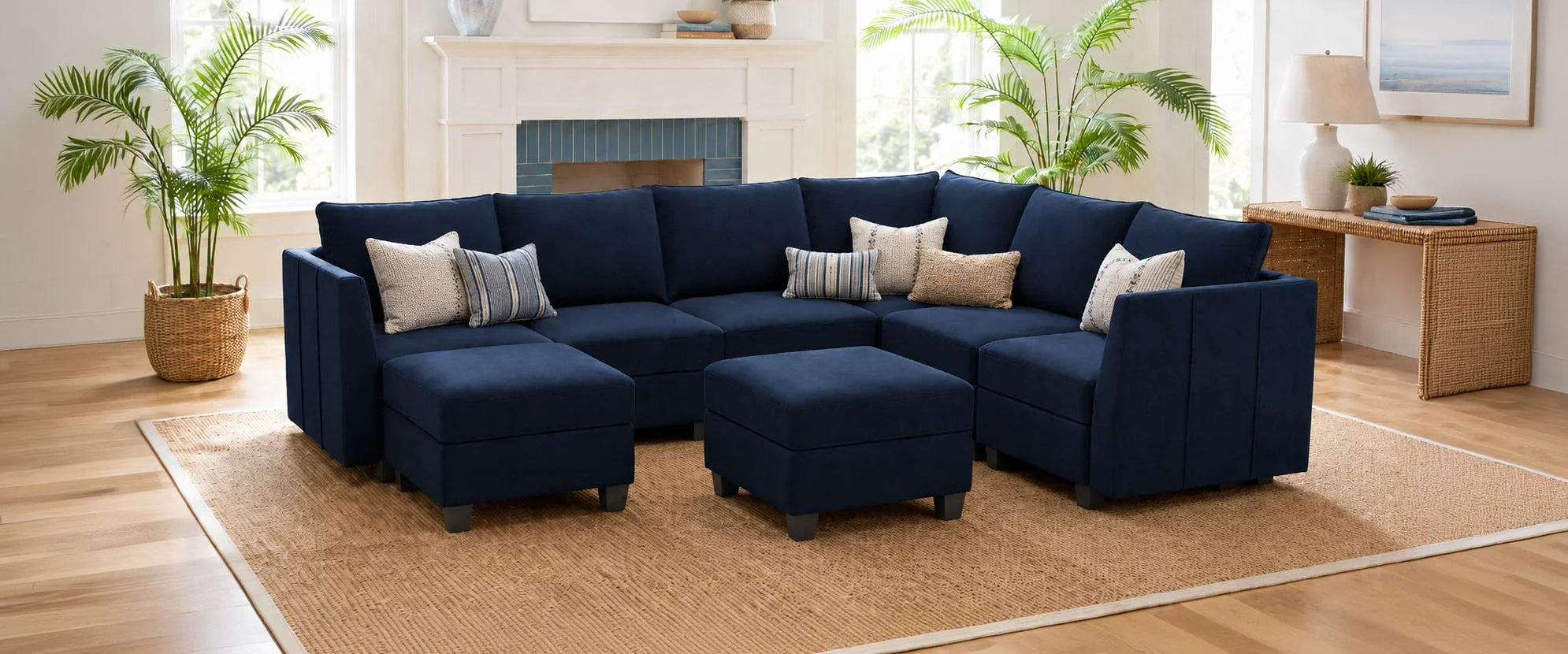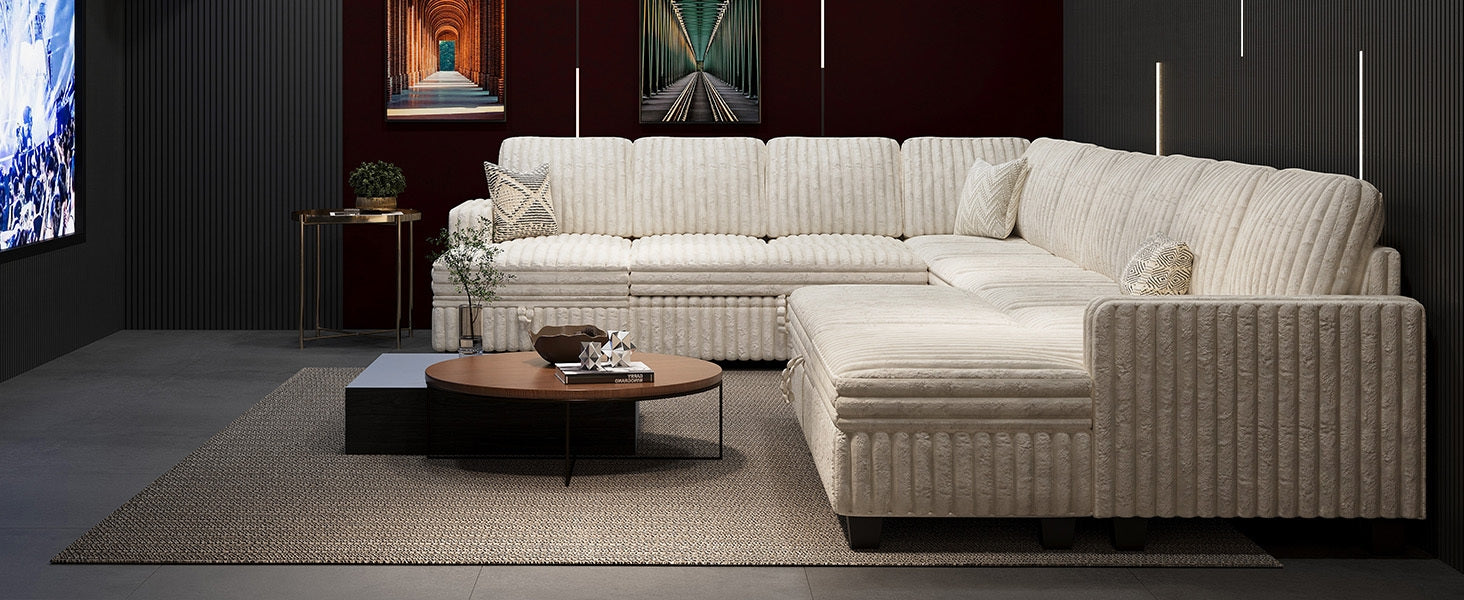

Small Living Room? 4 Layout Mistakes That Make Your Space Look Even Smaller
We’ve all been there. You spend hours scrolling through beautiful, airy spaces on Pinterest, but when you look at your own living room, it feels more "claustrophobic" than "cozy." No matter how many times you push the sofa against the wall or slide the coffee table around, the room still feels cramped, and you keep bumping your shins on the furniture. But here is the secret: your living room might not actually be too small—your layout is just working against you. If you are wondering why your living room feels cramped, you are not alone. Today, we’re breaking down the 4 silent living room layout mistakes that are shrinking your space and how to make a small living room look bigger with simple, clever adjustments. Let’s dive into how to easily fix these errors and make your home feel twice as large. Mistake #1: Not Thinking Through the Layout When planning a small living room layout, our first instinct is usually to push every single piece of furniture flush against the walls, hoping to open up a "big" space in the middle. Or worse, we buy beautiful, bulky furniture and squeeze it in without measuring the walking paths. The result? Your living room ends up feeling less like a cozy sanctuary and more like an obstacle course. You find yourself constantly sidestepping around the coffee table, dodging the sofa corners, or blocking the doorway just to get to the window. In interior design, this is called ignoring your living room traffic flow. A well-balanced room should have clear, unobstructed pathways (ideally 30 to 36 inches wide) so you can move naturally without bumping into things. If you have a modular couch too big for the living room, it completely locks down your floor plan and ruins the room's energy. How to Fix: Before buying static, oversized pieces, rethink your layout with flexible living room furniture in mind. Keep Pathways Open: Ensure there is a direct, easy route from the entrance of the room to the seating area and other rooms. Go Modular: Instead of a giant, heavy traditional sectional that permanently locks down your floor plan, opt for a modular sectional sofa for small spaces. Modular sofa designs allow you to easily reconfigure the layout—like splitting the seats or moving the ottoman—to perfectly adapt to your room’s unique traffic patterns. It gives you the freedom to change your layout whenever you want, keeping your pathways open and your living room breathing. If your traditional sectional is permanently locking down your floor plan, you need a layout that can evolve with your day-to-day life. Our Soforia modular sectional sofa collections allow you to split the seats, move the ottoman to either side, or completely rearrange the layout in under 5 minutes to keep your pathways wide open. Mistake #2: Furniture That Isn’t Intended for Living We’ve all fallen into this trap: you fall in love with a pristine, snow-white velvet sofa online or buy a rigid, delicate designer chair because it looks incredibly chic in photos. But then, real life happens. You’re constantly stressed about coffee spills, your dog’s muddy paws, or the fact that the sofa is so stiff nobody actually wants to sit on it. If your furniture makes you feel like you are living in a fragile museum rather than a cozy home, it’s a major living room design mistake. A beautiful living room is completely useless if it doesn't support how you actually live. In tight spaces, this mistake is magnified. When you buy "static" furniture that only serves one purpose or comes in delicate fabrics, you quickly run out of room and patience. In a small living room, every square inch of floor space is prime real estate. If your sofa isn’t helping you stay organized, it’s actively shrinking your room. How to Fix It: Shift your focus from "showroom aesthetics" to everyday livability. Your furniture should work for you, not the other way around. Prioritize Performance Fabrics: If you love bright, airy colors (like cream or light gray) but worry about stains, look for furniture made with high-performance, stain-resistant, and scratch-resistant fabrics. A high-quality performance fabric modular sofa allows you to enjoy a high-end look without the constant anxiety of spills or pet damage. Choose Smart, Multi-Functional Pieces: In a small living room, every piece of furniture must earn its keep. Instead of a basic, single-purpose modular couch, opt for a storage sofa or a sofa with built-in storage. It gives you the plush, cloud-like comfort you want for movie nights, while secretly hiding away extra blankets, pillows, and clutter beneath the seats. Why buy extra bulky storage bins when your modular couch can do the heavy lifting? With spacious, hidden compartments under every seat, you can tuck away blankets, pillows, and kids’ toys, keeping your space clean and visually spacious. You can choose to purchase the Thara Upgraded Cloud Sofa series. Mistake #3: A Poorly-Sized Rug and a Lack of Pillows It’s often the finishing touches that make or break a living room. You could have the perfect modular sectional couch and the ideal paint color, but if your rug is too small or your modular sectional couch looks barren and cold, the entire room’s balance will feel off. First, let's talk about the "floating rug island" trap. Choosing the wrong rug size for your living room is one of the most common design mistakes in American homes. When your rug only sits under your coffee table without touching any other furniture, it creates a harsh visual boundary, making your floor look choppy and your living room feel significantly smaller. Second is the lack of cozy layers. A modular sectional couch with zero or flat, sad pillows looks uninviting, stiff, and unfinished. It screams "dorm room" instead of "designer home." How to Fix: A cozy, high-end living room relies on proper scaling and plush layering. Here is how to arrange furniture in a small living room with perfect styling: Go Big on the Rug: Your rug should act as the "anchor" of your seating area. The golden rule for a cohesive layout is that at least the front legs of all major seating pieces (your sofa, sectionals, or accent chairs) should sit on the rug. For a small living room, an 8' x 10' rug is usually the sweet spot, instantly stretching the room's visual boundaries. Master the Art of Pillow Layering: Don't skimp on the plush factor. Mix and match different textures (like boucle, linen, or velvet) to add depth. If your modular sofa has deep, comfortable seating, lean into it with high-quality, feather-filled throw pillows in coordinating tones. It doesn’t just look like a professional showroom; it creates that "sink-in" cloud-like comfort that makes your guests never want to leave. Pair your newly sized rug with our highly adaptable Tesso modular sectional couch collection to create a seamless, cohesive lounge area. Mistake #4: Relying Solely on Overhead Lighting We’ve all walked into a room that felt cold, sterile, and altogether uninviting. Chances are, it was suffering from what designers call the "interrogation room" effect—relying solely on one bright, harsh overhead light. When you only use a single ceiling fixture, it casts harsh, downward shadows, making the corners of your room disappear into darkness. Not only does this make your living room feel flat and sterile, but it also visually shrinks your space by chopping it up with high-contrast shadows. A living room is meant for relaxing, cozying up, and entertaining. Your lighting should reflect that, especially in a compact space. How to Fix It: To make your small living room feel instantly larger and infinitely cozier, you need to learn how to layer lighting in a living room. Instead of one giant light source, aim for three distinct layers: Ambient (Overall) Lighting: This can be your overhead light, but keep it dimmable so you can control the intensity. Task Lighting: Add a sleek floor lamp next to your sofa for reading, or a small desk lamp on a side table. Accent (Atmosphere) Lighting: Use wall sconces, LED light strips behind the TV console, or even candles. To truly elevate a small space, look for furniture textures that naturally capture light and add warmth. Choosing a Huvona modular sectional couch in a plush, light-colored Performance Boucle not only reflects warm light beautifully, making your room feel larger, but its stain-resistant nature also means you can enjoy that bright, airy look without the stress of spills. The Ultimate Small Living Room Shortcut Redesigning a small living room doesn't mean you have to compromise on style, comfort, or storage. You don't need a bigger house—you just need furniture that works with you, not against you. If you’re tired of fighting rigid, heavy sofas that block your pathways and offer zero flexibility, it’s time to upgrade to a smarter, space-saving furniture solution. Our modular sofa series is widely considered the best couch for a small living room. Built specifically for modern, flexible living, our series features customizable layouts that fit any tight nook, hidden under-seat storage to swallow up clutter, and pet-friendly performance fabrics. It is the ultimate design cheat code to making your small space feel like a spacious oasis. FAQ How do I know if my living room layout is blocking traffic flow? The easiest test is the "Shin-Bump Test." If you have to twist your body, sidestep, or constantly dodge furniture corners just to walk from your hallway to the window, your traffic flow is blocked. In interior design, walking pathways should be at least 30 to 36 inches wide. If traditional, rigid sofas are locking down your floor plan and clogging your paths, switching to a Reconfigurable Sectional Sofa is the ultimate fix. It allows you to move the modules (like the ottoman or single chairs) in under 5 minutes to keep your natural pathways wide open. What is the best couch layout for a very small living room? For tight spaces, the gold standard is flexibility. Instead of buying a heavy, static 3-seater that permanently blocks one wall, the best layout is a [Modular Loveseat with a Movable Ottoman]. This setup gives you the comfort of a sectional (L-shape) when you want to lounge, but allows you to slide the ottoman to the center as a coffee table or move it away entirely when guests arrive. It maximizes seating without eating up precious floor space. How can I make my small living room look bigger and less cluttered? Two designer secrets: Go big on your rug and hide your clutter. A tiny rug chops up the floor, so opt for at least an 8' x 10' rug where the front legs of your furniture can sit on it. Second, swap out single-purpose furniture for multi-functional pieces. Instead of adding bulky, space-eating storage cabinets, choose a [Modular Sofa with Built-in Under-Seat Storage]. It hides away blankets, pillows, and toys completely out of sight, instantly creating a clean, airy, and visually spacious environment. How do I choose the right rug size for a sectional sofa? The golden rule is that at least the front legs of your sectional should rest on the rug to anchor the room. For a compact sectional in a small living room, an 8' x 10' rug is usually perfect. For larger modular setups, go with a 9' x 12' rug. Avoid a small 5'x 7' rug under the coffee table, as this creates a "floating island" effect that shrinks your living room. A cohesive rug-to-sofa ratio makes your seating area look grounded and high-end.
Learn more
Don't Leave It Blank: 6 Easy Ways to Decorate the Space Above Your Couch
You’ve found the perfect, cozy modular sofa. It feels like a warm embrace after a long day, and the texture is exactly what you dreamed of. But every time you sit down and look up, there it is: a massive, cold, staring blank wall. It feels less like a styled living room and more like an unfinished puzzle. Don’t let an empty backdrop ruin your home’s vibe. Elevating the space above your couch doesn't require a master’s degree in interior design or a massive budget. If you are looking for above sofa wall decor ideas to transform your space, you aren't alone. Figuring out what to put on the wall behind a couch or how to decorate a large blank wall is one of the most common design dilemmas. In this guide, we’re sharing 6 incredibly easy, stylish wall decor ideas for living room setups to transform that awkward blank space into a stunning focal point you'll love coming home to. 6 Brilliant Above Sofa Wall Decor Ideas 1. Curate a Personalized Gallery Wall The wall above your modular couch is the ultimate canvas for self-expression, and nothing handles that responsibility better than a curated gallery wall. It’s not just about hanging random pictures; it’s about creating a visual anchor that brings warmth, personality, and dimension to your entire living room. If you love a warm minimalist living room aesthetic, a gallery wall lets you blend personal memories with artistic textures, making your seating area feel less like a furniture showroom and more like a cozy, textured living room. How to Style It Perfectly: The Grid Layout (For a Clean, High-End Look): Choose matching frames (like sleek black, natural oak, or thin gold) and arrange them in a strict grid (e.g., a 2x3 or 3x3 layout). This symmetry looks incredibly sophisticated and pairs beautifully with modern, clean-lined sofas. The Eclectic Layout (For a Cozy, Lived-In Vibe): Mix and match different frame sizes, finishes, and orientations. Combine personal photographs with abstract line art, botanical prints, or even a small piece of woven textile to add physical depth. Pro-Tip for Balance: If you are sketching out your modular couch wall decor dimensions ratio, ensure the total width of your gallery wall spans about two-thirds to three-quarters of your couch's overall width. How high to hang art above a sofa is also crucial: hang the bottom frames roughly 8 to 10 inches above the top of your sofa cushions so the art feels integrated with your seating, not floating away from it. 2. Use Plants as a Background If art prints feel too static for your style, why not breathe life into the space above your modular sectional couch—literally? Embracing a biophilic living room design by using live plants is a brilliant way to achieve that highly coveted organic modern living room decor look while creating a soothing, organic sanctuary right in your home. Plants add an effortless layer of texture, movement, and vibrant color that artificial decor simply can’t match. Plus, pairing the lush, wild greenery with soft fabrics like a corduroy sofa or a plush chenille modular sectional couch creates an irresistible contrast that feels grounded, warm, and deeply therapeutic. How to Style It Perfectly: The Floating Plant Ledge: Install a long, sturdy floating shelf about 12 to 15 inches above your sofa backrest. Line it with cascading "trailing plants" like Pothos (Devil's Ivy), String of Pearls, or Heartleaf Philodendron. As the vines gently drape downward, they frame your seating area in a soft, natural canopy. The Wall-Mounted Planter Trio: For a clean, modern look, arrange three sleek, geometric wall planters in a horizontal line or a subtle stagger. Pop in low-maintenance air plants or vibrant succulents to keep the vibe minimalist yet full of life. The Hanging Accent: Hang one or two Macrame plant hangers from ceiling hooks just off-center to the modular sectional couch. This draws the eye upward, making your ceilings feel higher and adding a touch of cozy, bohemian texture. 3. Use Large-Scale Statement Art to Anchor the Space If your motto is "less is more," skip the complex arrangements and anchor your seating area with a single, massive piece of living room wall art. This approach is the cornerstone of warm minimalism—it eliminates visual clutter while creating a high-impact, sophisticated focal point that commands attention the moment you enter the room. Pairing a stark, oversized canvas with the rich texture of a deep-seated sectional couch doesn't just fill space; it sets the entire mood of your living area. Whether it’s a soothing abstract piece with soft, earthy tones or a bold, textured black-and-white photograph, a singular giant artwork gives your seating area that coveted luxury boutique hotel vibe. How to Style It Perfectly: The Golden Ratio for Scale: Size is everything here. An art piece that is too small will look lost, while one that is too large will overwhelm your furniture. Aim for an artwork that is two-thirds to three-quarters the width of your sectional couch. For instance, if you have a spacious, deep-seated modular sofa, look for a horizontal canvas that mirrors its expansive, grounding silhouette. The Magic Hanging Height: The biggest mistake people make is hanging art too high. To create a cohesive look, the bottom of the frame should sit exactly 8 to 12 inches above the top of your sofa cushions. This keeps the artwork visually connected to the furniture, creating a harmonious, singular design unit rather than two separate floating elements. Frame Matters: For a sleek, contemporary look, opt for a canvas with a hidden "floater frame" in natural wood or matte black. If your style leans more cozy and organic, an unframed canvas with heavy, visible paint texture adds an incredible layer of physical warmth. 4. Let the View Do the Talking: The Floating Window Layout Who says the space above your couch has to be a solid wall? Sometimes, the best art is the one created by nature itself. If you are searching for renter-friendly wall decor ideas, pulling your sofa away from the solid wall and positioning it right in front of a window is a brilliant, damage-free alternative. By letting a window float above your sectional couch, you instantly flood your cozy textured living room with gorgeous natural light, making the entire room feel larger, airier, and more connected to the outdoors. The changing seasons, the dancing shadows of leaves, and the shifting golden hour light become a living, breathing backdrop that no wallpaper or paint could ever replicate. How to Style It Perfectly: The Low-Profile Silhouette: To make this layout work seamlessly without blocking your natural light or the view, opt for a modern low-profile modular sofa. A sectional couch with a sleek, lower backrest sits perfectly below the windowsill, keeping the line of sight clean and unobstructed. Frame the Frame with Textiles: Dress your window with soft, floor-to-ceiling sheer curtains in neutral tones like cream, oatmeal, or linen. When the sun shines through, these lightweight fabrics diffuse the light beautifully, casting a soft, dreamy glow across the texture of your couch cushions. Create Breathing Room: Don’t push your sofa flush against the window glass. Leave a 6- to 12-inch gap behind the couch. This not only gives your curtains room to glide effortlessly but also creates an architectural "breathing space" that feels incredibly high-end and intentional. 5. Frame Your Sofa with Architectural Built-Ins For those who crave the ultimate blend of custom luxury and smart space utilization, nothing compares to framing your sectional couch with custom built-in furniture. Instead of treating the wall and the sofa as two separate entities, this approach integrates them into a single architectural masterpiece. Built-ins above and around the sectional sofa are the pinnacle of a warm minimalism living room. They eliminate the visual clutter of standalone bookcases while offering a sophisticated stage to display your favorite art, design books, and ceramic decor. The result? A stunning, wrap-around backdrop that makes your living room feel like a high-end, architect-designed sanctuary. How to Style It Perfectly: The Inset Alcove (The Floating Frame Effect): Create a recessed niche or alcove directly above the sectional sofa backrest. Line the inside of the alcove with warm wood cladding or a soft neutral paint, and install dimmable LED strip lighting. This creates a soft, ambient glow that perfectly highlights the texture of your couch cushions below. The Bridge Over the Sofa: Install symmetrical built-in shelving columns on both sides of your couch, connected by a top bridge shelf running overhead. This beautifully "hugs" your seating area. To keep it from feeling heavy, keep the shelves directly above the sofa open and airy, while utilizing lower cabinets for hidden storage. The Perfect Partner for Modularity: Built-in layouts love a modern low-profile modular sofa. Because modular sectionals allow you to customize the exact length and shape of your seating, you can perfectly match the footprint of your custom cabinetry, ensuring not a single inch of floor space is wasted. 6. Line Up a Symmetrical Display for Visual Order If you want your living room to look instantly curated, cohesive, and professionally designed, embrace the power of symmetry. The human brain is naturally drawn to balance, and creating a symmetrical display above your couch is the easiest way to inject a sense of timeless elegance and visual order into your home. This styling method is incredibly versatile. It works beautifully whether you lean toward sleek organic modern living room decor or prefer a more classic, traditional aesthetic. By framing the center of your seating area with perfectly balanced pairs, you anchor the entire room and give your sofa the upscale spotlight it deserves. How to Style It Perfectly: The Power of Pairs: Hang two identical, large-framed prints side-by-side directly over the center of the sectional couch. Choose abstract art, minimalist architectural sketches, or black-and-white photography. Keep the spacing tight—about 2 to 4 inches apart—so they read as one cohesive unit rather than two disjointed pieces. Symmetrical Sconces & Shelves: Install two identical floating ledges on either side of the wall, leaving the middle space open or featuring a singular focal point. Top each shelf with matching ceramic vases or sculptural objects. To elevate the cozy factor, mount two elegant, matching wall sconces just above the ends of your sofa cushions to cast a warm, ambient glow downward. Mirror the Sofa's Silhouette: Ensure your symmetrical arrangement aligns with the natural balance of your furniture. If you have a perfectly balanced, symmetrical 3-seater sofa, a twin-item layout overhead creates a stunning vertical harmony that grounds the entire seating arrangement. FAQ 1. How do I choose the right size artwork for the space above my couch? The golden rule of interior design is that any wall decor should span between two-thirds and three-quarters of the sofa’s total width. For example, if you own a spacious, deep-seated modular sofa that is 90 inches wide, your art arrangement or gallery wall should be roughly 60 to 68 inches wide. Additionally, when calculating your sofa wall decor dimensions ratio, always hang the bottom of the frame exactly 8 to 10 inches above the sofa cushions to ensure the decor feels anchored to the seating, rather than floating away. 2. How can I style the wall above my sofa to achieve a 'warm minimalism' or 'cozy' aesthetic? Achieving a warm minimalism living room aesthetic is all about balancing clean lines with rich, tactile textures. Instead of heavy visual clutter, focus on one oversized abstract canvas in neutral tones, or a sleek floating shelf featuring cascading live plants. To elevate the cozy factor, pair these organic wall elements with a couch in a high-performance, therapeutic texture like a corduroy sofa or a chenille couch. The contrast between the clean wall design and the rich, inviting fabric of the sofa cushions instantly creates a high-end, calming sanctuary. 3. Are there any damage-free, renter-friendly ways to decorate the space above my couch? Absolutely! You don’t need to drill into your walls to create a styled backdrop. Two of our favorite renter-friendly wall decor ideas include: Creating a damage-free gallery wall: Use adhesive picture-hanging strips to curate a lightweight gallery wall with plastic or thin wood frames. Repositioning your furniture: Move your couch away from the solid wall and place it directly in front of a large window. Let the natural view and elegant sheer curtains serve as your living, damage-free backdrop. (For this layout, a modern low-profile modular sofa works best as it won't block the natural light. 4. What type of wall decor works best with a modern, low-profile modular sofa? A modern low-profile modular sofa is fantastic because it makes ceilings feel taller and spaces feel more open. To complement this sleek silhouette, you have two amazing options: you can install custom built-in furniture that beautifully frames the low backrest, or embrace symmetrical displays (like two twin vertical frames) to draw the eye upward. Because modular sectionals allow you to change the layout whenever you want, choosing a versatile decor option like a floating display ledge gives you the flexibility to refresh your wall pieces to match your couch's new configuration.
Learn more
How to Arrange a Sofa for Maximum Functionality and Flow
Ever feel like your living room layout is more of an obstacle course than a place to relax? You buy a beautiful sofa, only to realize it blocks the walkway, covers the vents, or makes the entire room feel cramped. The truth is, a successful living room furniture arrangement doesn’t depend on how expensive your couch is—it’s all about how you position it. In this couch placement guide, we’ll show you the golden rules of sofa arrangement to maximize your space, unlock hidden functionality, and finally create that effortless, flowing layout you’ve been dreaming of. Factors to Consider for a Functional Living Room Layout Consider Traffic Patterns The absolute foundation of an efficient living room furniture layout is understanding how people move through it. Your sofa is typically the largest piece in the space, which means it acts like a boulder in a river—it will either guide the water smoothly or create a massive logjam. To ensure your layout feels effortless, you need to map out your room’s natural pathways and design around them. Here is how to master traffic patterns for proper sofa placement: Maintain Major Walkways: Identify the primary routes people take to cross the room (e.g., from the front door to the kitchen, or from the hallway to the patio). Keep these main thoroughfares at least 30 to 36 inches (76–91 cm) wide. This prevents that awkward, claustrophobic feeling when trying to figure out how to arrange living room furniture in tight spaces. The Coffee Table Clearance: Leave a golden zone of 14 to 18 inches (35–45 cm) between the edge of your sofa cushions and the coffee table. This distance is the sweet spot—it gives you plenty of legroom to sit comfortably, while keeping your drinks, tech, or books within easy arm's reach. Avoid the Screen Interruption: Never place a sofa in a position that forces people to walk directly between the seats and the TV. Disrupting movie night or a gaming session every time someone grabs a snack is a major functional failure. Walkways should always loop behind the main seating area rather than cutting through it. Breathing Room One of the most common mistakes in small living room arrangement is the instinct to push every single piece of furniture flat against the walls. While it feels like you are saving space, this "perimeter layout" often leaves a giant, cold void in the center of the room and actually makes the walls feel like they are closing in on you. Giving your modular sofa literal and visual breathing room is the secret weapon used by interior designers to make a small living room look bigger, more luxurious, and highly functional. The "Float" Technique: Whenever possible, pull your modular sofa away from the wall by at least 12 to 18 inches (30–45 cm), or even place it dead-center in the room. This is called "floating" your furniture. It creates an open couch layout, allows light to circulate, and instantly elevates the aesthetic from "standard apartment" to "designed home." The Airflow Zone: Leaving space behind the modular couch isn't just about looks—it's highly practical. It prevents your sofa from blocking baseboard heaters, covering electrical outlets, or smashing against window curtains. If you have a beautiful view out a window, floating the sofa a few feet away ensures you don't block the natural light. Create Useful Back-of-Sofa Space: Pulling the modular couch out opens up entirely new functional possibilities. You can slip a slim console table directly behind the sofa to hold table lamps, drop a charging station for your devices, or even tuck a low bookshelf back there. Focal Points Every functional room needs a clear anchor—a center of gravity that instantly tells your eyes where to look. Without a distinct focal point, a living room layout feels chaotic and unfocused. Because your modular sofa is the ultimate destination for comfort, its placement dictates how you interact with that anchor. The trick to maximizing functionality is choosing the right sofa layout ideas based on your room's features. Identify Your Main Feature: Look at your architecture. Does your room have a stunning fireplace, a massive window with a view, or is the TV the undisputed king of the space? Your primary sofa should directly face this feature, usually positioned perpendicular or parallel to it to create a clean, balanced sightline. The 60-Degree Viewing Rule: For the best visual ergonomics, the human eye prefers viewing angles within a 60-degree arc. When placing your modular sofa opposite a TV or a beautiful window view, ensure the seating isn't so wide that guests have to crane their necks sideways. The Dilemma: TV vs. Fireplace: This is the ultimate living room battleground. When designing a living room layout with a TV and fireplace, don't just default to mounting the TV high above the mantle (which causes major neck strain!). Instead, consider placing the sofa facing the fireplace and using a flexible, layout-friendly arrangement to balance both. The Best Sofa Placement Layouts for Any Space If you are looking for practical living room layout ideas, these 4 designer-approved formulas are the best ways to maximize functionality and spatial efficiency: The "Floating Flush" Against the Wall: Best for Compact Spaces How to do it: Position your sectional sofa facing the main focal point (like your TV or projector screen), but pull it away from the wall just a tiny bit. Leave a 2 to 4-inch (5–10 cm) gap between the back of the sofa and the wall. The Functional Benefit: This is the ultimate space-saving sectional couch layout for smaller apartments, maximizing open floor area in the center of the room. However, that tiny sliver of air behind the couch prevents wall scuffing and creates a subtle optical illusion that helps make a small living room look bigger. The Open-Concept "Float": Best for Large Living Rooms & Studio Apartments How to do it: Break the rule that furniture must hug the walls. Place your sectional sofa dead-center in the room, leaving a clear walkway of at least 36 inches (91 cm) entirely behind it. The Functional Benefit: This is the best sectional layout for an open floor plan. Your sofa becomes a beautiful, low-profile room divider. Without building a single wall, you perfectly zone an open-concept living room layout—creating a cozy entertainment lounge at the front and a distinct dining area or home office directly behind the couch. The L-Shape Corner Anchor: Best for Families, Socializing How to do it: Use a sectional sofa, or position a primary sofa and a secondary loveseat/accent chairs at a 90-degree angle to one another, framing the edge of your seating zone. The Functional Benefit: Perfect for anyone searching for high-capacity sectional sofa layouts. This layout offers the highest seating capacity per square foot. It utilizes awkward corners that usually go to waste and creates an intimate, conversational "hive" that is perfect for family gatherings. Face-to-Face Symmetry: Best for Conversation-First Layouts How to do it: Position two sectional sofas (or one main sofa and two matching accent chairs) completely parallel to one another, facing each other directly, with a coffee table placed in the center. The Functional Benefit: This provides a formal yet welcoming living room furniture arrangement. It completely prioritizes human connection over screens, forcing eye contact and effortless conversation—making it the ideal setup for homeowners who love entertaining guests without a TV blaring in the background. 🛋️ Ready to Design Your Perfect Living Room Flow? Don't let a rigid, traditional couch dictate how you live in your home. Whether you are dealing with a compact urban apartment or trying to figure out a complex open concept living room layout, flexibility is key. Our Belffin Modular Sofa Series is engineered to give you the ultimate balance of plush comfort, therapeutic tactility, and flexible seating for your living room. With customizable modular sofa configurations, you can easily switch between any of these layouts in minutes. Move the individual blocks to clear up a walkway, create a massive L-shape for movie nights, or split them apart into separate seating zones. Explore our space-saving sectional configurations today and find the perfect, adaptable fit for your unique home! FAQ 1. What is the golden rule of sofa placement? The ultimate golden rule of sectional couch placement is to prioritize traffic flow. Always ensure there is a clear, unobstructed walkway of at least 30 to 36 inches (76–91 cm) along major pathways in the room, and leave 14 to 18 inches (35–45 cm) between the front of the sofa and your coffee table for optimal legroom and accessibility. 2. Should a sofa always be pushed against the wall? No, pushing a sofa flat against the wall is a common mistake when setting up a living room layout. Leaving just 2 to 4 inches of breathing room behind a couch can make a room feel larger. In larger spaces, floating the sofa in the center of the space creates a more luxurious aesthetic and naturally divides the room into functional zones. 3. How do you arrange a living room with a TV and a fireplace? When mastering a living room layout with a TV and fireplace, avoid mounting the screen too high over the mantle to prevent neck strain. Instead, position your main sofa facing the fireplace and place the TV on an adjacent wall. Alternatively, choosing an L-shaped sectional sofa layout allows you to dynamically face both focal points simultaneously. 4. How do I know if a sectional or modular sofa will fit my layout? To ensure a perfect fit for your furniture arrangement, use painter's tape on the floor to map out the exact footprint of the sectional couch before buying. Measure the clearance for nearby doors and walkways. If you want a layout that can grow with you, investing in customizable modular sofa configurations is the best choice, as the individual blocks can be infinitely rearranged to fit any space.
Learn more
Small & Stylish: 5 Clever Sofa Layouts to Transform Your Narrow Living Room
We all dream of having a perfectly proportioned living room—one with an impeccable layout to match. However, living room dimensions and shapes vary widely; if you happen to have a long, narrow living space, stepping into it can often feel less like entering a warm, cozy sanctuary and more like walking down a long, cramped hallway. You may yearn for a large, comfortable sectional sofa, yet worry that it will obstruct traffic flow and make the room appear even smaller. The good news is this: you don't have to sacrifice comfort to accommodate your space's size. With the right layout, even the most elongated living room can be transformed into a space that feels open, inviting, and undeniably sophisticated. Read on as Belffin unveils 5 clever small living room sectional couch layout—strategies that will completely revolutionize the way you perceive your own space. What to Consider for a Long, Narrow Living Room Room Proportions The key to perfectly laying out a long, narrow living room lies in cleverly balancing its awkward proportions to avoid creating an undesirable "tunnel" or "hallway" effect. Rather than treating the entire room as one long, continuous corridor, apply the "rule of thirds" to visually divide it into two distinct functional zones—for instance, a primary seating and entertaining area paired with a cozy reading nook or dining area. By positioning furniture—such as a modular couch or a distinctive accent chair—perpendicular to the walls (rather than simply lining everything up along the length of the room), you create a horizontal visual orientation that effectively "pushes out" the walls. This technique makes the narrow floor plan appear significantly more spacious, resulting in a more balanced and harmonious overall spatial feel. Traffic Flow In a narrow space, the layout of a sectional sofa determines whether the room feels like a fully functional home environment or a maze riddled with obstacles. To maintain a natural flow of movement, it is crucial to establish a clear, unobstructed walkway along one side of the room—ideally between 30 and 36 inches wide—rather than routing traffic directly through the center of the seating area. By pulling the sectional sofa slightly away from the wall, or by opting for a design with clean lines and a low, airy profile, you can guide people to walk around the conversation zone without disrupting its tranquil atmosphere. This ensures that family members and guests can move freely between the two ends of the room without bumping into furniture or interrupting an ongoing movie night. Purpose of the Space Before placing your sofa, clearly define the room's primary function to ensure that its layout aligns with your lifestyle. Given that long, narrow living rooms often need to serve multiple purposes, you should first determine whether the space will function as a dedicated media room, a formal entertaining area, or a versatile multi-purpose zone that combines both living and dining functions. If your goal is to create a cinema-like audiovisual experience, a sleek, L-shaped sectional sofa serves as the visual focal point of the room while maximizing seating capacity. However, if you frequently host guests, consider an arrangement featuring a sofa paired with two opposing armchairs; this face-to-face layout is far more conducive to fostering a relaxed and convivial atmosphere for conversation. By delineating distinct "functional zones" based on their intended use, you can transform an otherwise long, narrow, and somewhat cramped floor plan into an organized, purposeful, and ideal living space—ensuring that every single inch serves a specific function and is utilized to its fullest potential. 5 Best Narrow Living Room Sofa Layout Ideas The Classic Linear Layout: Streamlined Simplicity For extremely narrow and elongated spaces, a linear living room layout offers the most intuitive and ideal solution. Simply positioning a sleek, long sofa flush against a main wall—with the TV console placed on the opposite side—immediately clears a spacious, straight pathway through the room. This layout maximizes open floor space in the center, preventing the room from appearing cluttered or cramped. To break up any visual "flatness," consider placing a small, slender-legged accent chair near the window at a slight angle; this not only disrupts the rigid parallel lines and adds a touch of design flair, but also ensures that the flow of movement through the space remains unobstructed. Style Tip: This layout can sometimes feel monotonous. To avoid this, consider placing a lightweight accent chair at the corner diagonal to the sofa, angling it slightly inward to break up the rigid parallel lines. The L-Shaped Sectional Zone If your living room feels more like a long corridor, an L-shaped layout can completely transform the space. By opting for a sectional couch featuring a chaise longue (or extended seat), you can utilize the sofa's "corner" section as a natural interior divider. Simply position the longer side of the sofa against the wall, allowing the shorter chaise section to extend inward; this effectively "segments" the narrow, rectangular room into two distinct zones—a front area dedicated to lounging and relaxation, and a rear area that can be designated as a home office nook or dining corner. This layout not only lends a sense of structure to the space but also helps to create a more harmonious and balanced overall proportion for the room. Style Tip: For the corner section, it is best to choose a backless chaise style; this prevents visual obstruction and helps maintain an open, airy feel within the room. The Face-to-Face Setup For those who prioritize conversation over "screen time," a "face-to-face" layout fosters an intimate atmosphere that cleverly mitigates the cramped sensation often associated with long, narrow rooms. Rather than lining all the furniture against the walls, position the main sofa to one side and place two elegant armchairs directly opposite it. This arrangement guides the eye horizontally rather than vertically, thereby visually "widening" the space. It is a sophisticated furnishing strategy that magnificently transforms an otherwise elongated room into a lounge area that is both professionally polished and perfectly suited for entertaining guests. Style Tip: Ensure there is a gap between the two armchairs to avoid creating an impenetrable "wall." The "Floating" Multi-Functional Layout If your living room is particularly long and narrow, do not feel confined to placing your sofa flush against the back wall. The so-called "floating layout" involves shifting the sofa forward—away from the wall—to create a walkway behind it. By positioning a slender console table or a small desk directly behind the sofa, you can cleverly establish a "back-to-back" functional zoning arrangement. This layout technique creates a visual focal point in the center of the room, effectively eliminating the "tunnel effect" often associated with long, narrow spaces, and giving the entire room a sense of clear functionality and layered depth. Style Tip: Your sofa doesn't have to be against the wall. Moving the sofa toward the center of the room—leaving a walkway behind it—will make the space look more like a professionally designed showroom. The Modular Flexibility Approach For modern homeowners, a modular sectional sofa layout offers the ultimate solution for adapting to ever-changing spatial needs. Rather than being confined by rigid, fixed furniture pieces, you can opt for modular units that can be freely reconfigured to suit your specific requirements. For a movie night, you might arrange them in a traditional, neat row; yet, when you need to open up the floor plan, you can easily separate them into distinct seating clusters. This "divisible" flexibility is particularly well-suited for long, narrow rooms, as it allows you to maintain "breathing room"—open gaps—between furniture pieces, ensuring the entire space remains airy and open, never feeling cramped or heavy. Style Tip: In narrow spaces, a modular sectional can be arranged asymmetrically—with some sections placed against the left wall and others against the right (in a staggered pattern). This guides the eye in an S-shaped path, effectively enhancing the perceived depth of the room. Ready to Redefine Your Living Room? Whether a long, narrow living room feels "cramped" often depends entirely on the furniture you choose. The right sectional couch—whether it’s a sleek, modular combination or an elegant, low-profile corner sofa—can serve as the focal point of your home, completely revitalizing your living environment. Now that you’ve gathered some layout inspiration, it’s the perfect time to find the ideal piece that perfectly matches your vision. We invite you to explore our collection of modern sofas: designs that blend stylish aesthetics with space-saving functionality, tailored to fit homes of all shapes and sizes, and designed to infuse your living space with both comfort and style. With just a few clicks, the living room layout of your dreams is within your reach! Love Your Sofa? Bring the Same Comfort to Your Bedroom! As a valued Belffin reader, you’re invited to be among the first to explore our sister brand, Belffinsleep. Designed with the same premium materials and smart construction you trust, our new bed frame collection offers the ultimate sleep experience. 🎁 Exclusive Launch Perk: Use code at checkout for extra savings on your first bed frame order. 👉 Explore Belffinsleep Bed Frames FAQs How do I arrange a sectional sofa in a long, narrow living room without blocking traffic? The key is keeping a clear main walkway—ideally 30 to 36 inches wide—along one side of the room rather than cutting through the center. Instead of pushing every piece of furniture against the walls, choose a sectional with an open-ended chaise (or a backless module) and place the longer side along the main wall. This naturally defines the seating zone without creating a boxed-in "tunnel" feel or blocking household traffic. How can I visually widen a narrow living room using couch placement? Use horizontal focal points to draw the eye side-to-side rather than front-to-back. Try a face-to-face setup by placing your main sofa on one side and two slim-profile accent chairs opposite it, leaving space between the chairs. Alternatively, choose a modular sectional and arrange the pieces in an asymmetric or slightly offset pattern to break up continuous parallel lines. Should a sofa always sit flush against the wall in a small living space? Not necessarily. If your room is particularly long, pulling the sofa forward 2 to 3 feet to "float" it creates depth and separates the room into functional zones. You can place a slender console table or a compact desk behind the floating sofa to instantly add a dedicated home office or entryway landing zone without making the room feel smaller. What type of sectional sofa works best for narrow rectangular rooms? Low-profile modular sectionals and L-shaped couches with reversible or backless chaises work best. Modular units allow you to split, reconfigure, or stagger seating to fit awkward room dimensions, keeping visual weight low and preserving an open, airy visual flow across the floor plan.
Learn more
Loveseat Suitable for Small Apartments: Space Efficiency and Comfort
Living in a small apartment can present a challenge: choosing the right sofa for your living room. Finding the perfect sofa in a limited space is no easy feat. Simply matching your personal aesthetic isn't enough; you also need to consider its placement. With the return of minimalist functionalism to interior design in 2026, sofas are no longer just furniture, but space magicians. For those living in apartments or compact homes, how can you maintain a sense of openness in the living room while providing a feeling of envelopment and security, and maximizing space utilization? Today, Belffin will guide you through this year's home furnishing trends, exploring top choices for visually "expanding" and tactilely exceptional two-seater sofas. What’s the Right Size Couch for a Small Space? "Small apartment" doesn't mean sacrificing seating comfort; the key is precise control over sofa dimensions. Generally, small sofas for small spaces, for a small living room of around 10-20 square meters, the recommended length of a two-seater sofa is between 1.5 and 1.8 meters. This size provides comfort for two people sitting side by side without visually overwhelming the space. Besides length, depth is also an implicit indicator of comfort; a depth of 85 cm-95 cm ensures support while allowing sufficient aisle space. More importantly, 2026 home design emphasizes "visual lightness"—choosing styles with slender, high legs or low backs exposes more floor and wall space, psychologically making the living room feel much larger. Transform Your Small Space With The 4 Best Loveseats Nido Pull-out Loveseat If you live in a studio apartment, the Nido Pull-out Loveseat is one of the best choices. The Nido features a pull-out design at the bottom, allowing for a seamless transition from a seated position to a spacious "movie theater mode" or temporary guest room with a simple pull. This functionality is crucial for apartments without a separate guest room. This small space sleeper sectional sofa is made of faux rabbit fur corduroy fabric. This material perfectly aligns with the 2026 home trend of pursuing "extreme comfort," offering both the retro feel of corduroy and the soft touch of faux rabbit fur, making every sitting or reclining feel like being gently enveloped. Equipped with a 139° adjustable backrest, it creates an exceptionally comfortable and supportive seating experience, allowing you to find the perfect support angle to conform to the curve of your spine, whether you're engrossed in working, reclining while reading, or completely relaxing. Its low center of gravity design and smooth, rounded armrests reduce the feeling of oppression from the furniture, maintaining a sense of openness and breathability even in a small bedroom or living room of less than 10 square meters. It is ideal for small living rooms, offices, guest rooms, and dormitories. Soforia Loveseat Sofa In small apartments, making the most of space is crucial, and the Soforia Loveseat Sofa stands out with its stylish design. Featuring a fully modular design, the Soforia can function as a delicate loveseat by the bedroom window, or easily upgraded into a large L-shaped or U-shaped sectional sofa by adding modules as the family grows. Addressing the core pain point of "short-space storage," the Soforia small space sectional couch hides ample storage space under each cushion. Whether it's out-of-season blankets, cushions, or living room clutter, everything can be perfectly concealed, achieving true visual minimalism. Following this year's trend of "tactile materialism," Soforia offers a variety of options, including skin-friendly Velvet and Terry Fabric. Even more thoughtfully, it comes with removable covers, making cleaning a breeze, making it a quintessential "pet and family friendly" piece of furniture. Both the armrests and backrest support multiple adjustment positions (up to 135 degrees), and with its extra-large 26.4-inch seat depth, it can provide just the right amount of support whether you are sitting upright or slumped down. Thara Oversized Loveseat Looking for the most compact sofa for your apartment living room? The Thara Oversized Loveseat boasts an exceptionally deep seat, far exceeding that of a typical two-seater, combined with its signature low center of gravity design, allowing for effortless cross-legged comfort. This wonderful balance of large size and small footprint makes it a visual focal point in a studio apartment or cozy secondary bedroom. To save space in your living room, each module of the Thara features ample under-seat storage. Whether it's a heavy winter blanket or scattered living room clutter, it can be instantly concealed, keeping your small living room tidy. This apartment couch is crafted from thick, luxurious chenille and corduroy fabrics. These highly textured fabrics are not only water-repellent and easy to clean, but also add a warm, layered feel to the space, perfectly aligning with the "Warm Minimalism" trend that will be popular in 2026. Filled with high-resilience foam and featuring ultra-soft cushions, Thara offers a cloud-like, immersive wrapping experience. Whether for deep relaxation after working from home or for binge-watching TV shows on the weekend, it provides unparalleled psychological comfort. Plume Pull-out Loveseat Sofa If you're looking for a sofa bed suitable for a small space, the Plume Pull-out Loveseat Sofa is the perfect choice. As a top-of-the-line bed sofa couch, Plume features smooth, silent sliding rails. With a simple pull, it transforms from a compact double bed into a spacious flat area. This is the ideal "space-saving furniture" solution for those living in studio apartments or needing to combine a study and a guest room. Featuring an integrated chaise lounge, it not only provides a supportive, deep sitting experience but also cleverly conceals a large amount of hidden storage space, instantly hiding cluttered cushions and blankets. The Plume collection uses this year's most sought-after faux rabbit fur corduroy fabric. This fabric not only possesses the retro striped aesthetic of ordinary corduroy, but also boasts a soft, supple touch like real rabbit fur, bringing both visual and tactile warmth to a small living room. The interior features multiple layers of high-resilience foam and a solid wood frame, ensuring balanced support whether sitting, leaning, or reclining when used as a "Convertible Couch," preventing it from sagging even after prolonged sitting and truly achieving "long-lasting companionship." Don't Let Space Limit Your Imagination of Life In the modern home philosophy of 2026, "small" doesn't mean "simple," but rather a more refined and intelligent way of living. Choosing a two-seater sofa suitable for a small space is essentially about finding a balance: between limited square footage and unlimited comfort, between daytime social functions and nighttime relaxation and privacy. Whether you're soothed by the cloud-like faux rabbit fur feel of Plume, captivated by Soforia's powerful modular storage, or drawn to the spatial freedom offered by Thara and Nido, the most important thing is—this piece of furniture can truly make your home a warm and welcoming haven. Ready to Upgrade Your Small Home? Don't let your living room feel cramped anymore. Click now at belffin.com/collections/loveseat-sofa to explore our 2026 small apartment sofa selection and take advantage of our limited-time offers to rediscover the long-lost sense of openness and sophistication in your living room.
Learn more
5 Best Green Sofa Living Room Ideas to Refresh Your Space in 2026
In 2026, the living room has evolved beyond being merely a gathering spot; it has become a vital sanctuary for relaxation, with the sofa playing a pivotal role within this space. With the arrival of spring, green sofas have emerged as a top color choice for the living room. A green sofa not only instantly revitalizes an ordinary living room—transforming it into a striking design focal point—but also fosters an atmosphere of calm and tranquility. Whether you prefer the bold, deep allure of an emerald velvet couch or the serene, natural vibe of a sage green modular sofa, green has officially ascended to the status of the "new neutral" in the world of home decor. It artfully bridges the gap between the outdoors and the interior, infusing the space with a fresh splash of color while retaining a timeless elegance. In this guide, we have curated five fresh and inspiring green sofa living room ideas designed to help you master the art of home styling—from selecting the perfect earthy color palette to choosing just the right textures and materials—ensuring your home radiates with renewed vitality and charm throughout the year. Earthy Neutrals and Natural Textures If you are seeking a design concept that perfectly balances modern luxury with the comforts of home, the Soforia pine green sectional sofa is your ideal choice for 2026. This stunning, richly hued pine green sectional is far more than just a piece of furniture; it is a bold stylistic statement that sets a tone for the entire space—one that feels both timelessly classic and refreshingly contemporary. Serving as a top trend in 2026 living room design, this green sofa creates a visually striking focal point by masterfully blending and juxtaposing cool and warm color palettes. Pair the sofa with warm-toned wood flooring, decorative rugs, and a wooden coffee table to cultivate an atmosphere of calm and serenity. This combination highlights the sofa without allowing it to overpower the room; the interplay of rich textures adds depth and dimension while maintaining overall color harmony, infusing the entire space with a unique charm that feels both enduring and fresh. Merging Modernity and Retro Coziness For those seeking rich textures, modern-retro elegance, and the ultimate in comfort, the Thara Upgraded Cloud Sofa serves as the perfect source of inspiration for 2026's green sofa design concepts. The standout feature of this piece is its soft, inviting Green Corduroy Velvet Modular design. Its spacious and alluring silhouette perfectly embodies the trend of tactile luxury—it is a sofa you not only see but also feel—radiating warmth and softness. This piece demonstrates how a comfortable, large L-shaped couch can be elevated into a truly exquisite piece of furniture. Skillfully pair this richly textured, retro-style sofa with sophisticated, luxurious living room accents featuring marble and brass. This combination creates an elegant "New Neutral" palette that feels both upscale and meticulously curated. A grand, elegant white marble coffee table with a brass base provides a striking contrast to the deep, warm green corduroy. This interplay of elements prevents the sofa from appearing visually heavy, instead infusing the space with a sense of understated luxury. Perfect Encounter of Olivewood Green and Industrial Style For those who cherish the raw, rugged beauty of an industrial-style loft yet yearn for the warm, secluded ambiance of a forest retreat, the Vayla Olivewood Green corduroy sectional sofa serves as an undeniable source of inspiration. As we step into 2026, a wave of minimalism dubbed "Clutter-core"—an aesthetic defined by organized layering—is sweeping through the design world; in this style, every object serves a practical purpose while simultaneously offering rich textural depth. With its deep, sophisticated hue and signature wide-wale corduroy fabric, this olive-green sofa stands out against a backdrop of rough, exposed brick walls like a vibrant "oasis," becoming the undisputed visual focal point of the entire space. This unique allure stems from the clever layering of various natural materials. The deep green tones of the L-shaped sectional sofa seem to mimic the overlapping canopy of a forest, while the unpolished oak coffee table and exposed ceiling beams evoke the earthy imagery of "tree trunks" within the room. A large, textured cream-colored wool rug anchors the floor, infusing the layout with a bright, airy luminosity that counteracts any potential heaviness or oppressiveness from the dark wood and brickwork, leaving the entire space feeling open, luminous, and light. A Myrtle Green L-Shaped Sectional for Grand Spaces If your living room boasts soaring ceilings and expansive floor-to-ceiling windows, why not seize the opportunity to create a truly magnificent focal point? As we step into 2026, home décor trends are shifting toward "social-first" seating arrangements, and this massive, myrtle-green Huvona Myrtle Green Pull-out Sofa stands as a quintessential example of this movement. Its rich myrtle-green hue not only fills the room's open space but also firmly anchors the entire open-plan layout, transforming what was once a vast, empty hall into a vibrant, inviting sanctuary for relaxation. The brilliance of this green sectional sofa’s design lies in its harmonious, monochromatic resonance with the natural world. The sofa’s green upholstery perfectly mirrors the swaying silhouettes of the palm trees visible through the windows, creating a sense of visual fluidity that feels utterly organic. To ensure the overall aesthetic remains neither heavy nor oppressive, the piece is deliberately paired with a selection of materials that are rich in texture yet light and airy: woven rattan pendant lights, a substantial jute rug, and an exquisite rattan room divider. These honey-toned accents create a stunning contrast against the deep, cool green of the sofa fabric, as if casting a warm, sunlit glow across the entire space. Botanical Layers — Plants and Patterns Integrating a green sofa into a broader botanical-themed decor scheme goes far beyond merely placing a piece of furniture; it involves curating a miniature ecosystem within the home. The focal point of this design is a stunning, tufted moss-green modular sofa. Its distinctive "quilted" texture cleverly mimics the undulating, organic mounds of moss found on a forest floor. This sculptural silhouette boldly breaks the mold of conventional flat-backed sofa designs, instantly infusing the entire room with vivid character and a sense of dynamic vitality. The Belffin Living Chesterfield Sofa is positioned atop a lighter-hued teal rug, creating a sophisticated and layered gradient of greens. Surrounding the space, a diverse array of indoor greenery—ranging from towering fiddle-leaf figs to feathery palms—envelops the room, transforming the sofa's seating area into the vibrant heart of a sun-drenched, verdant "indoor atrium." Framed by the classic architectural backdrop of arched windows and herringbone wood flooring, this avant-garde sofa finds its perfect, harmonious place within this lush environment. Embracing the Green Modular Couch in 2026 As we’ve explored, a green modular couch is far more than just a bold color choice—it’s a commitment to a home that feels alive, balanced, and restorative. Whether you’re drawn to the moody elegance of emerald velvet, the rugged charm of olive corduroy, or the airy serenity of sage green, this versatile hue has proven itself as the "new neutral" for 2026 and beyond. The beauty of a green modular couch lies in its ability to grow and change with you. By layering textures, mixing organic materials like wood and marble, and surrounding your seating with botanical elements, you can transform any living room into a personalized sanctuary. Remember, the best design is one that reflects your unique rhythm of life. Ready to Find Your Perfect Shade of Green? Don't just follow the trend—lead it. Explore our 2026 Green Sectional Sofa Collection and discover the modular flexibility that fits your space and your style. From compact L-shaped sectionals to expansive U-shaped social pits, your dream living room is just one click away. Loved this guide? Don’t stop at the sofa. Great design and restorative rest go hand-in-hand. If you're currently refreshing your home layout or upgrading your furniture, be sure to drop by our sister store Belffinsleep. Discover sleek, sturdy, and stylish bed frames designed to transform your sleep experience. 👉 Upgrade Your Bedroom with Belffinsleep FAQs What rug colors go best with a green sofa in a living room? Neutral tones like warm beige, ivory, and light cream create a soft contrast that lets a green couch stand out without feeling overwhelming. If you want a natural, grounded look, layer your green sofa with a natural fiber jute or sisal rug. For a bolder, designer-inspired palette, rust orange, terracotta, or muted teal rugs complement olive and pine green sectionals exceptionally well. How do I style a green sectional sofa in a small or low-light room? Keep the surrounding elements light and reflective to prevent dark green or emerald upholstery from absorbing too much ambient light. Pair your green sectional with light oak wood floors, white marble coffee tables, and brass or metallic lighting accents. Adding woven rattan textures, sheer white curtains, and a high-contrast off-white rug keeps the seating area bright, airy, and spacious. Are green sofas considered a classic neutral or a fleeting trend? Muted shades of green—such as sage, olive, pine, and moss—act as "new neutrals" because they draw directly from natural landscapes. Unlike bright accent colors, soft green tones pair seamlessly with wood, stone, leather, and metal finishes, allowing them to adapt easily as your accent decor and wall colors evolve. Which sofa fabrics are best for green modular sectionals? The ideal fabric depends on your room's vibe and daily household use. Wide-wale corduroy and performance velvet bring rich tactile depth and warmth to retro or modern-minimalist spaces. For busy living rooms with kids or pets, high-density performance woven fabrics in olive or myrtle green offer strong stain resistance and long-term durability without sacrificing style.
Learn more