Shop By Categories
Blog posts
Modular Sofas & Sectional Sofas: Which Is Best for Your Home?
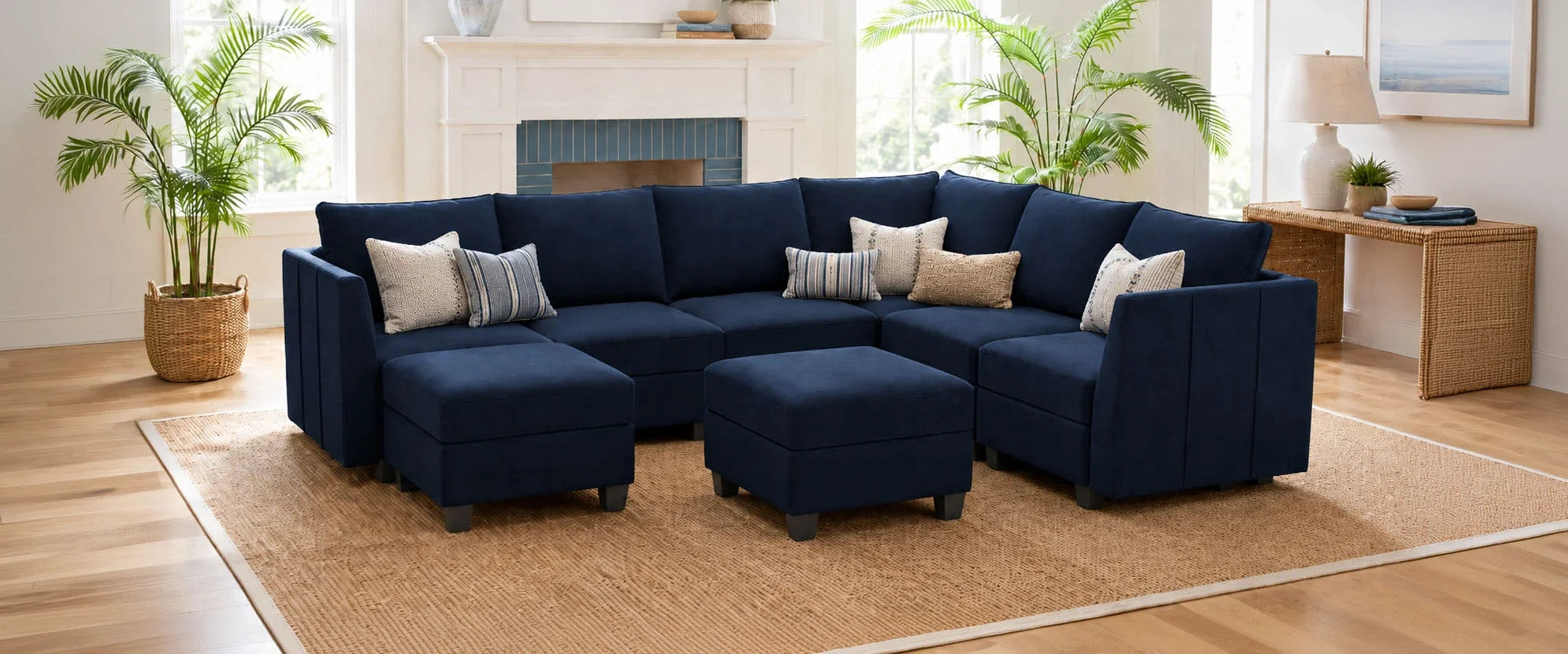
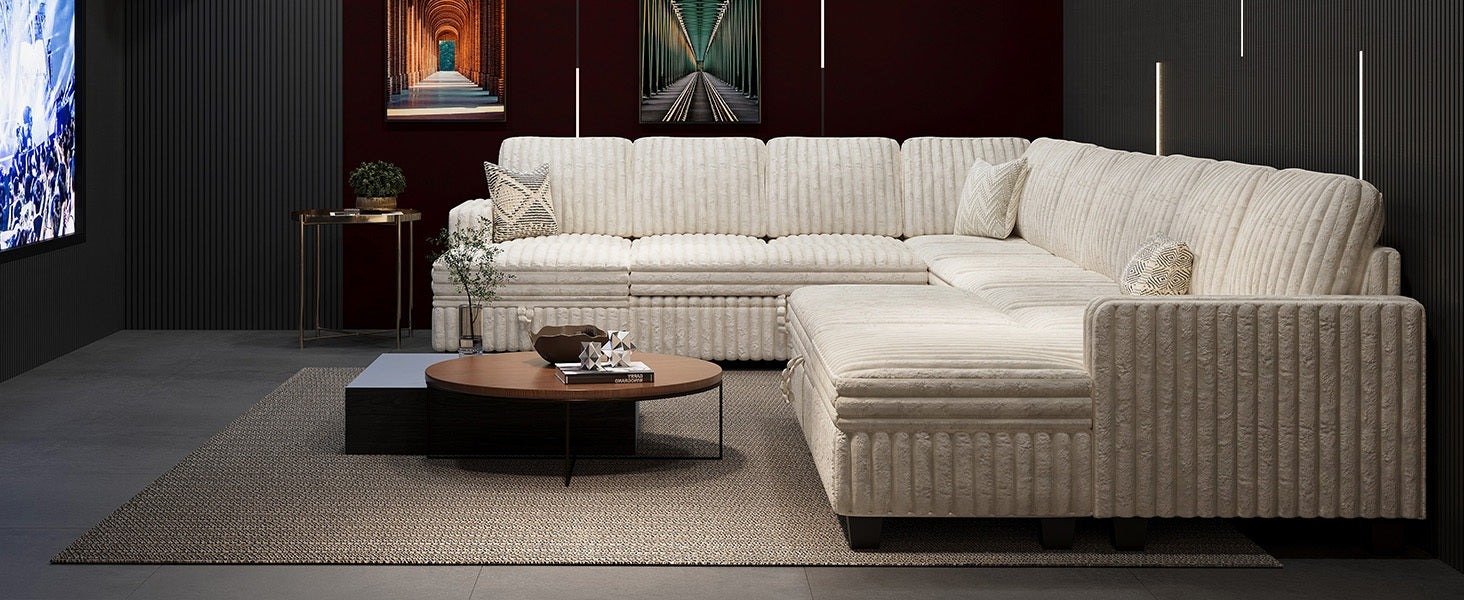
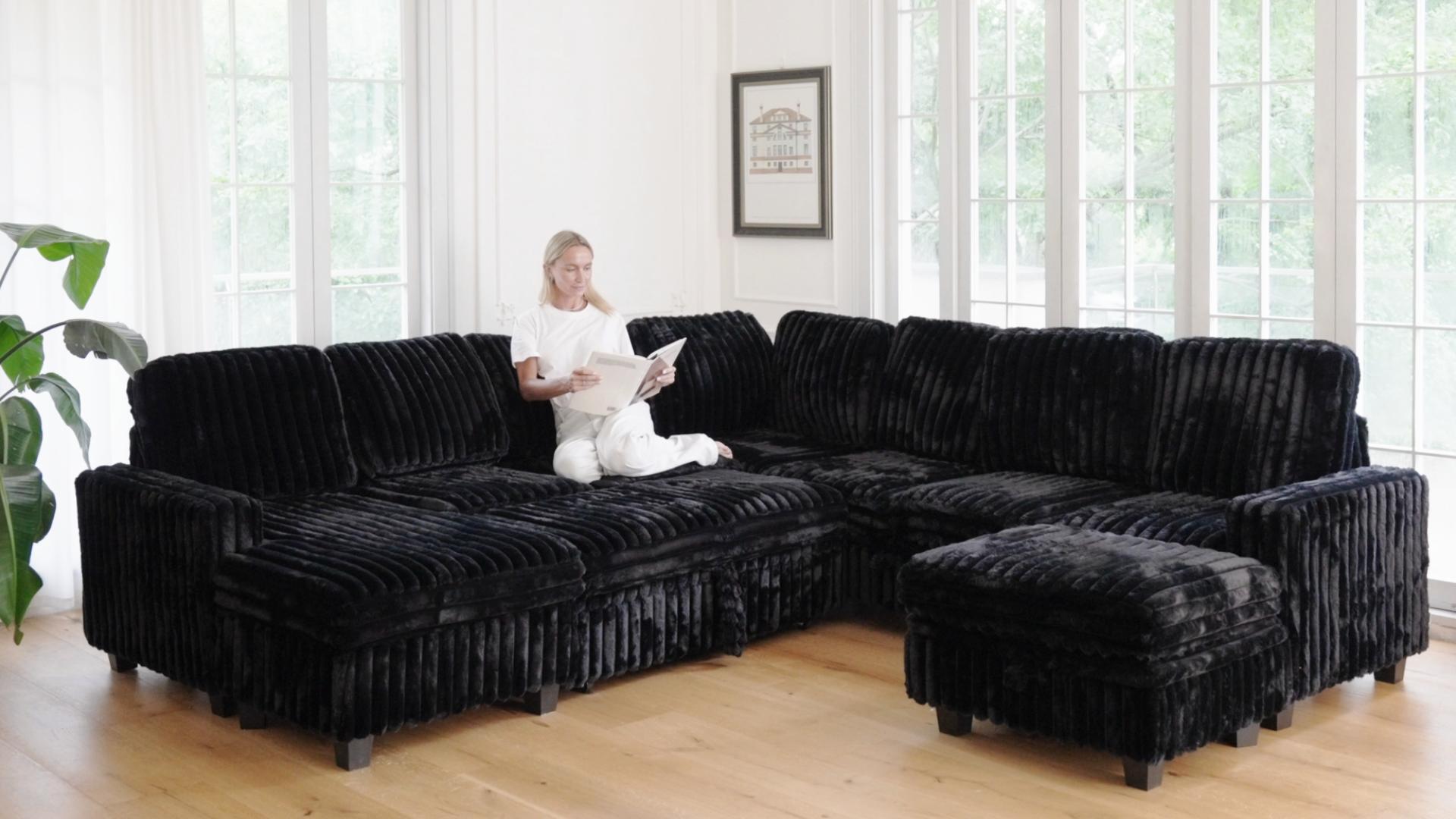
Modern lifestyles bring about constantly shifting demands for home furnishings, leading an increasing number of consumers to seek furniture that offers flexible adaptability. Consequently, modular sofas and sectional sofas have emerged to meet this need—a trend that has rapidly gained popularity within the U.S. home furnishings market. If you are currently in the market for a new sofa but find yourself torn between a modular unit and a sectional, don't worry. This article provides a detailed breakdown of the differences between the two, helping you choose the option best suited to your home. A sectional sofa is a spacious, comfortable sofa system that can be configured into "L" or "U" shapes—making it an ideal centerpiece for a living room used for family gatherings or entertaining guests. A modular sofa, on the other hand, functions much like a jigsaw puzzle; it allows you to rearrange individual seating units freely—adding or removing pieces—to create a custom layout. While both styles emphasize layout flexibility, they differ fundamentally in their design logic and practical application. Read on to discover which option—the sectional or the modular sofa—is the perfect fit for your living room. The Difference Between Sectional and Modular Sofas Feature Modular Sofa Sectional Sofa Structure Individual modules that can be rearranged Fixed sections Shape Can be any shape or size Typically, "L" or "U" shape Flexibility High flexibility Limited flexibility Spatial Adaptation Perfectly suited for small apartments, irregularly shaped spaces, or renters Suitable for medium-to-large living rooms with a regular layout Ease of Transport Individually packaged—making moving or navigating narrow doorways incredibly easy. The modules are relatively large; elevator limitations may restrict delivery to the unit Future Expandability New modules can be purchased at any time, allowing for unlimited expansion. It is difficult to add intermediate sections independently. The Advantages of Modular Sofas 1. Ultimate Flexibility Everyday Mode: Easily arrange the modular sections into an L-shape to create a cozy circle where the whole family can gather to watch TV.Social Mode: Separate the modules to form several independent single seats or small sofas, facilitating face-to-face conversation during gatherings with friends.Deep Relaxation Mode: Slot the ottoman into the gap of the L-shaped configuration to instantly transform the unit into a massive "modular sleeper sofa," offering an immersive, home-theater-like experience. 2. Perfect Spatial Adaptability Scale to Fit: Based on the actual width of your living room, you can precisely select the exact number of modules—whether three, four, or more—to fit the space perfectly.Taming "Awkward Corners": For uniquely shaped living rooms featuring structural columns or angled walls, modular sofas offer the flexibility to navigate around obstacles—or even be configured to precisely trace the contours of the walls. 3. "Stress-Free" Moving and Assembly Modular Packaging: Each module is typically packaged individually in a manageable size, allowing it to easily pass through narrow doorways, small elevators, or winding staircases.Single-Person Assembly: Most modular sofas feature tool-free assembly or simple interlocking mechanisms, allowing a single person to complete a "living room upgrade" in under thirty minutes. 4. Hidden Functional and Storage Benefits Many modern modular sofas (such as those from the Belffin brand) are designed to make full use of the space within their base:Integrated Storage: Beneath each seat cushion, a spacious hidden compartment is often concealed—perfect for stowing away off-season blankets, throw pillows, or general living room clutter, effectively serving a dual function as both a sofa and a storage cabinet. Advantages of Sectional Sofas 1. Enhanced Cohesion and Visual Flow Design Unity: Unlike sofas pieced together from disparate blocks, a sectional sofa features armrests, backrests, and bases with more coherent and fluid lines. In a spacious living room, a sectional sofa can instantly anchor the space, becoming the room's focal point.Visual Simplicity: Compared to modular sofas—which can sometimes appear "blocky" due to numerous seams—sectional sofas feature fewer gaps, resulting in a cleaner, more sophisticated aesthetic. 2. Ultimate Comfort and Support Seamless Seating Experience: The seat cushions on a sectional sofa are typically longer and wider than the individual cushions found on modular sofas. When you lie down across the sofa, your body rests upon a large, continuous surface of support, free from the sensation of tiny gaps or unevenness between separate modules.Structural Stability: The integrated frame structure ensures that the sofa remains firmly in place, even after years of use. Whether you sit down with force or children tumble across it, the various sections of the sofa remain tightly locked together, preventing any shifting or sliding between modules. 3. Deep Relaxation via the "Chaise Longue." Leg Support: Sectional sofas typically feature an integrated chaise longue section. This elongated design conforms to the body's natural reclining posture, making it ideal for napping, reading, or extended TV viewing—offering a luxurious, "half-bed, half-chair" experience of pure leisure.Corner Space Utilization: A sectional sofa fits perfectly into room corners, transforming an otherwise underutilized 90-degree angle into a cozy, enveloping seating area that fosters a greater sense of closeness among family members. Sectional or Modular Sofa? When you are ready to add a new sofa to your living room, you might find yourself torn between purchasing a modular sofa or a sectional. In reality, both options have their own distinct characteristics, each influencing the room's visual aesthetic and functionality. Below, we will analyze various factors to help you determine which type of sofa is the right fit for you. 1. Will your living room change? Pick Modular: If you're renting, or like to rearrange your living room every six months (e.g., by the window in summer, around the fireplace in winter), the modular sofa's "building block" nature allows you to easily disassemble an L-shape into a straight line, or move extra modules to the bedroom. Pick Sectional: If you've already moved into your own home, and your living room's TV wall and layout are fixed, you only need a solid, visually appealing focal point. The overall aesthetic and fewer seams of a modular sofa will satisfy you more. 2. What are your moving conditions like? Pick Modular: If your apartment building has a narrow elevator, narrow hallways, or you live on the second floor of an older building with winding stairs, a modular sofa can be packed into multiple small boxes, easily carried in by an adult. Pick Sectional: If you have a large, single-level apartment on the ground floor, or a very large freight elevator, a modular sofa is usually divided into 2-3 large sections. As long as the moving route is clear, assembly is faster than with modular sofas. 3. What are your requirements for your "lying flat" posture? Pick Modular: Suitable for the "all-rounder." When you want to lie down, push the ottoman over to create a large bed; when you want to sit upright and work, push it out. This flexibility means you can customize your own "depth." Pick Sectional: Suitable for those who prefer "deep relaxation." The integrated chaise lounge has no gaps, and the leg support is more continuous. If you're used to sinking into the sofa to watch movies on long journeys, the modular design usually provides a more enveloping feel. 4. Are you considering adding seats later? Pick Modular: If your current budget is limited, or if your family may grow in the future (e.g., planning to get a pet or welcome a new baby), you can buy a 3-seater first, and then buy 1-2 modules to expand later if needed. Pick Sectional: If you're looking for value for money... Given the same dimensions and upholstery materials, the manufacturing cost of a sectional sofa is typically 15% to 20% lower than that of a fully finished modular sofa. If you are certain that your current seating capacity is sufficient, a sectional sofa offers better value. Find the Perfect Sofa for Your Home Choosing between the ultimate cocoon-like embrace of a sectional sofa and the boundless freedom of a modular one is, at its core, a choice about how you relate to your living space. If you seek a living room ambiance that is grounded, grand, and effortlessly complete right from the start, a sectional sofa with sleek, flowing lines will serve as a timeless visual anchor in your home. Conversely, if you are currently navigating a period of growth or transition in life—whether facing a move, welcoming new family members, or simply enjoying the process of rearranging your decor—a modular sofa is the agile companion that can "evolve" right alongside you. Ultimately, the best sofa is one that accommodates not only your body but also your life. Before placing your order, take a moment to close your eyes and imagine: on a future Friday movie night, in what posture would you most love to sink into that soft embrace? By paying attention to these details, you are sure to create a home that is both comfortable and stylish—a place where beautiful memories are made.
Learn moreSay Goodbye to Back Pain: How to Choose a Perfect Couch?
Back pain is more than just physical discomfort; it creeps silently into your life, making it impossible to concentrate on a good book and even dreading your relaxing time after getting off work. Many people believe back pain can only be solved by changing their mattress or seeing a doctor, but the truth is: the sofa you spend hours sitting on every day is often the root of the problem. A suitable sofa is crucial; it's not just a piece of decorative furniture in the living room, but more importantly, it provides comfort for your back. A good sofa can not only maintain your posture but also be a savior for your back pain. This guide, Belffin Sofa, will show you how to choose the "perfect sofa" that protects your spine without sacrificing your home's aesthetics. Why is Your Old Sofa Hurting You? If your sofa makes you feel increasingly tired the longer you sit on it, it's usually because it's making one of these two mistakes:* Too soft (the "sinking" effect): While this type of sofa may feel like a cloud at first, it lacks support. Your pelvis tilts backward, forcing your spine into a "C" shape, increasing pressure on your intervertebral discs.* Too deep: If your back doesn't reach the backrest or your feet don't touch the ground, your core muscles will be constantly tense. Relieve Back Pain: 5 Key Criteria for Choosing a Sofa 1. Lumbar Support This is the most important indicator. A high-quality lumbar support sofa should have a clearly defined lower back support design. Tip: If there's a gap between your lower back and the backrest when sitting on the sofa, you'll need a lumbar support pillow. 2. Seat Cushion Depth and Height The ideal proportions allow for even weight distribution: Depth: When you sit upright and lean back, there should be about 2-3 fingers' width between the edge of the seat cushion and the back of your knees. Height: Your feet should be flat on the ground, with your knees at a 90° angle. 3. Filling Density Avoid all-down filling. While luxurious, it will sag over time. Recommendation: Choose high-density foam or individually pocketed springs. They offer better resilience and provide continuous feedback to your body. 4. Backrest Angle and Firmness A backrest that is too upright (90°) will cause stiffness, while one that is too reclined will cause the neck to tilt forward. Look for a design with a recline angle between 105° and 110° to minimize load on the spine. 5. Armrest Considerations The optimal height for armrests is one where your elbows can rest naturally when you are sitting upright, with your upper arms and forearms forming approximately a 90° angle. Too high: This will force you to shrug your shoulders, causing tension in the trapezius muscles, leading to headaches and neck stiffness. Too low: You will unconsciously lean to one side to find support, resulting in scoliosis and uneven stress on the lower back. Which Types of Sofas Best Suit Your Comfort Needs? 1. Modular Couch: Tailor-made Key Features: Some modular couches have backrests that extend above the shoulder blades and even support the head; the lower back has pronounced curved padding. Comfort Points: This type of sofa provides all-around longitudinal support. It prevents your neck from being unsupported, making it ideal for people with sensitive spines or cervical spondylosis. Suitable for: People who like to sit upright while reading, or taller individuals whose necks are not adequately supported by ordinary sofas. 2. Ergonomic Recliner Sofa Key Features: The backrest and footrest can be independently adjusted, usually with electric controls. Comfort Points: It allows for a "zero-gravity" sitting posture. By raising the legs and fine-tuning the backrest angle (usually between 120° and 135°), it minimizes pressure on the lumbar discs. Suitable for: People suffering from chronic back pain, or those who need to completely relax after getting off work. 3. Firm & Tufted Sofa Key Features: High-density foam cushions, possibly with tufted details, firm feel, strong resilience. Comfort Points: Provides stable pelvic support. You won't sink into the sofa, and getting up is very easy without excessive strain on your lower back. Suitable for: Elderly people with weak core muscles, or those who experience back pain when sitting on soft sofas. 4. Moderately Deep Sectional Sofa Key Features: Offers ample side-lying space, but with a reasonable seat depth (approximately 50-60cm). Comfort Points: The sectional sofa balances social sitting and comfortable lying positions. When lying on your side, the spine remains relatively neutral, unlike the twisting sensation on a soft single seat. Suitable for: Families who frequently snuggle on the sofa with their loved ones to watch movies, seeking a balance between ambiance and functionality. Final Thoughts For those with back problems or pain, choosing a suitable sofa is choosing a comfortable companion. The most suitable sofa should not only provide stable support, but also have armrests, backrest height, and depth that perfectly conform to your back. Whether it's a sturdy and durable traditional sofa or a customizable modular sofa, listen to your body's comfort when making your choice. With a suitable sofa, you can truly relax at home, get rid of back pain, and enjoy comfort—a choice that not only protects your health but also enhances the overall style of your living room.
Learn more
We are Featured on