Creating a beautiful and comfortable living room involves far more than simply selecting aesthetically pleasing furniture; crucially, it requires balancing smooth traffic flow, visual equilibrium, and practical functionality. A poorly arranged living room layout can severely compromise the overall experience of the space. Regrettably, not even the most expensive furniture can salvage a room that is marred by a flawed layout. In fact, you may currently be inadvertently making subtle design errors that cause your living room to appear smaller and less inviting than it actually is. Read on to discover 7 common living room design mistakes—errors you should avoid immediately—and learn how to easily adjust your layout to transform your home into a living space that is both cozy and spacious.
Pushing The Furniture Against The Walls
When you place every piece of furniture flush against the walls, you aren't actually saving space—instead, you are creating a cold, uninviting void in the center of the room. This common layout blunder instantly strips your living room of its warm, welcoming atmosphere. From a practical standpoint, this arrangement forces people to sit too far apart, hindering the opportunity for natural, intimate conversation. From a design perspective, it actually accentuates the room's boundaries, making an already small space feel even more cramped, while causing a spacious room to feel disjointed and lacking in cohesion.
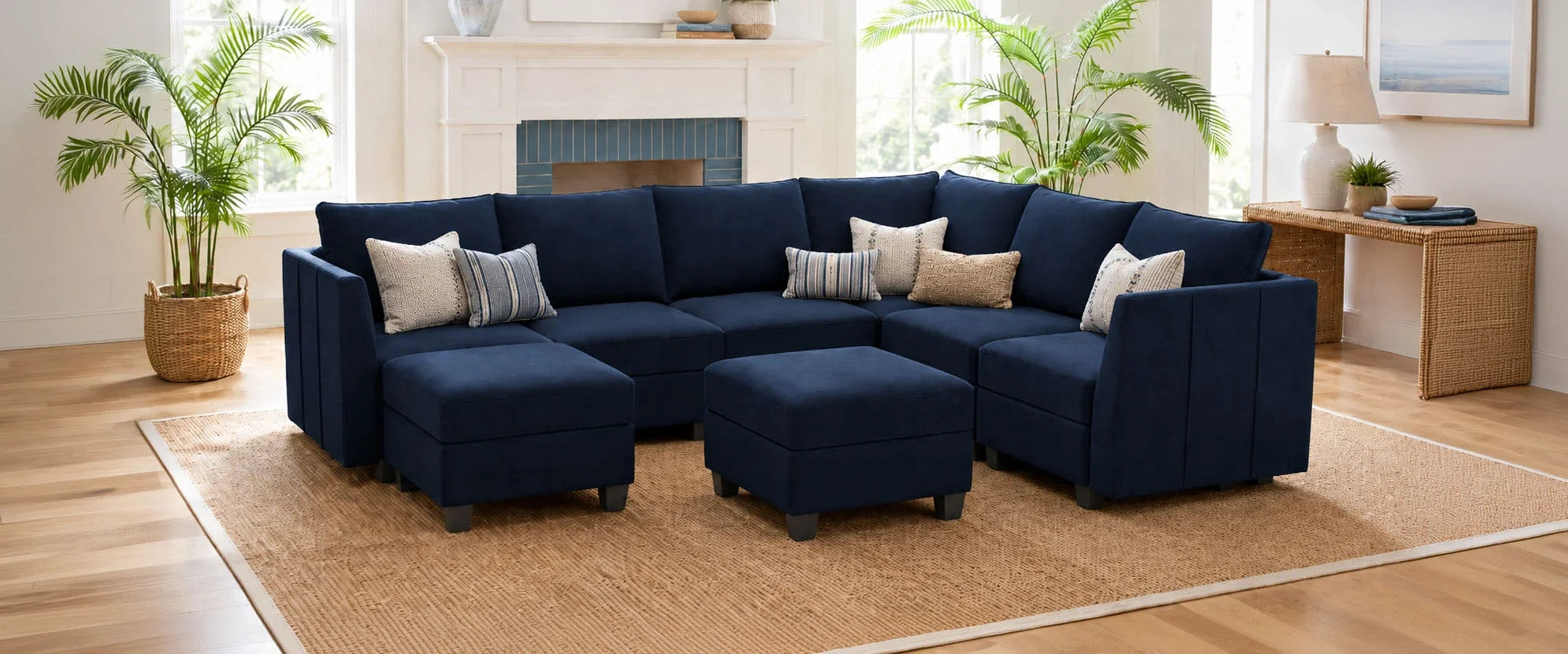
Instead, let your furniture "float." Pulling your furniture arrangement away from the walls—even by just a few inches—instantly infuses the space with a sense of "breathability," lending your home that high-end, thoughtfully curated aesthetic.
Pro Tip: Use a properly sized area rug to define this newly created "floating" zone. Ensure that the front legs of all your primary seating pieces rest firmly on the rug; this visually anchors the entire conversation area, tying it together to create a unified, harmonious whole. Referring to this article on Living Room Layout Ideas can also help you avoid many detours.
Placing The Sofa In The Flow Of Traffic
The sofa is the most important piece of furniture in the living room, yet it is also the most challenging to position. When you place a large modular couch or sectional couch directly in the path of everyday foot traffic, you completely disrupt the natural flow of movement throughout the entire living space.
Exceptional sofa layouts always prioritize "fluid circulation." The placement of the sofa should guide people around the central conversation zone, rather than cutting directly through it and splitting the space in two. If your living room features an open-plan layout, consider using the back of the sofa—or the individual modules of a sectional couch—as a stylish room divider to define the boundaries of the living area. However, be sure to position the "opening" of this zone to face the room's entrance; this creates a welcoming gesture that invites guests in, rather than an insular, closed-off feeling that keeps people at a distance.
Pro Tip: Stand at the main entrance of your living room and close your eyes. Then, open your eyes and attempt to walk directly toward the exit on the opposite side of the room. If, during this journey, you find yourself having to take a significant detour or slow down considerably to navigate around the sofa, it is a clear sign that your living room layout is in urgent need of adjustment. A smooth, unobstructed path of circulation is the key to cultivating a serene and sophisticated home atmosphere.

Opting For Oversized Furniture
In a spacious, open showroom, it is all too easy to fall in love with a massive, deep-seated modular sectional sofa. However, if you are working with a small living room layout, you may suddenly discover that it completely overwhelms your space—not only appearing visually unappealing but also obstructing the room's natural flow of movement.
A successful living room layout hinges entirely on the appropriateness of the furniture's scale and proportions, as well as furniture arrangement tips. Ideally, a living room should feel spacious and comfortable, allowing guests to enter and exit with ease without creating congestion. If you are captivated by the cozy comfort of a deep-seated sofa but your living room is of standard dimensions, look for designs featuring slender armrests (specifically right-angle styles) rather than bulky, heavy rolled arms. Furthermore, opting for a sofa with a low backrest and exposed legs allows light to pass underneath; this visually lightens the furniture's mass, making it appear airier and more open.
Pro Tip: If you have your heart set on a modular sectional sofa and simply can't do without one, consider looking for modular collections that offer customization options or flexible configuration features. Brands like Belffin, for instance, offer modular units that can be separated and reconfigured. Should you find that a specific layout makes your current living space feel too cramped or oppressive, you can easily rearrange the setup, scale down the configuration, or even separate the modular sectional sofa into independent units for placement elsewhere.
Putting The Sofa Too Close To The TV
If you position your sofa too close to the television, what was once a cozy and inviting living room can instantly transform into the worst seat in a movie theater—specifically, that dreaded "front row" that everyone tries to avoid. Furthermore, from an interior design perspective, this layout blunder can completely disrupt the room's overall sense of balance.
Finding the perfect balance between your sofa and TV is actually a simple science. The key factor depends entirely on the size of the screen. To ensure the ultimate viewing comfort, the distance between the viewer's eyes and the screen should ideally fall within a range of 1.5 to 2.5 times the screen's diagonal measurement. If your room layout is restrictive and space is at a premium, consider opting for a modular sectional sofa or lightweight lounge chairs that can be easily shifted backward; alternatively, mount your TV on an adjustable cantilever bracket so that—when guests visit, and you wish to focus on conversation—you can simply fold the screen back flush against the wall.
Pro Tip: If your room is small—meaning your modular sectional sofa must be positioned closer to the TV than the recommended formula suggests—avoid purchasing an excessively large screen. Instead, opt for a slightly smaller display with higher resolution, or cleverly integrate the TV into your interior decor to prevent it from visually dominating the space and appearing as though it is swallowing up the entire seating area.

Using Skimpy Rugs
A rug serves as the visual anchor of a living room layout, visually tying all the furniture together to create a unified and harmonious zone. If you choose a rug that is too small—leaving the entire room feeling sparse—it will completely disrupt the space's visual balance.
When selecting a living room rug, bigger is often better. The function of a rug is to define the boundaries of the conversation area, rather than merely serving as a small mat tucked beneath the coffee table.
Pro Tip: If you have already purchased a beautiful rug only to discover, to your dismay, that it is too small, don't rush to discard it! Instead, try the "layering" technique. You can purchase a larger, affordable, and neutrally colored rug to serve as a foundational base layer, and then simply center your smaller, decorative rug on top of it.
Choosing The Wrong Size Coffee Table
The coffee table occupies the absolute center of the living room layout, presenting a prime opportunity to define the space's unique style. Conversely, an ill-chosen table can become a major misstep in the design, completely undermining the room's overall aesthetic appeal.
To find a coffee table that both blends seamlessly into its surroundings and stands out as a distinctive design element, you must carefully coordinate its dimensions and height with the adjacent sofa. The coffee table should fill the space just right—neither looking too sparse nor overpowering the surrounding furniture.
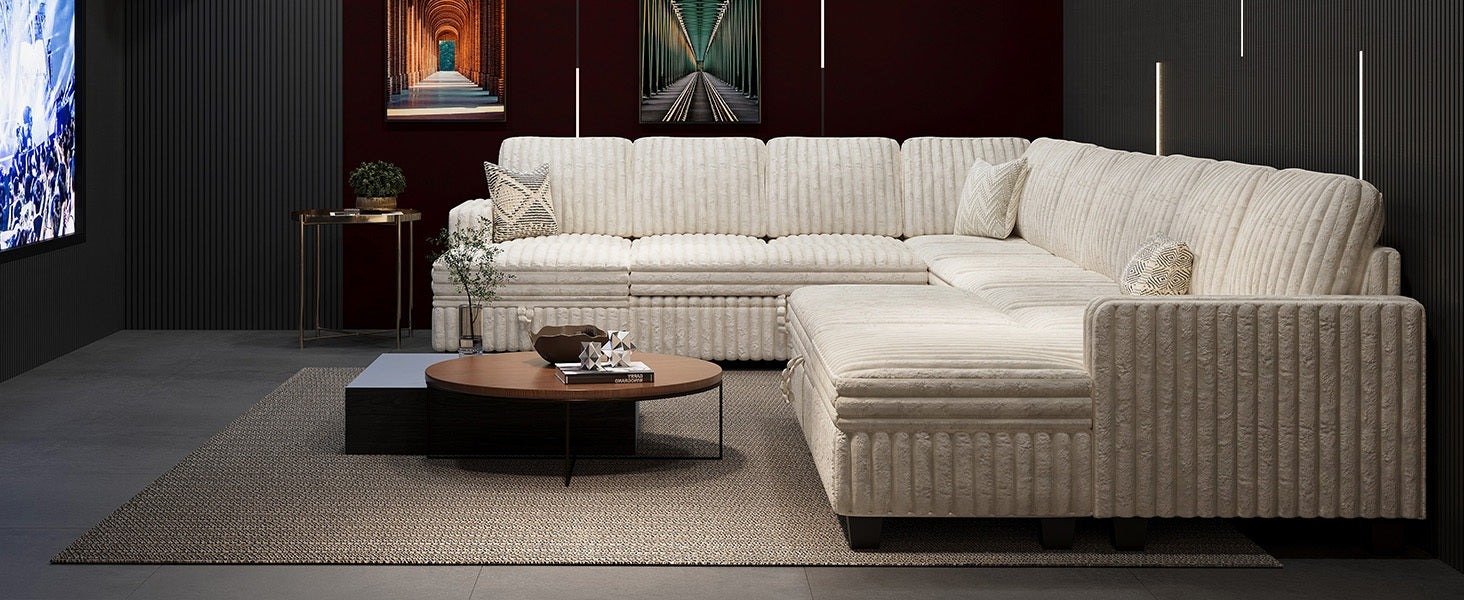
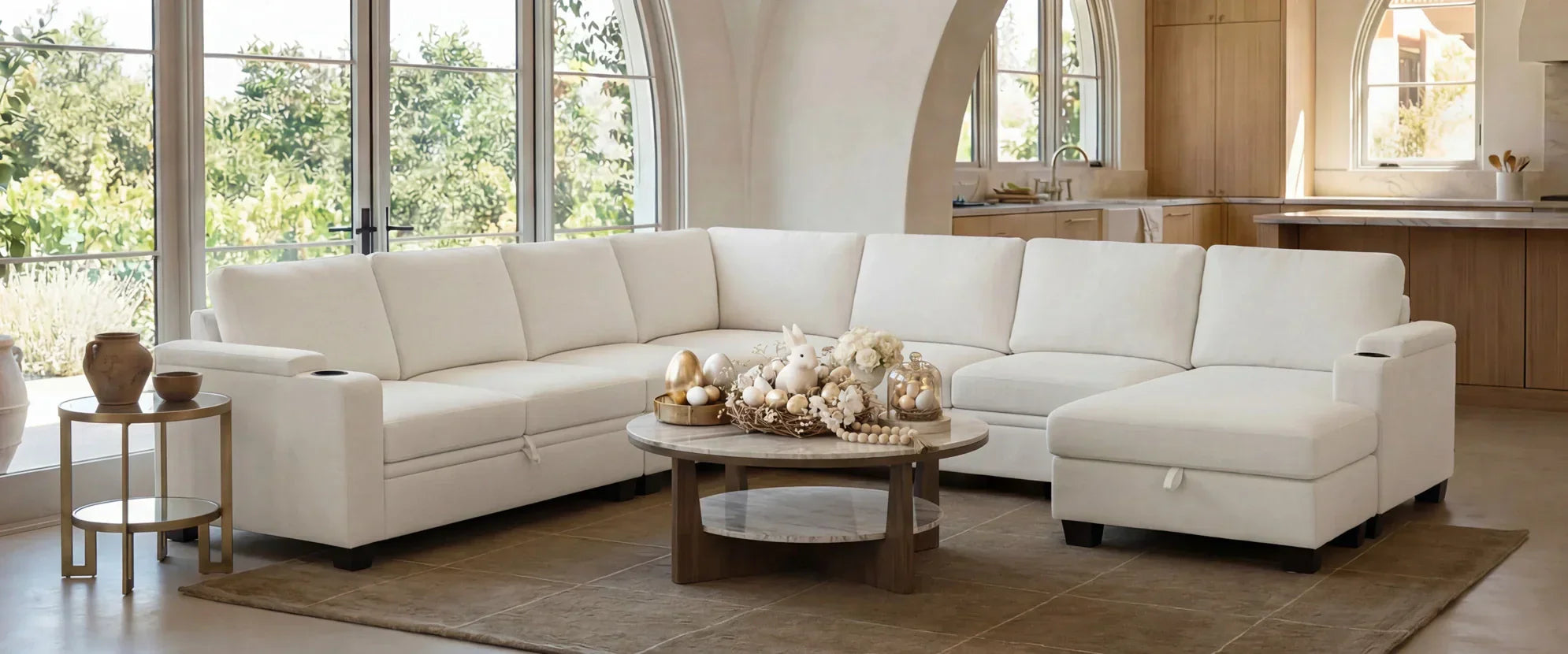
Pro Tip: If you own a large L-shaped sectional sofa, a traditional rectangular coffee table can often obstruct the flow of foot traffic. In such cases, consider opting for a round coffee table or a configuration involving square ottomans. Their soft, rounded contours create a delightful visual contrast against the sharp angles of the sectional sofa, while also allowing for easier, smoother access to the corner seats.

Getting The Scale Wrong
Proportion is the single most important element in any room—and this extends far beyond mere square footage. It is also the most subtle pitfall in layout design: the tendency to mix and match furniture pieces that are completely at odds in terms of visual weight and height.
Achieving a perfect sense of scale does not mean ensuring that every object matches down to the last millimeter; rather, it lies in balancing the "visual weight" of your furniture and maintaining a coherent, unified visual horizon throughout the entire layout.
Pro Tip: Try standing at the main entrance of your living room and taking a black-and-white photograph of the space. By eliminating the distraction of color, you can gain an incredibly intuitive perspective on the "silhouettes" of your furniture and how their heights are distributed. If the lines of the room rise and fall dramatically in a jagged, "zigzag" pattern—or if one side of the photograph appears dark and heavy while the other looks empty and airy—then it is time to rearrange your elements to balance the visual weight of the composition.
Layout is the Secret to Home Comfort
Transforming your living room doesn't require a massive budget or a professional interior designer. More often than not, it simply requires a bit of strategic editing. By avoiding these 7 common layout blunders—pulling your furniture away from the walls, clearing your traffic paths, and investing in a rug that actually fits—you can instantly unlock the true potential, comfort, and beauty of your home.
If you find that your current rigid furniture makes it impossible to avoid these mistakes, it might be time to rethink your seating. Investing in a highly flexible, customizable modular sofa (like the adaptable configurations from Belffin) allows you to effortlessly resize, rearrange, and scale your layout as your life and space evolve.
Which of these layout mistakes are you going to fix first this weekend? Let us know in the comments below!