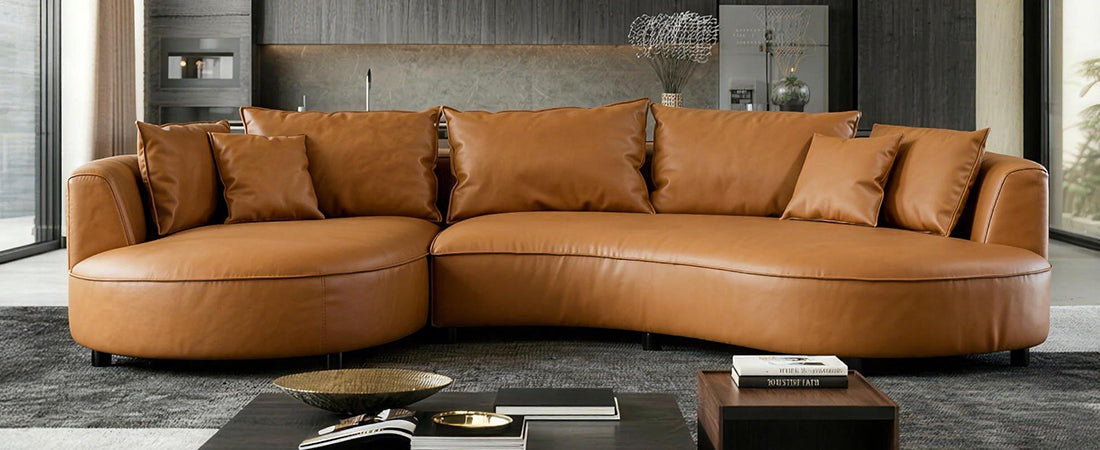
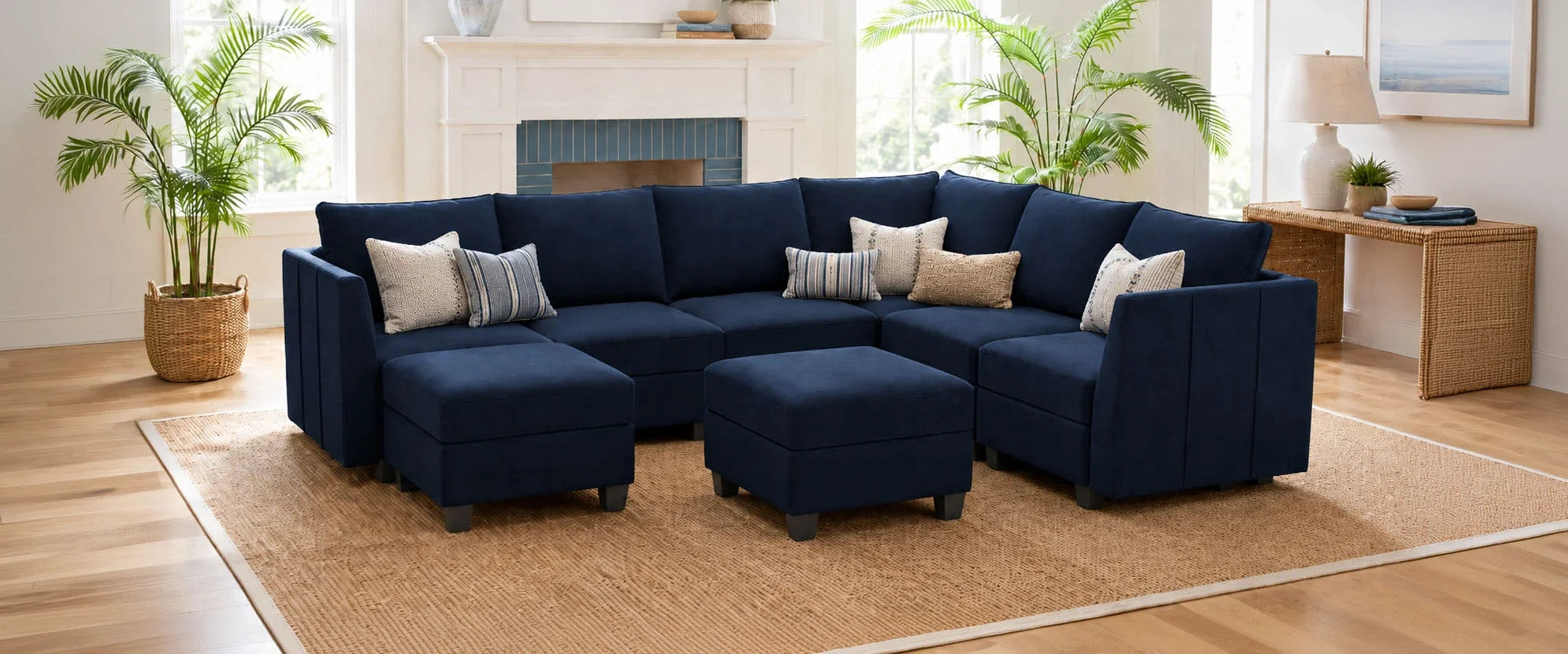
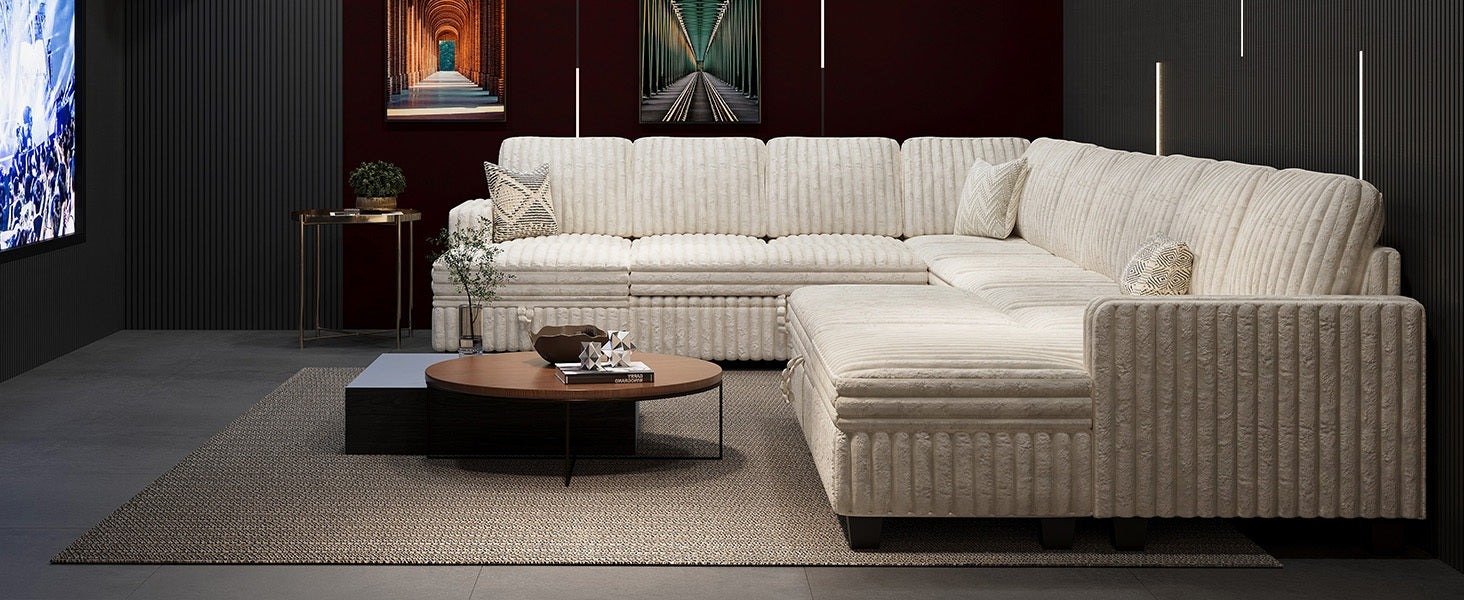
A high-quality leather sofa is not just a piece of furniture; it's a long-term investment. A genuine leather sectional sofa will grow with you. It will withstand your messes, provide comfort, and endure occasional accidents. Over time, the leather will develop a unique patina, but only if it is properly cleaned and conditioned. If you want your leather sofa to remain soft and supple after ten years, then this in-depth leather sectional sofa care guide is for you.
Why are Cleaning and Conditioning Both Essential?
Many people think cleaning a leather sofa means "wiping off the dust," but that's only the first step. Cleaning: Removes sweat, oils, and dust, preventing these particles from wearing down the leather fibers. Conditioning: Leather is essentially animal skin. It loses its natural oils as environmental humidity changes. Without regular conditioning, the leather will harden, crack, and even peel. Longevity: Regular care keeps the leather supple, extending its lifespan by 3-4 times compared to a fabric modular sectional sofa.
Step-by-step Guide on How to Clean a Leather Couch
Step 1: Daily Dusting (Once a week) Don't underestimate dust. Dust particles are very sharp at the microscopic level, and prolonged friction can damage the protective coating of the leather. Tools: Soft microfiber cloth or vacuum cleaner (with a soft brush attachment). Key point: Clean deep into the crevices and folds, where dust tends to accumulate.
Step 2: Deep Cleaning (Once a quarter) When the leather looks a little dull, it's time for a gentle cleaning. Product selection: Be sure to use a pH-balanced, specialized leather cleaner. Forbidden: Do not use dish soap, alcohol, ammonia-based cleaners, or wet wipes; they will strip the leather of its natural oils, causing irreversible damage. Technique: Spray the cleaner onto the cloth, not directly onto the sofa, and gently wipe in a circular motion.
Step 3: Deep Conditioning (Every 6-12 months) This is a crucial step in maintaining the "soul" of your sofa. Apply conditioner: Use a high-quality leather conditioning lotion and apply it evenly. Absorption and polishing: Let it sit for 1-2 hours to allow the leather to fully absorb the nutrients, then polish with a clean, dry cloth.
How to Remove Stains From Leather Couches
The core principle for dealing with stains on genuine leather sectional couches is: the sooner the better, and absolutely avoid vigorous rubbing. Genuine leather has a microporous structure, and the longer a stain remains, the deeper it penetrates.
Grease Stains
The trickiest thing about grease stains is that they penetrate the leather fibers. Never wipe with water, as oil is insoluble in water, and water may actually spread the stain.
1. Immediate Absorption: If the oil stain is fresh, immediately gently press a clean paper towel onto the stain to absorb excess oil from the surface. 2. Use Powder (Key Technique): Sprinkle a thick layer of talcum powder, cornstarch, or baking soda onto the stain. These powders have strong absorbent properties. 3. Let it Sit: Let the powder sit on the couch for 4-6 hours (preferably overnight). You will notice the powder changing color, indicating that the oil has been absorbed. 4. Clean and Repeat: Gently brush off the powder with a soft brush. If the stain remains, repeat the above steps. 5. Subsequent Care: After the oil stain is removed, since the powder will remove moisture from the leather, it is recommended to apply a small amount of leather conditioner to the area.
Ink
Ink is a highly penetrating dye and must be handled with extreme caution to avoid damaging the leather coating.
1. If the ink is dry: Professional eraser: Try using a specialized "leather ink remover stick," which is the safest option. Non-alcoholic oil-based solvent: For some finished leathers, you can use a cotton swab dipped in a small amount of leather cleaner and gently roll it along the stain.
2. If the ink is wet: Immediately blot it dry with a paper towel; never rub back and forth, as this will spread the stain and make it much larger. Magic eraser/nano sponge: Although effective, it is essentially a physical abrasive and will remove the protective coating on the leather surface. Use only light dabbing motions; do not rub vigorously. Medical alcohol: Using medical alcohol to remove ink stains should be a last resort, as it may cause the leather to fade! It is only suitable for heavily coated leather. Dip a cotton swab in a very small amount, test it on an inconspicuous area to ensure it doesn't cause discoloration, then quickly dab it onto the ink stain and immediately wipe it clean with a damp cloth.
3 Secrets to Extending the Lifespan of Your Leather Sofa
Besides cleaning, the daily environment also determines the lifespan of your sofa: Avoid heat sources: Do not place your sofa near radiators or fireplaces. High temperatures accelerate oil evaporation, leading to leather cracking. Avoid direct sunlight: Strong ultraviolet rays are the main culprit behind leather fading. If your living room receives a lot of sunlight, it's recommended to draw thin curtains during midday. Choose the right cleaning agent: Before using a new product extensively, be sure to test it on an inconspicuous area, such as the back or bottom of the sofa.
Caring for your Leather Sectional Sofa
It doesn't require daily effort, just a little patience every few months. When you sink into that still soft and luxurious sofa, you'll find that all the effort is worthwhile.
If you’ve ever walked into your living room only to find new claw marks on your sectional sofa armrest, or a layer of pet hair that your vacuum can't pick up, you know how frustrating it is. Protecting your sofa from cats and dogs doesn't mean covering it with ugly, mismatched blankets. In this guide, we break down 5 practical, budget-friendly ways to pet-proof your couch from scratches, stains, and hair—without ruining the look of your living room.
To pet-proof your sectional sofa effectively, it helps to understand why your pets target it in the first place. Knowing how to stop cats from scratching your sofa starts with recognizing their instincts to stretch, mark territory, and shed claw sheaths. Dogs, on the other hand, often scratch or dig into cushions out of nesting instincts, bringing in dirt, mud, and endless shedding along the way. Knowing these triggers allows you to combine physical protection with behavioral fixes, ensuring your sectional couch stays safe for the long run.
Use a Heavyweight Throw Blanket as a Pet-Proof Couch Protector
Throwing a basic heavyweight throw blanket over your modular couch over your seating is one of the easiest ways to catch hair, dirt, and light scratches. However, flimsy blankets tend to slide off the second a dog jumps up or a cat starts digging.
To make this method actually work:
Choose tight-weave materials: Opt for thick cotton, velvet, or fleece. Avoid loose-knit or open-weave blankets, as pet claws can easily snag the threads.
Secure the edges: Tuck the blanket deeply into the gaps between the seat cushions and the modular couch frame. You can also use non-slip couch cushion anchors or foam grip strips underneath to keep it from shifting.
Focus on high-impact zones: If you don't want to cover the whole modular couch, fold the throw selectively over the armrests or seat cushions where your pet loves to nap.
Invest in a Pet-Friendly Couch with Washable Covers
If you're shopping for a new couch—or looking to upgrade—make sure to opt for a pet-friendly modular sofa with washable covers and fully removable zippered cushions. Spot cleaning can only do so much when you're figuring out how to get dog smell out of your couch or dealing with deep-set pet odors, muddy paw prints, and accidental spills.
Having washable covers means you can toss the fabric straight into the washing machine whenever it needs a refresh, rather than renting an upholstery cleaner or paying for professional servicing.
What to look for when buying:
Full-length zipper design: The zipper runs the entire length of the cushion, making it much easier and less strenuous to remove or replace the cover.
Pre-shrunk fabrics: Look for covers made from pre-shrunk cotton blends or performance polyester so they don't shrink in the wash and fit poorly afterward.
Modular construction: Modular sofas with individual cushion covers are much easier to wash one piece at a time compared to large, one-piece dog-proof couch covers.
Place Dedicated Sisal Scratchers Directly Next to Your Sofa
Cats don't scratch furniture out of spite—they do it to stretch their muscles, mark their territory, and shed their claw sheaths. If you just buy a scratcher and put it in a distant corner, your cat will keep using your couch.
To redirect their scratching habit effectively:
Place it at the target zone: Put a sturdy sisal scratching post for cats or scratching board right next to the modular sofa armrest your cat frequently targets.
Match their scratching style: Pay attention to how your cat scratches. If they stretch upward on the modular sofa, buy a tall vertical post or wall mount. If they scratch horizontally on the carpet, opt for a flat cardboard or sisal mat.
Combine with physical guards: If your cat has a deep-seated habit, apply clear anti-scratch tape to your modular couch or plastic couch guards for cats on the armrest corners while training them to use the post.
Use positive encouragement: Rub a bit of dried catnip on the new scratcher or spray it with catnip oil. When you see your cat using the scratcher instead of the couch, reward them with a treat immediately.
Skip Single-Use Paper Rollers for Reusable Hair Removal Tools
Standard sticky paper rollers work fine for a quick touch-up before guests arrive, but using them on an entire sectional sofa gets expensive and creates a lot of trash. Plus, adhesive sheets often fail when you need to figure out how to get dog hair out of couch cushions when it's deeply woven into the fabric.
For daily hair removal, reusable tools offer far better traction and save money in the long run:
Pet hair rubber squeegees or detailing brushes: Dragging a pet hair rubber squeegee or rubber blade across woven upholstery pulls up stubborn, embedded fur that vacuums leave behind.
Self-cleaning electrostatic lint rollers: These use electrostatic friction as a lint roller for dog hair to catch fur into a back chamber as you roll back and forth, requiring no sticky refills.
Switch to a Scratch-Resistant Performance Fabric Sofa
If you're replacing your sectional couch or ordering custom slipcovers, asking what the best fabric for cats that scratch or dogs that shed is makes the biggest long-term difference. Traditional woven fabrics like linen or tweed have visible loops that act like magnets for cat claws and trap dog hair deep within the threads.
A performance fabric pet-friendly sectional sofa is engineered specifically to withstand daily pet wear and tear:
Performance Velvet & Microfiber: Wondering if microfiber holds up to cat claws? Yes! Fabrics like performance velvet vs. leather for cats perform exceptionally well because they have a flat, loop-less pile. Because there are no loose threads for claws to catch onto, cats usually lose interest in scratching them.
Stain-Resistant & Stain-Repellent Technology: Top-tier stain-resistant fabric for sofas is treated at the fiber level to repel liquids. Spills, drool, or muddy paw prints form beads on the surface, allowing you to wipe them away with a damp cloth and mild soap.
Check the Martindale rating: Look for a scratch-resistant couch for cats with fabric rated for 30,000+ double rubs (Martindale test). A higher rating means the fabric resists heavy friction, claw marks, and pilling over years of use.
Final Thoughts: Finding the Right Balance
Protecting your sectional sofa doesn't mean hiding it under layers of ugly blankets or constantly worrying every time your pet jumps up. By combining daily physical protection—like using a sturdy scratching post or a cat-proof couch protector—with durable, pet-friendly fabrics, you can enjoy a stylish living room without compromising your pet's comfort.
If you’re currently looking for a couch that can handle daily claws, fur, and spills, check out our collection of Belffin Pet-Friendly Performance Sofas. Designed with scratch-resistant weaves and easy-zip removable covers, they make living with pets completely stress-free.
Looking to Pet-Proof Your Bedroom, Too?
The living room isn't the only space taking a beating from daily claws, shedding, and muddy paws—our pets love jumping onto the bed just as much as the couch. If you're upgrading your home to be completely pet-friendly, explore our dedicated sleep line at BelffinSleep. From upholstered bed frames made with scratch-resistant fabrics to built-in storage models that keep extra blankets and lint rollers within arm's reach, we help you create a cozy, hair-free bedroom both you and your pets will love.
FAQs
What is the best couch fabric if you have cats that scratch?
Performance velvet and microfiber are the best choices for cat owners searching for the best fabric for cats that scratch. These fabrics have a smooth, flat pile with no exposed loops, making it difficult for cat claws to snag or get traction. Avoid loose-weave fabrics like linen, tweed, or chenille, as well as genuine leather, which shows claw puncture marks easily.
Can you fix cat scratches on a fabric sofa?
If you're wondering how to fix cat scratches on a fabric couch, start by carefully trimming away loose threads using a fabric shaver or small scissors rather than pulling them. For velvet or microfiber, rubbing a damp microfiber cloth in gentle circles can often smooth down minor surface scuffs. However, if the base threads are torn, replacing the individual cushion cover is the cleanest long-term fix.
How do you get embedded dog hair and odor out of couch cushions?
If you need to know how to get dog hair out of couch cushions and how to get dog smell out of your couch, start by dragging a rubber squeegee or damp rubber glove across the fabric to group embedded fur into easy-to-grab clumps before vacuuming. To remove dog odors without washing, sprinkle a thin layer of baking soda over dry cushions, let it sit for 15–20 minutes to absorb moisture and smell, then vacuum it up thoroughly.
Do sofa covers really protect couches from pets, or are they a waste of money?
High-quality, form-fitting dog-proof couch covers or heavy-density throw blankets definitely protect against claws, mud, and everyday wear. However, loose or thin sheets often slide off and fail to prevent claw punctures. For maximum protection, look for covers made from heavy cotton canvas, microfiber, or waterproof materials, and use non-slip couch cushion anchors to keep them tucked tightly in place.
When the spooky season weather turns chilly, there’s nothing better than sinking into a plush, cloud modular sectional. Belffin sectional sofas are crafted with high-density foam cushions and skin-friendly, easy-to-clean fabric options that withstand everyday life—making them the ultimate pet-friendly couch for party spills, energetic kids, and furry family members. Whether you need a massive U-shaped sectional sofa for the best sectional for movie night gatherings or an L-shaped cozy corner for couple lounge sessions, you can build your customizable sectional couch today while enjoying our steep Halloween sofa deals.
Exclusive Halloween Savings: October 16 – October 31 Only!
Mark your calendars for our fall furniture sales! From October 16 through October 31, we’re dropping our biggest spend-and-save deals of the season across our entire store. The bigger your dream modular setup, the more you save with our October sofa promo:
Spend $999 → Get $100 OFF
Spend $1,599 → Get $200 OFF
Spend $2,599 → Get $300 OFF
Spend $3,599 → Get $400 OFF
Spend $4,599 → Get $500 OFF
🎃 Bonus Treat: Spend $999 or more, and you'll automatically receive a FREE festive Halloween throw pillow to give your living room that instant cozy holiday vibe!
👻 Looking for the Ultimate Steal? Visit Our Clearance Zone!
Score deep-discount couch deals with 20% to 30% OFF on select modular pieces in our clearance sofa sales section. Use promo code TREAT2026 at checkout before these limited-stock items vanish into thin air!
Top Spooky-Good Belffin Picks to Treat Your Living Room
Plume Pull-out Storage Sofa
Best For: Movie Night Binging & Overnight Party Guests
Are you planning to invite friends over for a horror movie marathon, or hosting friends and family for a sleepover after a Halloween party? The Plume Pull-out Storage Sofa is your ultimate living room multitasker. Featuring a seamless pull out couch mechanism, it instantly transforms from a sleek, plush sectional into a spacious pull out sofa bed for night-long lounging or unexpected guests. In addition, this sectional sofa features storage space (located beneath the chaise) that allows you to neatly store items such as spare blankets, seasonal cushions, and board games.
Key Features: Smooth pull-out sleeper conversion, spacious chaise storage, premium high-density foam cushions.
Halloween Special: Eligible for our spend and save deals—pair it with extra modules to unlock up to $500 off!
Elora Modular Sofa
Best For: Customizable Living Rooms & Large Holiday Gatherings
Tired of rigid furniture that can't flexibly adapt to your space? The Elora Modular Sofa gives you total design freedom to adapt to any occasion. Built with individual module seats, you can effortlessly rearrange Elora into a cozy L-shape for family spooky movie nights, or open it up into a spacious party setup for your Halloween bash. This sofa combines the comfort of a deep seat with a timeless design, infusing your home with high-end designer aesthetics at a highly attractive price.
Key Features: Infinite modular configurations, ultra-deep and plush seating, and stain-resistant fabrics ideal for households with pets.
Halloween Deal: Add an armless single-seat module or an ottoman to your order, and receive an automatic $200 discount on orders over $1,599, plus a free Halloween-themed throw pillow!
Huvona Pull-out Sofa
Best For: Urban Apartments, Multi-Purpose Spaces & Effortless Guest Hosting
Struggling with limited square footage while trying to host friends and family this autumn? The Huvona Pull-out Sofa is the ultimate space-saving marvel designed for modern homes. Engineered with a compact footprint, this versatile couch seamlessly transforms into a supportive pull out sofa bed in just seconds. Whether you want to transform your home office into a cozy guest room for Halloween visitors or simply enjoy a relaxing break on an autumn afternoon, Huvona meets the dual needs of everyday lounging and occasional sleeping without taking up too much space. It’s the ideal small space sleeper sofa for those who refuse to compromise on style or practicality.
Key Features: Smooth pull-out sleeper conversion mechanism, space-conscious tailored profile, high-resilience support foam, durable upholstery.
Halloween Special: Perfect for pairing with matching ottomans! Hit the $999 order threshold to instantly unlock $100 OFF plus your FREE festive Halloween throw pillow at checkout!
Marea Water-Resistant Down Modular Sofa
Best For: Spill-Proof Halloween Parties, Ultimate Down Luxury & Pet-Friendly Homes
Hosting a festive Halloween party with wine, pumpkin drinks, or kids running around? Zero stress with the Marea Modular Sofa. Upholstered in premium water resistant sofa fabric, liquid spills bead right off before they can soak in—making it a true spill proof couch where cleanup is as easy as a quick wipe. Exceptional functionality does not come at the expense of luxury: the Marea features generous down filling that offers an irresistible, cloud-like softness, enveloping you in comfort and turning every movie night into an experience as relaxing as a stay in a five-star lounge.
Key Features: Advanced water-repellent and stain-resistant fabric, luxurious "cloud-like" modular down filling, and versatile modular configurations.
Halloween Special: Building a spacious Marea sectional? Easily cross the $2,599 or $3,599 threshold to score $300 to $400 OFF + your FREE Halloween throw pillow!
Avelia Oversized Cloud Modular Sofa
Best For: Ultimate Cloud Comfort, Spacious Living Rooms & Whole-Family Lounging
If your idea of autumn perfection is sinking into a giant, ultra-plush couch that feels like a warm hug, the Avelia Oversized Cloud Modular Sofa is the star of the season. Designed as an oversized cloud couch with extra-deep seating and multi-layer cloud cushioning, Avelia provides unmatched space for the whole family (and pets!) to stretch out on the best sectional for movie night. Its grand, low-profile silhouette brings an effortless luxury vibe to any spacious living room while keeping everybody cozy all night long.
Key Features: Extra-deep oversized dimensions, cloud-like sink-in plushness, customizable sectional couch units, premium soft upholstery.
Halloween Special: Building a spacious 5-piece or 6-piece Avelia layout? Easily hit our highest-tier discounts of $400 to $500 OFF, plus your FREE Halloween throw pillow at checkout!
Ready to Upgrade Your Living Room Before These Deals Vanish?
Don’t let scary living room clutter or cramped seating haunt your holiday season! Whether you need a pull out sofa bed like the Plume or Huvona, a spill proof couch like the Marea, or an oversized cloud couch like the Avelia, now is the absolute best time to bring home your Belffin modular sofa.
Quick Reminder of Your Halloween Perks:
🎃 Spend More, Save More: Get up to $500 OFF your order automatically at checkout.
👻 Clearance Savings: Take 20%–30% OFF select items in our clearance sofa sales with code TREAT2026.
🎁 Free Gift: Claim a FREE Halloween throw pillow on all orders over $999.
⏳ Remember, these spooktacular savings and limited-edition gifts end on October 31st at midnight.
FAQs
How do Belffin Halloween discounts and promo codes work at checkout?
During our Halloween furniture sale 2026 (October 16–31), tiered discounts apply automatically at checkout based on your order subtotal: $100 off $999, $200 off $1,599, $300 off $2,599, $400 off $3,599, and $500 off $4,599+. Orders over $999 also automatically receive a FREE Halloween throw pillow. If you are purchasing items from our Clearance Zone (20%–30% off), enter discount code TREAT2026 in the promo box at checkout.
Are Belffin modular sofas easy to assemble, expand, or move?
Yes! Belffin modular sectional sofas are engineered for easy assembly with tool-free or simple connector setups. Each module is individually packaged, making it easy to maneuver through narrow hallways and doorways. You can easily expand your customizable sectional couch later by purchasing individual seats or ottoman modules as your living room needs change.
Does Belffin offer free shipping and hassle-free returns on Halloween orders?
Yes, Belffin offers free shipping on modular sofas (Free Standard Shipping) on all orders across the contiguous United States. Once shipped, your order typically arrives within 3 to 7 business days. We also offer a 30-day trial sofa home guarantee—if you're not completely satisfied with your new sectional, our support team will guide you through our simple return process.
How do I clean and care for Belffin water-resistant and fabric sectionals?
For models like the Marea Water-Resistant Sofa, liquid spills bead up on the surface and can be quickly dabbed clean with a cloth, making it an easy-to-clean fabric sectional. For general cleaning on all Belffin performance fabrics, light vacuuming or spot cleaning with mild soap and warm water works best. Most removable cushion covers can also be gently washed to keep your couch looking fresh for years to come.
There’s nothing quite like sinking into an oversized sofa after a long day—where extra-deep seats and cloud-like cushions turn your living room into the ultimate lounge destination. Whether you're hunting for a premium cloud couch alternative or a sprawling movie pit sofa for family game nights, one big question looms: Will it actually fit your space without overwhelming the room? In this guide, we break down standard oversized sectional dimensions, deep seating specs, and essential living room layout rules so you can claim maximum comfort with a perfect fit.
What Is an Oversized Sofa?
An oversized sofa—often referred to as a deep seat sectional, deep seating sofa, or extra deep sofa—is designed for maximum lounging, boasting proportions that exceed standard living room furniture. While a traditional sofa is built for upright, formal sitting, an overstuffed sectional prioritizes plush depth, expansive length, and sink-in relaxation.
To tell if a sofa truly qualifies as "oversized," pay attention to two core measurements: seat depth and overall frame length.
Dimension Metric
Standard Sofa Specs
Oversized Sofa Specs
Why It Matters for Your Space
Seat Depth (Inside)
20" - 22"
24" - 28"+
Determines how you sit—formal upright vs. legs-curled lounging.
Overall Depth (Back to Front)
32" - 36"
40" - 46"+
Controls how far the sofa extends into your floor plan walkway.
Overall Length / Width
72" - 84"
90" - 110"+ (Sectionals: 120"+)
Defines the primary wall space or central anchor footprint required.
Overall Height
32" - 36"
28" - 34" (Low-Profile)
Lower heights maintain sightlines; higher backs offer head support.
What Is a Deep Seat Sofa? Standard vs. Extra Deep Dimensions
When browsing large sectional sofas for living room spaces, many homeowners confuse a long sofa with a true oversized deep seat sofa. You might see an 8-foot-wide sofa and assume it’s oversized—only to sit down and realize the cushions feel shallow, narrow, and stiff.
So, what actually gives a sofa its "oversized" status? Is it total frame width, cushion depth, or usable seating space? The short answer: True oversized comfort is defined by Seat Depth and Cushion Proportions, not just total length.
Seat Depth (The True Benchmark): Standard sofas feature 20" to 22" seat depth. An extra-deep sectional bumps seat depth to 24" to 28"+ inches, completely changing your sitting posture so you can tuck your legs up or curl into a corner.
Cushion Width: Oversized seating provides 30" to 36"+ inches of width per seat, allowing adults, kids, and pets to lounge side-by-side without feeling squeezed.
Belffin Uteeran Cloud Modular Sofa
A prime example of modern deep seating is the Uteeran Cloud Modular Sofa. Engineered as a high-end cloud modular sofa with oversized deep seating and plush cushioning, it merges extra-deep proportions with flexible modular arrangements. This allows you to experience the sink-in luxury of a cloud couch alternative while easily adapting the sectional layout to match your exact room footprint.
Key Takeaway: If you want a sofa where you can pull your feet up on the cushions without hanging off the edge, prioritize Seat Depth (24"+) over total frame width.
Wide Seat vs. Deep Seat: Which Oversized Comfort Do You Actually Need?
When shopping for oversized seating, many people treat "wide" and "deep" as the same thing. However, Wide Seats and Deep Seats solve two completely different physical and spatial problems. Choosing the wrong one can mean sitting awkwardly with dangling feet or feeling squeezed on movie night.
Wide Seats (30" - 36"+ per seat): Focus on horizontal elbow room. Ideal for families, pets, and hosting guests sitting upright side-by-side.
Deep Seats (24" - 28"+ front-to-back): Essential sofa depth for tall people (6'0"+), snugglers, and anyone who loves tucking their legs up.
If you have a spacious living room or an open-concept floor plan, you don't have to choose. A Deep & Wide Oversized Sectional (30"+seat width x 26"seat depth or pit sectional offers the ultimate lounge luxury—allowing adults to nap comfortably side-by-side or sprawl out completely without running out of cushion space.
Belffin Thara Upgraded Cloud Sofa
If you're looking for the perfect blend of spatial freedom and cloud-like lounging, the Thara Upgraded Cloud Sofa stands out with its specially engineered oversized seats. Designed to give you extra elbow room laterally while offering generous depth, its upgraded cushion proportions make it an ideal kid-friendly oversized sectional for busy households and tall loungers alike.
How to Know for Sure Your Oversized Sofa Will Fit: Dimensions & Clearance Rules
Before ordering an overstuffed sofa, test its physical footprint using the painter’s tape trick. Outline the sofa’s exact width, total depth, and extended chaise footprint directly on your floor with low-tack tape, leaving it down for 24 hours to ensure daily traffic flow remains unblocked.
To keep your living room comfortable and functional, adhere to these sectional sofa clearance dimensions:
1. Walkway Clearance: Maintain at least 36 inches(preferably 42 inches along main paths.
2. Coffee Table Distance: Leave 14to 18 inches between seat cushions and your coffee table.
3. Delivery Path Clearance: Measure the interior width and ceiling height of front entryways, hallway turns, stairwells, and elevators to ensure a clearance of at least 32 to 34 inches.
Belffin Marea Water-Resistant Down Modular Sofa
A standout solution for mastering both scale and delivery ease is the Marea Water-Resistant Down Modular Sofa. Built with extra-large deep seating and plush down-fill cushions, it delivers supreme sink-in comfort without spatial anxiety. Featuring a water resistant down sofa design with stain-resistant protection, its modular structure ships in maneuverable boxes that easily pass through narrow doors and hallway turns.
Styling & Fabrics: Choosing a Pet-Friendly Performance Fabric for Large Sofas
An oversized sofa should feel like an inviting haven, not a giant, bulky footprint dominating your living room. The secret to making an extra deep sectional look light and sophisticated lies in choosing high-performance fabrics and mastering soft-furnishing scale.
Pet-Friendly Performance Fabric: Large surface areas mean more exposure to spills, pet hair, and claws. Opt for a pet friendly performance fabric (such as high-performance chenille, velvet, or performance weave) that offers stain resistance, easy spot cleaning, and durability against claw snags.
Visual De-Bulking Hacks: Choose low-profile silhouettes or raised legs that show floor space underneath to keep an extra-deep couch from swallowing a medium-sized room.
Belffin Vayla Oversized Cloud Modular Sofa
For those who want to elevate both everyday styling and movie-night relaxation, the Vayla Oversized Cloud Modular Sofa serves as an ideal centerpiece. Featuring an oversized chaise lounge, it offers expansive room to stretch out completely while maintaining clean, tailored lines. Its soft profile functions as a luxury stain resistant modular sofa, delivering maximum lounging comfort without making your living room feel cluttered.
Claim Your Ultimate Lounge Comfort
Upgrading to an oversized deep seat sofa is one of the best investments you can make for your home’s everyday comfort. By balancing deep seat sectional measurements with smart room clearance and performance fabrics, you can enjoy maximum lounging space without sacrificing style or flow.
Before making your final choice, keep these core rules in mind:
📐 Prioritize Seat Depth: Look for 24" to 28"+ inches of seat depth for true curling-up comfort.
📏 Honor the 3-Foot Rule: Maintain at least 36 inches of walkway space around traffic lanes.
📦 Choose Modular Versatility: Opt for modular designs to navigate tight doorways and elevators on delivery day stress-free.
Ready for Cloud-Like Comfort That Fits Perfectly?
You don't have to compromise between deep-seat luxury and easy delivery. Belffin’s Oversized Modular Sectionals feature extra-deep seating, pet-friendly performance fabrics, and flexible modular configurations that adapt seamlessly to any living room layout—shipping straight to your door in maneuverable boxes.
FAQs
What defines an oversized sofa versus a standard sofa?
An oversized sofa is primarily defined by its seat depth 24" to 28"+ inches and generous seat cushion width 30"+ inches per person), whereas a standard sofa features a shallower seat depth of 20" to 22" inches. Oversized sofas (such as a cloud modular sofa or deep seat sectional) are engineered for sink-in lounging, curling up, and sleeping.
How much room clearance do you need around an oversized sectional?
According to standard sectional sofa clearance dimensions, you should maintain a minimum walkway clearance of 36 inches (preferably 42 inches) around main traffic lanes and entryways. Additionally, leave 14 to 18 inches between the sofa edge and your coffee table for comfortable leg movement.
How do I ensure an oversized sofa will fit through my doorway?
Measure the interior width and ceiling height of all front doors, hallways, stairwells, and elevators before ordering. Most extra-deep sofas require a minimum doorway clearance of 32 to 34 inches. If your entryways are tight, opt for a modular oversized sectional (like Belffin sectionals), which ship in individual maneuverable boxes that easily pass through standard interior doors.
Will an oversized sofa fit in a small living room?
Yes, small rooms can accommodate an oversized sofa if you choose a low-profile frame (28" to 32" inches height), light-colored pet friendly performance fabric, and exposed legs that show floor space underneath. Pushing a low-profile deep seat sofa flush against the main wall creates a cozy, high-end focal point without overwhelming your living room layout.