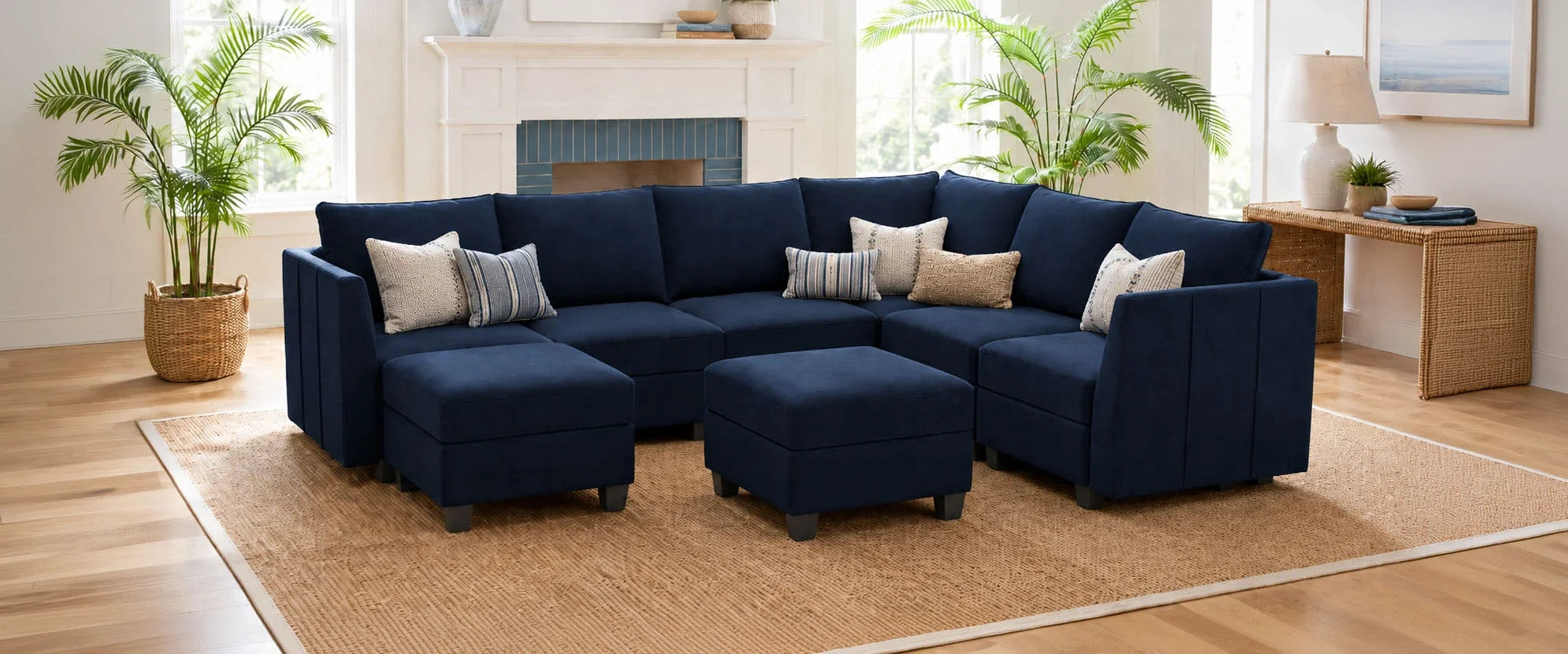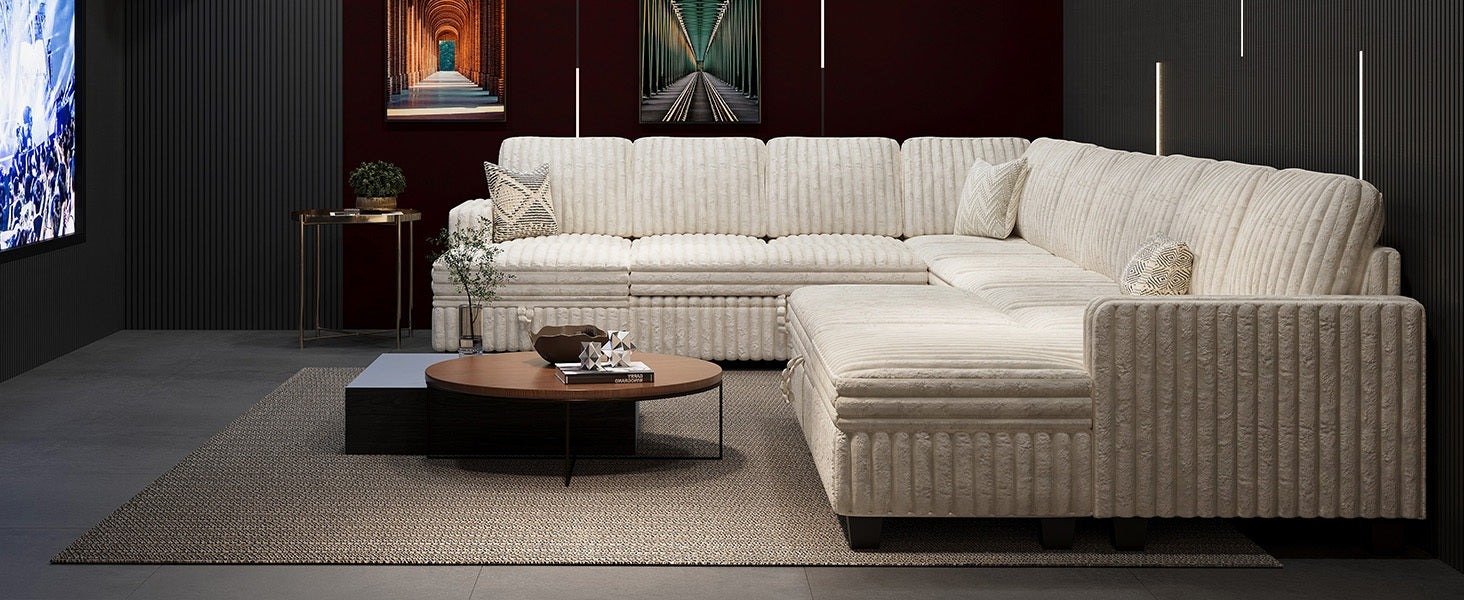
The year may be halfway through, but the savings are just getting started.
Best Deal Sofas
Sectional Sofa
Modular Sofa
Soforia Modular Sleeper Sofa
Thara Upgraded Cloud Sofa
Plume Pull-out Storage Sofa
Huvona Pull-out Sofa


The year may be halfway through, but the savings are just getting started.
Sectional Sofa
Modular Sofa
Soforia Modular Sleeper Sofa
Thara Upgraded Cloud Sofa
Plume Pull-out Storage Sofa
Huvona Pull-out Sofa

When the spooky season weather turns chilly, there’s nothing better than sinking into a plush, cloud modular sectional. Belffin sectional sofa are crafted with high-density foam cushions and skin-friendly, easy-to-clean fabric options that withstand everyday life—making them the ultimate pet-friendly couch for party spills, energetic kids, and furry family members. Whether you need a massive U-shaped sectional sofa for the best sectional for movie night gatherings or an L-shaped cozy corner for couple lounge sessions, you can build your customizable sectional couch today while enjoying our steep Halloween sofa deals. Exclusive Halloween Savings: October 16 – October 31 Only! Mark your calendars for our fall furniture sales! From October 16 through October 31, we’re dropping our biggest spend and save deals of the season across our entire store. The bigger your dream modular setup, the more you save with our October sofa promo: Spend $999 → Get $100 OFF Spend $1,599 → Get $200 OFF Spend $2,599 → Get $300 OFF Spend $3,599 → Get $400 OFF Spend $4,599 → Get $500 OFF 🎃 Bonus Treat: Spend $999 or more, and you'll automatically receive a FREE festive Halloween throw pillow to give your living room that instant cozy holiday vibe! 👻 Looking for the Ultimate Steal? Visit Our Clearance Zone! Score deep discount couch deals with 20% to 30% OFF on select modular pieces in our clearance sofa sales section. Use promo code TREAT2026 at checkout before these limited-stock items vanish into thin air! Top Spooky-Good Belffin Picks to Treat Your Living Room Plume Pull-out Storage Sofa Best For: Movie Night Binging & Overnight Party Guests Are you planning to invite friends over for a horror movie marathon, or hosting friends and family for a sleepover after a Halloween party? The Plume Pull-out Storage Sofa is your ultimate living room multitasker. Featuring a seamless pull out couch mechanism, it instantly transforms from a sleek, plush sectional into a spacious pull out sofa bed for night-long lounging or unexpected guests. In addition, this sectional sofa features storage space (located beneath the chaise) that allows you to neatly store items such as spare blankets, seasonal cushions, and board games. Key Features: Smooth pull-out sleeper conversion, spacious chaise storage, premium high-density foam cushions. Halloween Special: Eligible for our spend and save deals—pair it with extra modules to unlock up to $500 off! Elora Modular Sofa Best For: Customizable Living Rooms & Large Holiday Gatherings Tired of rigid furniture that can't flexibly adapt to your space? The Elora Modular Sofa gives you total design freedom to adapt to any occasion. Built with individual module seats, you can effortlessly rearrange Elora into a cozy L-shape for family spooky movie nights, or open it up into a spacious party setup for your Halloween bash. This sofa combines the comfort of a deep seat with a timeless design, infusing your home with high-end designer aesthetics at a highly attractive price. Key Features: Infinite modular configurations, ultra-deep and plush seating, and stain-resistant fabrics ideal for households with pets. Halloween Deal: Add an armless single-seat module or an ottoman to your order, and receive an automatic $200 discount on orders over $1,599, plus a free Halloween-themed throw pillow! Huvona Pull-out Sofa Best For: Urban Apartments, Multi-Purpose Spaces & Effortless Guest Hosting Struggling with limited square footage while trying to host friends and family this autumn? The Huvona Pull-out Sofa is the ultimate space-saving marvel designed for modern homes. Engineered with a compact footprint, this versatile couch seamlessly transforms into a supportive pull out sofa bed in just seconds. Whether you want to transform your home office into a cozy guest room for Halloween visitors or simply enjoy a relaxing break on an autumn afternoon, Huvona meets the dual needs of everyday lounging and occasional sleeping without taking up too much space. It’s the ideal small space sleeper sofa for those who refuse to compromise on style or practicality. Key Features: Smooth pull-out sleeper conversion mechanism, space-conscious tailored profile, high-resilience support foam, durable upholstery. Halloween Special: Perfect for pairing with matching ottomans! Hit the $999 order threshold to instantly unlock $100 OFF plus your FREE festive Halloween throw pillow at checkout! Marea Water-Resistant Down Modular Sofa Best For: Spill-Proof Halloween Parties, Ultimate Down Luxury & Pet-Friendly Homes Hosting a festive Halloween party with wine, pumpkin drinks, or kids running around? Zero stress with the Marea Modular Sofa. Upholstered in premium water resistant sofa fabric, liquid spills bead right off before they can soak in—making it a true spill proof couch where cleanup is as easy as a quick wipe. Exceptional functionality does not come at the expense of luxury: the Marea features generous down filling that offers an irresistible, cloud-like softness, enveloping you in comfort and turning every movie night into an experience as relaxing as a stay in a five-star lounge. Key Features: Advanced water-repellent and stain-resistant fabric, luxurious "cloud-like" modular down filling, and versatile modular configurations. Halloween Special: Building a spacious Marea sectional? Easily cross the $2,599 or $3,599 threshold to score $300 to $400 OFF + your FREE Halloween throw pillow! Avelia Oversized Cloud Modular Sofa Best For: Ultimate Cloud Comfort, Spacious Living Rooms & Whole-Family Lounging If your idea of autumn perfection is sinking into a giant, ultra-plush couch that feels like a warm hug, the Avelia Oversized Cloud Modular Sofa is the star of the season. Designed as an oversized cloud couch with extra-deep seating and multi-layer cloud cushioning, Avelia provides unmatched space for the whole family (and pets!) to stretch out on the best sectional for movie night. Its grand, low-profile silhouette brings an effortless luxury vibe to any spacious living room while keeping everybody cozy all night long. Key Features: Extra-deep oversized dimensions, cloud-like sink-in plushness, customizable sectional couch units, premium soft upholstery. Halloween Special: Building a spacious 5-piece or 6-piece Avelia layout? Easily hit our highest-tier discounts of $400 to $500 OFF, plus your FREE Halloween throw pillow at checkout! Ready to Upgrade Your Living Room Before These Deals Vanish? Don’t let scary living room clutter or cramped seating haunt your holiday season! Whether you need a pull out sofa bed like the Plume or Huvona, a spill proof couch like the Marea, or an oversized cloud couch like the Avelia, now is the absolute best time to bring home your Belffin modular sofa. Quick Reminder of Your Halloween Perks: 🎃 Spend More, Save More: Get up to $500 OFF your order automatically at checkout. 👻 Clearance Savings: Take 20%–30% OFF select items in our clearance sofa sales with code TREAT2026. 🎁 Free Gift: Claim a FREE Halloween throw pillow on all orders over $999. ⏳ Remember, these spooktacular savings and limited-edition gifts end on October 31st at midnight. FAQs How do Belffin Halloween discounts and promo codes work at checkout? During our Halloween furniture sale 2026 (October 16–31), tiered discounts apply automatically at checkout based on your order subtotal: $100 off $999, $200 off $1,599, $300 off $2,599, $400 off $3,599, and $500 off $4,599+. Orders over $999 also automatically receive a FREE Halloween throw pillow. If you are purchasing items from our Clearance Zone (20%–30% off), enter discount code TREAT2026 in the promo box at checkout. Are Belffin modular sofas easy to assemble, expand, or move? Yes! Belffin modular sectional sofas are engineered for easy assembly with tool-free or simple connector setups. Each module is individually packaged, making it easy to maneuver through narrow hallways and doorways. You can easily expand your customizable sectional couch later by purchasing individual seats or ottoman modules as your living room needs change. Does Belffin offer free shipping and hassle-free returns on Halloween orders? Yes, Belffin offers free shipping on modular sofas (Free Standard Shipping) on all orders across the contiguous United States. Once shipped, your order typically arrives within 3 to 7 business days. We also offer a 30-day trial sofa home guarantee—if you're not completely satisfied with your new sectional, our support team will guide you through our simple return process. How do I clean and care for Belffin water-resistant and fabric sectionals? For models like the Marea Water-Resistant Sofa, liquid spills bead up on the surface and can be quickly dabbed clean with a cloth, making it an easy-to-clean fabric sectional. For general cleaning on all Belffin performance fabrics, light vacuuming or spot cleaning with mild soap and warm water works best. Most removable cushion covers can also be gently washed to keep your couch looking fresh for years to come.
Learn more
There’s nothing quite like sinking into an oversized sofa after a long day—where extra-deep seats and cloud-like cushions turn your living room into the ultimate lounge destination. Whether you're hunting for a premium cloud couch alternative or a sprawling movie pit sofa for family game nights, one big question looms: Will it actually fit your space without overwhelming the room? In this guide, we break down standard oversized sectional dimensions, deep seating specs, and essential living room layout rules so you can claim maximum comfort with a perfect fit. What Is an Oversized Sofa? An oversized sofa—often referred to as a deep seat sectional, deep seating sofa, or extra deep sofa—is designed for maximum lounging, boasting proportions that exceed standard living room furniture. While a traditional sofa is built for upright, formal sitting, an overstuffed sectional prioritizes plush depth, expansive length, and sink-in relaxation. To tell if a sofa truly qualifies as "oversized," pay attention to two core measurements: seat depth and overall frame length. Dimension Metric Standard Sofa Specs Oversized Sofa Specs Why It Matters for Your Space Seat Depth (Inside) 20" - 22" 24" - 28"+ Determines how you sit—formal upright vs. legs-curled lounging. Overall Depth (Back to Front) 32" - 36" 40" - 46"+ Controls how far the sofa extends into your floor plan walkway. Overall Length / Width 72" - 84" 90" - 110"+ (Sectionals: 120"+) Defines the primary wall space or central anchor footprint required. Overall Height 32" - 36" 28" - 34" (Low-Profile) Lower heights maintain sightlines; higher backs offer head support. What Is a Deep Seat Sofa? Standard vs. Extra Deep Dimensions When browsing large sectional sofas for living room spaces, many homeowners confuse a long sofa with a true oversized deep seat sofa. You might see an 8-foot-wide sofa and assume it’s oversized—only to sit down and realize the cushions feel shallow, narrow, and stiff. So, what actually gives a sofa its "oversized" status? Is it total frame width, cushion depth, or usable seating space? The short answer: True oversized comfort is defined by Seat Depth and Cushion Proportions, not just total length. Seat Depth (The True Benchmark): Standard sofas feature 20" to 22" seat depth. An extra-deep sectional bumps seat depth to 24" to 28"+ inches, completely changing your sitting posture so you can tuck your legs up or curl into a corner. Cushion Width: Oversized seating provides 30" to 36"+ inches of width per seat, allowing adults, kids, and pets to lounge side-by-side without feeling squeezed. Belffin Uteeran Cloud Modular Sofa A prime example of modern deep seating is the Uteeran Cloud Modular Sofa. Engineered as a high-end cloud modular sofa with oversized deep seating and plush cushioning, it merges extra-deep proportions with flexible modular arrangements. This allows you to experience the sink-in luxury of a cloud couch alternative while easily adapting the sectional layout to match your exact room footprint. Key Takeaway: If you want a sofa where you can pull your feet up on the cushions without hanging off the edge, prioritize Seat Depth (24"+) over total frame width. Wide Seat vs. Deep Seat: Which Oversized Comfort Do You Actually Need? When shopping for oversized seating, many people treat "wide" and "deep" as the same thing. However, Wide Seats and Deep Seats solve two completely different physical and spatial problems. Choosing the wrong one can mean sitting awkwardly with dangling feet or feeling squeezed on movie night. Wide Seats (30" - 36"+ per seat): Focus on horizontal elbow room. Ideal for families, pets, and hosting guests sitting upright side-by-side. Deep Seats (24" - 28"+ front-to-back): Essential sofa depth for tall people (6'0"+), snugglers, and anyone who loves tucking their legs up. If you have a spacious living room or an open-concept floor plan, you don't have to choose. A Deep & Wide Oversized Sectional (30"+seat width x 26"seat depth or pit sectional offers the ultimate lounge luxury—allowing adults to nap comfortably side-by-side or sprawl out completely without running out of cushion space. Belffin Thara Upgraded Cloud Sofa If you're looking for the perfect blend of spatial freedom and cloud-like lounging, the Thara Upgraded Cloud Sofa stands out with its specially engineered oversized seats. Designed to give you extra elbow room laterally while offering generous depth, its upgraded cushion proportions make it an ideal kid-friendly oversized sectional for busy households and tall loungers alike. How to Know for Sure Your Oversized Sofa Will Fit: Dimensions & Clearance Rules Before ordering an overstuffed sofa, test its physical footprint using the painter’s tape trick. Outline the sofa’s exact width, total depth, and extended chaise footprint directly on your floor with low-tack tape, leaving it down for 24 hours to ensure daily traffic flow remains unblocked. To keep your living room comfortable and functional, adhere to these sectional sofa clearance dimensions: 1. Walkway Clearance: Maintain at least 36 inches(preferably 42 inches along main paths. 2. Coffee Table Distance: Leave 14to 18 inches between seat cushions and your coffee table. 3. Delivery Path Clearance: Measure the interior width and ceiling height of front entryways, hallway turns, stairwells, and elevators to ensure a clearance of at least 32 to 34 inches. Belffin Marea Water-Resistant Down Modular Sofa A standout solution for mastering both scale and delivery ease is the Marea Water-Resistant Down Modular Sofa. Built with extra-large deep seating and plush down-fill cushions, it delivers supreme sink-in comfort without spatial anxiety. Featuring a water resistant down sofa design with stain-resistant protection, its modular structure ships in maneuverable boxes that easily pass through narrow doors and hallway turns. Styling & Fabrics: Choosing a Pet-Friendly Performance Fabric for Large Sofas An oversized sofa should feel like an inviting haven, not a giant, bulky footprint dominating your living room. The secret to making an extra deep sectional look light and sophisticated lies in choosing high-performance fabrics and mastering soft-furnishing scale. Pet-Friendly Performance Fabric: Large surface areas mean more exposure to spills, pet hair, and claws. Opt for a pet friendly performance fabric (such as high-performance chenille, velvet, or performance weave) that offers stain resistance, easy spot cleaning, and durability against claw snags. Visual De-Bulking Hacks: Choose low-profile silhouettes or raised legs that show floor space underneath to keep an extra-deep couch from swallowing a medium-sized room. Belffin Vayla Oversized Cloud Modular Sofa For those who want to elevate both everyday styling and movie-night relaxation, the Vayla Oversized Cloud Modular Sofa serves as an ideal centerpiece. Featuring an oversized chaise lounge, it offers expansive room to stretch out completely while maintaining clean, tailored lines. Its soft profile functions as a luxury stain resistant modular sofa, delivering maximum lounging comfort without making your living room feel cluttered. Claim Your Ultimate Lounge Comfort Upgrading to an oversized deep seat sofa is one of the best investments you can make for your home’s everyday comfort. By balancing deep seat sectional measurements with smart room clearance and performance fabrics, you can enjoy maximum lounging space without sacrificing style or flow. Before making your final choice, keep these core rules in mind: 📐 Prioritize Seat Depth: Look for 24" to 28"+ inches of seat depth for true curling-up comfort. 📏 Honor the 3-Foot Rule: Maintain at least 36 inches of walkway space around traffic lanes. 📦 Choose Modular Versatility: Opt for modular designs to navigate tight doorways and elevators on delivery day stress-free. Ready for Cloud-Like Comfort That Fits Perfectly? You don't have to compromise between deep-seat luxury and easy delivery. Belffin’s Oversized Modular Sectionals feature extra-deep seating, pet-friendly performance fabrics, and flexible modular configurations that adapt seamlessly to any living room layout—shipping straight to your door in maneuverable boxes. FAQs What defines an oversized sofa versus a standard sofa? An oversized sofa is primarily defined by its seat depth 24" to 28"+ inches and generous seat cushion width 30"+ inches per person), whereas a standard sofa features a shallower seat depth of 20" to 22" inches. Oversized sofas (such as a cloud modular sofa or deep seat sectional) are engineered for sink-in lounging, curling up, and sleeping. How much room clearance do you need around an oversized sectional? According to standard sectional sofa clearance dimensions, you should maintain a minimum walkway clearance of 36 inches (preferably 42 inches) around main traffic lanes and entryways. Additionally, leave 14 to 18 inches between the sofa edge and your coffee table for comfortable leg movement. How do I ensure an oversized sofa will fit through my doorway? Measure the interior width and ceiling height of all front doors, hallways, stairwells, and elevators before ordering. Most extra-deep sofas require a minimum doorway clearance of 32 to 34 inches. If your entryways are tight, opt for a modular oversized sectional (like Belffin sectionals), which ship in individual maneuverable boxes that easily pass through standard interior doors. Will an oversized sofa fit in a small living room? Yes, small rooms can accommodate an oversized sofa if you choose a low-profile frame (28" to 32" inches height), light-colored pet friendly performance fabric, and exposed legs that show floor space underneath. Pushing a low-profile deep seat sofa flush against the main wall creates a cozy, high-end focal point without overwhelming your living room layout.
Learn more
Living in a small space often means making compromises, but your sleeping quality shouldn’t be one of them. For years, sleeper sofas have had a bad reputation—clunky mechanisms, thin mattresses, and bar-in-your-back discomfort that leaves guests aching the next morning. But what if your sofa bed was actually as comfortable as a real mattress? Whether you’re furnishing a cozy studio apartment, setting up a home office, or seeking a primary bed replacement, we’ve rounded up the best everyday sleeper sofas that maximize small spaces without sacrificing an ounce of daily comfort. What Makes a Sleeper Sofa Suitable for Daily Use? 1. Advanced Frame Support (No-Bar Sleeper Sofa Design) Traditional pull-out sofa beds are notorious for that dreaded metal bar digging into your back. Modern sleeper sofas for everyday use eliminate this issue. Look for sleeper sofas with no metal bar, such as mechanism-free platform bases, smooth pull-out trundles, or high-density module layouts that provide even, full-body support without uncomfortable steel frames. 2. Real Mattress-Level Comfort & High-Density Foam For daily sleep, thin 3-inch mattresses simply won't cut it. Opt for cushions made with high-resiliency (HR) foam or multi-layer memory foam at least 5 to 7 inches thick. A great modular sofa bed for daily sleep strikes the perfect ergonomic balance—a firm sleeper sofa for back support during the day that won't sag, yet soft and contouring enough for proper spine alignment at night. 3. Effortless Pull-Out & 10-Second Transformation When a modular sofa bed becomes your main sleeping setup, converting it shouldn't feel like a workout. Look for smooth roller-track systems, click-clack folding designs, or one-handed easy transition pull mechanisms. You should be able to effortlessly transition from couch to bed in under 30 seconds without wrestling with heavy parts. 4. Heavy-Duty, Stain-Resistant Performance Fabric Daily sitting, lounging, and sleeping put extra wear and tear on upholstery. Choose fabrics with high durability ratings—such as performance velvet, pet-friendly sleeper sofa materials, or stain-resistant performance fabric. Removable and washable covers, or fabrics that wipe clean easily, are a major plus for maintaining long-term hygiene. 5. Sleeper Sofa with Hidden Storage & Space-Saving Smart Design Small-space living thrives on multi-functionality. Top-rated apartment-size sleeper sofas often feature built-in storage chaises or under-seat compartments, allowing you to tuck away pillows, duvets, and bed linens right where you need them. Modular sleeper sofa designs also give you the flexibility to rearrange your layout as your space or lifestyle changes. 5 Best Sofa Beds for Everyday Sitting and Sleeping The following five products cater to distinct daily usage scenarios: sofas intended for extended daytime use, sofa beds that are frequently repositioned, and pull-out sofas for everyday living. Soforia Modular Sleeper Sofa — Best Overall ⭐RatingEveryday Sitting: ★★★★★ | Frequent Conversion: ★★★★★ | Regular Sleeping: ★★★★☆ Best For: Studio apartment dwellers, work-from-home & flex space owners, frequent hosters & entertainers Highlights: Removable covers & hidden storage seat Tool-free assembly & foldable armrests/backrests One-touch lounge, recline, and sleep modes High-performance velvet fabric with scratch-resistant, cat-scratch-resistant, and hair-repellent properties Why This Rating: The Soforia Modular Sleeper Sofa is a top-rated sleeper sofa for small spaces thanks to its versatile modular design and platform-style high-density foam support, which eliminates uncomfortable metal bars and provides real mattress-level comfort every night. With built-in hidden storage for bedding and durable, pet-friendly performance fabric, it seamlessly combines space-saving sofa bed practicality with long-lasting style and functionality. Buyer Review: “As a sleeper sofa you can sleep on every night, it works remarkably well for guests and daily lounging. Overall, it’s stylish, functional, and a great value for the price.” — Jtsp Thara Upgraded Cloud Sofa — Best for Style-First Living Rooms ⭐RatingEveryday Sitting: ★★★★☆ | Frequent Conversion: ★★★☆☆ | Regular Sleeping: ★★★★☆ Best For: Most comfortable sleeper sofa seekers, pet owners & busy households, movie buffs & home lounge enthusiasts Highlights: Oversized deep seating & removable covers Hidden storage seat & tool-free installation High-resilience foam sofa cushions Heavy-duty fabric tested to withstand 100,000 cycles of abrasion Why This Rating: The Thara Upgraded Cloud Sofa excels as a daily-use sleeper by combining sink-in "cloud-like" comfort with a supportive, high-resilience base that prevents deep sagging over time. This modular couch features flexible modular components—eliminating the need to endure annoying metal frame crossbars—and transforms into a spacious, comfortable sleeping area in just seconds. Wrapped in stain-resistant, pet-friendly performance fabric with built-in hidden storage, it offers a high-end lounge aesthetic during the day and firm sleeper sofa back support every single night. Buyer Review: “It's so cozy! Easy to assemble, fast shipping, and the new favorite hang-out spot for the family.” — Anonymous Plume Pull-out Storage Sofa — Perfect for Small Spaces ⭐RatingEveryday Sitting: ★★★★☆ | Frequent Conversion: ★★★★☆ | Regular Sleeping: ★★★★☆ Best For: Micro-apartment residents, home office sleeper sofa setups, minimalists & organization enthusiasts Highlights: Built-in under-seat storage compartment Removable covers & small-space sleeper sectional layout Durable and easy-to-clean faux rabbit fur corduroy fabric Sturdy solid wood frame architecture Why This Rating: The Plume Pull-out Storage Sofa delivers a smart, compact space-saving design that transforms from a cozy daytime modular couch into a supportive bed in under 10 seconds via a smooth roller-track pull-out system. Designed with a flat, high-density foam base, it bypasses uncomfortable metal support bars to deliver even, ergonomic sleeping support night after night. Featuring a spacious built-in storage chaise to keep bedding neatly tucked away, it maximizes every square inch of studio apartment furniture layouts without compromising on daily comfort. Buyer Review: “Transforming into a full couch bed for daily sleep takes zero heavy lifting. Excellent engineering.” — Joshua H. Elora Modular Sofa — Best for Frequent Conversion ⭐RatingEveryday Sitting: ★★★★☆ | Frequent Conversion: ★★★★★ | Regular Sleeping: ★★★★★ Best For: Apartment-size sleeper sofa shoppers, pet owners & active families, multi-room guest setups Highlights: 400 lb load capacity per seat module Expandable seating layout that grows with your space Spacious hidden storage built directly into every seat or ottoman Simple, tool-free links for a rock-solid configuration Why This Rating: The Elora Modular Sleeper Sofa combines ultimate layout adaptability with everyday practical comfort. Featuring individual seat modules that can be reconfigured effortlessly into an L-shape, U-shape, or a seamless bed platform, it delivers true mattress-grade support without relying on uncomfortable metal frame bars. Every seat module incorporates a generous hidden storage compartment, making it easy to store pillows and bedding right where you need them. Wrapped in high-durability, stain-resistant performance fabric with ergonomic cushioning, the Elora delivers high-end aesthetic appeal and long-lasting utility for everyday sleep and lounging. Buyer Review: “Perfect for my home office sleeper sofa/guest room combo. It looks professional but is cozy enough for a midday break.” — Freelancer_Life Huvona Pull-out Sofa — Best for Easy-Care Lounging ⭐ RatingEveryday Sitting: ★★★★☆ | Frequent Conversion: ★★★★★ | Regular Sleeping: ★★★★☆ Best For: Studio apartment residents, guest room & home office hybrids, everyday sleep seekers Highlights: Deep-Seating Design Precision-milled wood frame Under-seat space accommodates bedding storage boxes Removable, machine-washable sofa cover Why This Rating: The Huvona Pull-out Sofa for everyday living delivers an ultra-smooth transition from a polished daytime modular couch to a spacious, mattress-level bed in just seconds using an intuitive, effortless pull-out mechanism. Designed with a flat, high-density foam foundation, it eliminates uncomfortable metal frame bars for consistent, full-body support night after night. Featuring an integrated storage compartment to keep bedding organized and upholstered in durable, easy-to-clean performance fabric, the Huvona provides an ideal balance of space-saving sofa bed design, daily comfort, and refined contemporary aesthetics. Buyer Review: “The modular couch is great for the cost. Easy to put together, and the effortless pull-out system allows me to arrange it in the room to fit any combination.” — Jeffrey Conway Final Thoughts: Finding Your Perfect Everyday Sleeper Choosing a sleeper sofa for everyday use no longer means sacrificing your sleep quality or cluttering your small space. The key is prioritizing no-bar sleeper sofa platform support, high-density foam cushioning, and high-durability stain-resistant performance fabrics that stand up to daily life. For total layout flexibility & maximum storage: Go with the Belffin Elora or Soforia Modular Sleeper Sofa. For plush, sink-in luxury & deep relaxation: Choose the Thara Upgraded Cloud Sofa. For compact, ultra-fast 10-second conversion: The Plume or Huvona Pull-out Storage Sofas are your best fit. Say goodbye to restless nights and bulky furniture. Explore our full collection of the most comfortable sleeper sofas today and find the perfect blend of comfort, style, and space-saving functionality for your home! FAQs Can you actually sleep on a sleeper sofa every night? Yes, you can comfortably sleep on a sleeper sofa for everyday use every night, provided it is designed for daily sleep. Look for models with high-density foam (or memory foam) cushions at least 5 to 7 inches thick and no-bar platform support. Unlike traditional fold-out couches with painful metal support bars, contemporary daily sleeper sofas provide proper ergonomic weight distribution and long-lasting spinal alignment. How do I choose the best sleeper sofa for a small space? When choosing a sleeper sofa for small spaces, focus on three key features: Compact Mechanism: Opt for an effortless pull-out or wall-hugger design that doesn't require extra clearance to extend. Integrated Storage: Select a sleeper sofa with hidden storage chaises or under-seat compartments to store bedding out of sight. Modular Versatility: Choose an apartment size sleeper sofa with modular units that can be rearranged to fit narrow corners or tight studio apartment layouts. What is the most comfortable type of sleeper sofa for daily sleep? Platform-style pull-out sofas and modular sleeper sectionals are considered the most comfortable sleeper sofas for daily sleep. They eliminate rigid steel frames and thin spring coils, offering a flat, supportive surface with real mattress level comfort. How do you care for and maintain an everyday sleeper sofa? To extend the lifespan of an everyday sleeper sofa: Rotate and Flip Cushions: Regularly rotate seat cushions to ensure even wear and prevent localized sagging. Use Performance Fabrics: Choose pet-friendly sleeper sofa materials and stain-resistant performance fabric to spot-clean spills immediately. Protect the Surface: Use a breathable mattress protector or fitted sheet when sleeping to protect the fabric from body oils and daily friction.
Learn more