Choosing the perfect bed frame isn't merely about selecting a piece of furniture for your bedroom; it is an investment in one-third of your life—after all, quality sleep often begins with a solid foundation.
Whether you have just moved into a new home or are preparing to upgrade your current sleeping space, the dizzying array of materials, styles, and features available on the market can often leave you feeling overwhelmed. Should you opt for a storage-style frame to maximize space efficiency, or pursue the minimalist aesthetic of solid wood? Before making a purchase, it is crucial to understand the various options, dimensions, and functional roles that bed frames play.
In this guide, we will take a deep dive into the essential knowledge you need to master before buying a bed frame, helping you avoid common purchasing pitfalls and create the dream bedroom that is both beautiful and practical.
Choosing a New Bed Frame: Where to Start
Selecting a new bed frame may seem like a simple furniture-buying task, but it actually determines the quality of your sleep for thousands of nights to come. Faced with the dizzying array of materials, styles, and features available on the market, it is completely normal to feel overwhelmed and unsure where to begin. To find the bed frame that is right for you, we recommend starting with the following three core dimensions:
1. Measure Your Space: Define Your "Physical Boundaries."
Before setting your sights on any specific style, the first tool you should pick up isn't a catalog—it's a tape measure.
Allow for Walkways: You should leave at least 60–90 cm of clearance on both sides of the bed frame to ensure you don't bump your legs when getting up at night or changing the sheets.
Consider Furniture Interaction: If your bedroom also contains a wardrobe, ensure that the closet doors won't collide with the corners of the bed frame when opened.
Plan the Delivery Route: Don't forget to measure the dimensions of stairwell turns and elevator doors—this is especially critical if you are purchasing a one-piece frame or an oversized headboard.
2. Assess Your Lifestyle: Clarify Your "Core Needs."
Different people have vastly different functional requirements for a bed, and these needs should guide your selection process:
The Storage Enthusiast: If bedroom space is limited, a bed frame with built-in storage or a drawer-style base is the top choice; these options can magically conjure up the storage capacity of several large closets out of thin air.
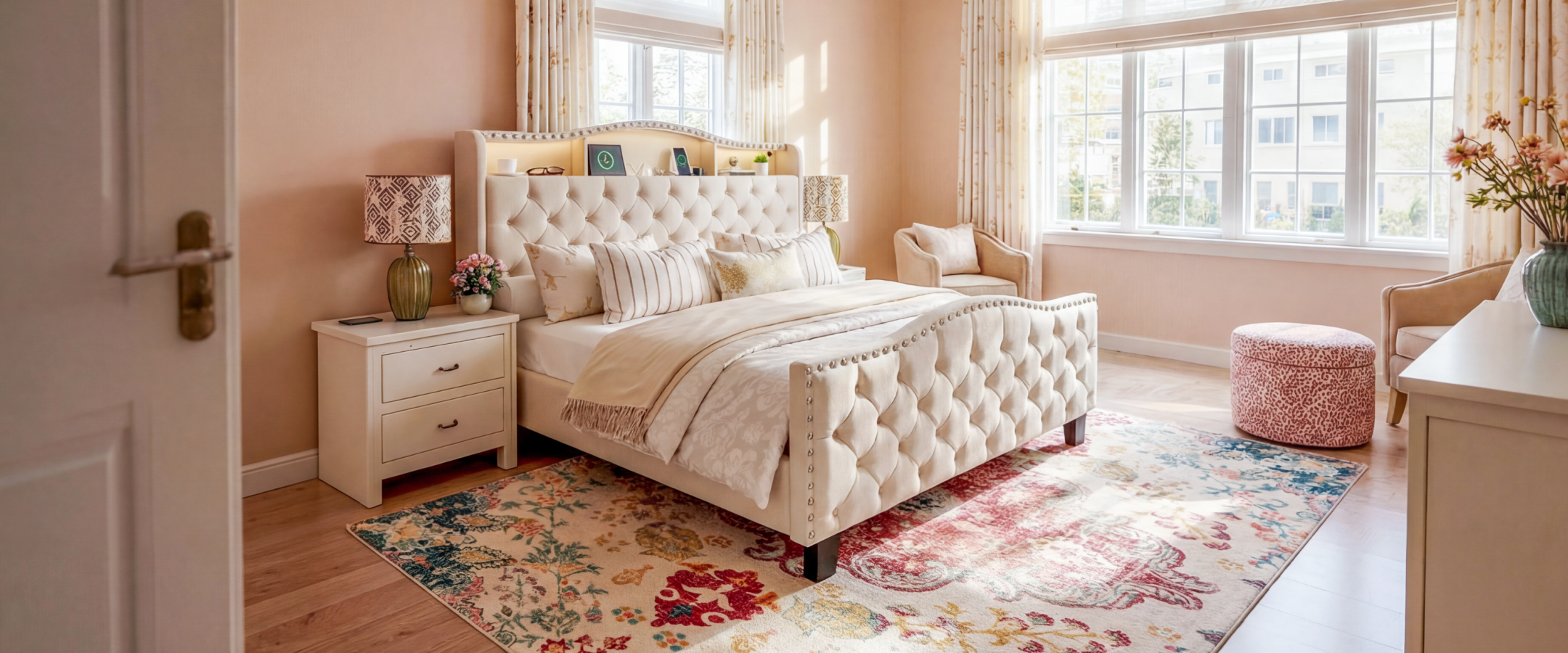
The Bedtime Reader: If you are in the habit of leaning back in bed to read or use your phone, an upholstered bed frame will offer superior support and comfort compared to frames with solid wood or metal headboards.
Pet Owners: Given the potential for scratching and cleaning challenges associated with pets, durable and low-maintenance materials—such as high-performance fabrics or metal frames—will be far less of a hassle than genuine leather.
3. Check for Stability: The Invisible "Skeleton" Matters Most
The durability of a bed frame depends largely on the construction of its slat system or base.
Slat Spacing: Check the spacing between the wooden slats. It is generally recommended that the gaps do not exceed 7 cm; otherwise, the mattress may sag or deform, thereby shortening its lifespan.
Support Legs: Large-sized bed frames (such as King Size) must feature additional support legs in the center to prevent the middle section from collapsing.
Noise Test: When making a purchase, try applying slight pressure; a high-quality bed frame should not produce any squeaking or unusual noises.

Bed Frame Size Guide: Making the Most of Your Space
Many people fall into the trap of thinking "the bigger, the more comfortable" when buying a bed, often overlooking the spatial relationship between the bed frame and the surrounding walls, wardrobes, and nightstands. An ideal bed should not only cradle your dreams but also ensure your bedroom feels spacious and uncluttered. Below is a guide to common bed frame sizes:
Twin Size Bed Frame: Approx. 99 x 191 cm. Best suited for children's rooms or extremely small apartments. If intended for use as a guest bed, we recommend choosing a model with a pull-out or extendable feature for greater versatility.
Full Size Bed Frame: Approx. 137 x 191 cm. Although often referred to as a "double bed," it may feel slightly cramped for two people; it is, however, an excellent value choice for teenagers' rooms or for individuals seeking the ultimate solo sleeping experience.
Queen Size Bed Frame: Approx. 152 x 203 cm. The most popular size globally. It strikes a perfect balance between sleeping comfort and floor footprint, making it suitable for the vast majority of master bedrooms.
King Size Bed Frame: Approx. 193 x 203 cm. If you share your bed with a partner, children, or pets that occasionally "squeeze in," this size offers a sense of spaciousness akin to a five-star hotel. However, a key prerequisite is that your bedroom must have a width of at least 3.6 meters.
Are Bed Frames Important?
A bed frame not only determines the aesthetics of your bedroom, but also your sleep structure and the lifespan of your mattress. Therefore, choosing the right bed frame is crucial.
The core functions of a bed frame:
Supporting the mattress and preventing sagging: Mattresses need even support. If the spacing between the slats of the bed frame is too large (more than 7-8cm) or if the structure is unstable, the mattress will sag due to uneven pressure, ruining expensive latex or individually pocketed spring mattresses.
Extending mattress lifespan: A good bed frame provides necessary ventilation. Mattresses accumulate moisture from the body during use. If placed directly on the floor or on a poorly ventilated bed frame, mold and dust mites can easily grow.
Silence and stability: Inferior bed frames often creak when you turn over. This is usually due to loose frame connections or an overly lightweight material, severely affecting deep sleep.

Key Considerations When Choosing a Bed Frame
Stability: Ideally, look for a frame with a "center support" (i.e., an extra support leg located in the middle of the bed); this prevents the bed slats or beams from bowing in the center.
Height: The combined height of the bed frame and mattress is ideally around 50–60 cm. A bed that is too high or too low places undue strain on the knees, a particular concern for the elderly.
Eco-friendliness: If you opt for a solid wood or engineered wood frame, pay close attention to its formaldehyde emission rating. Solid wood (such as North American black walnut or oak) is generally more durable and eco-friendly, whereas with engineered wood frames, it is crucial to inspect the quality of the edge-banding craftsmanship.
Transform Your Bedroom Today
Choosing the ideal bed frame is, at its core, about finding the perfect balance between spatial efficiency, aesthetic style, and the science of sleep. Whether you lean toward a storage bed frame to maximize space or are captivated by the warm texture and minimalist design of an upholstered bed frame, the most critical step is to identify the option that truly complements and supports your lifestyle.
Don't let creaking noises or cluttered surroundings disrupt your sweet dreams any longer. Take your measurements, clarify your needs, and find the sturdiest companion for your beloved mattress today. A simple change can ensure that every morning begins with a renewed sense of comfort and tranquility.