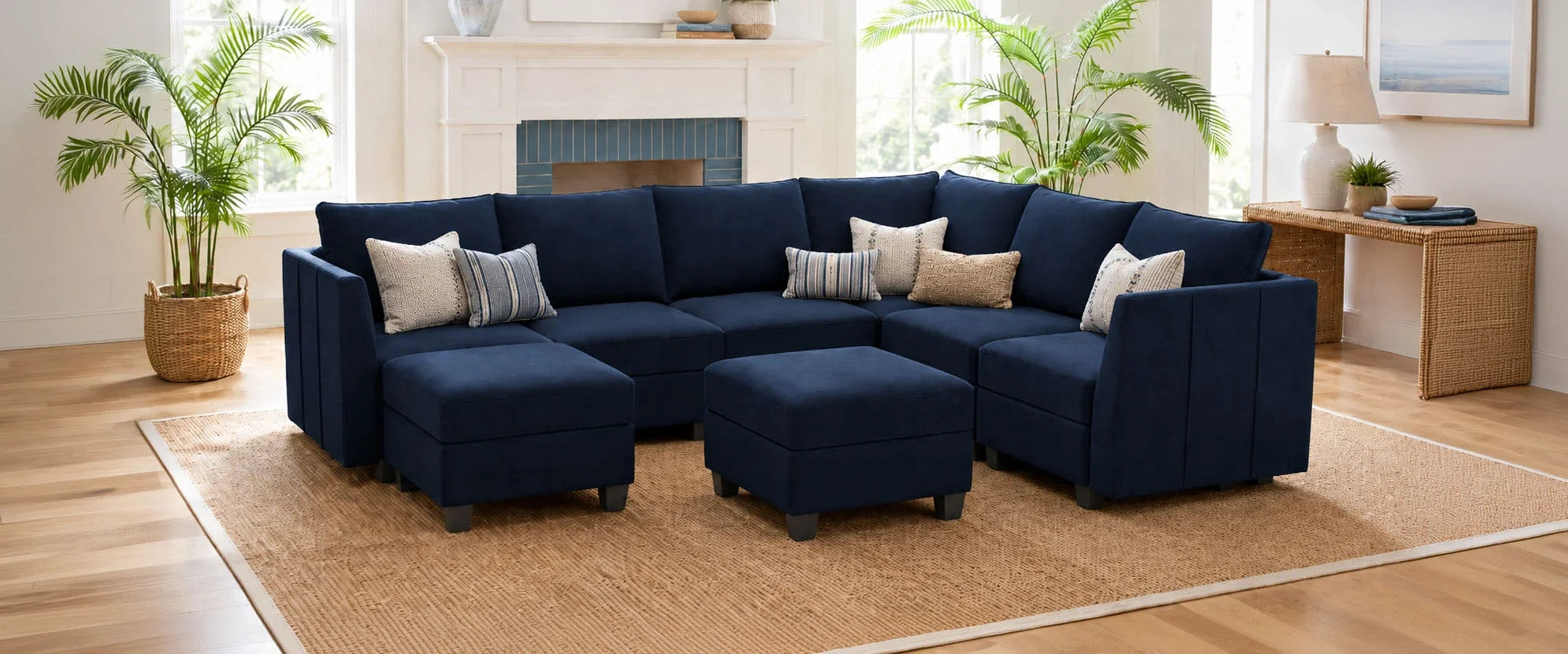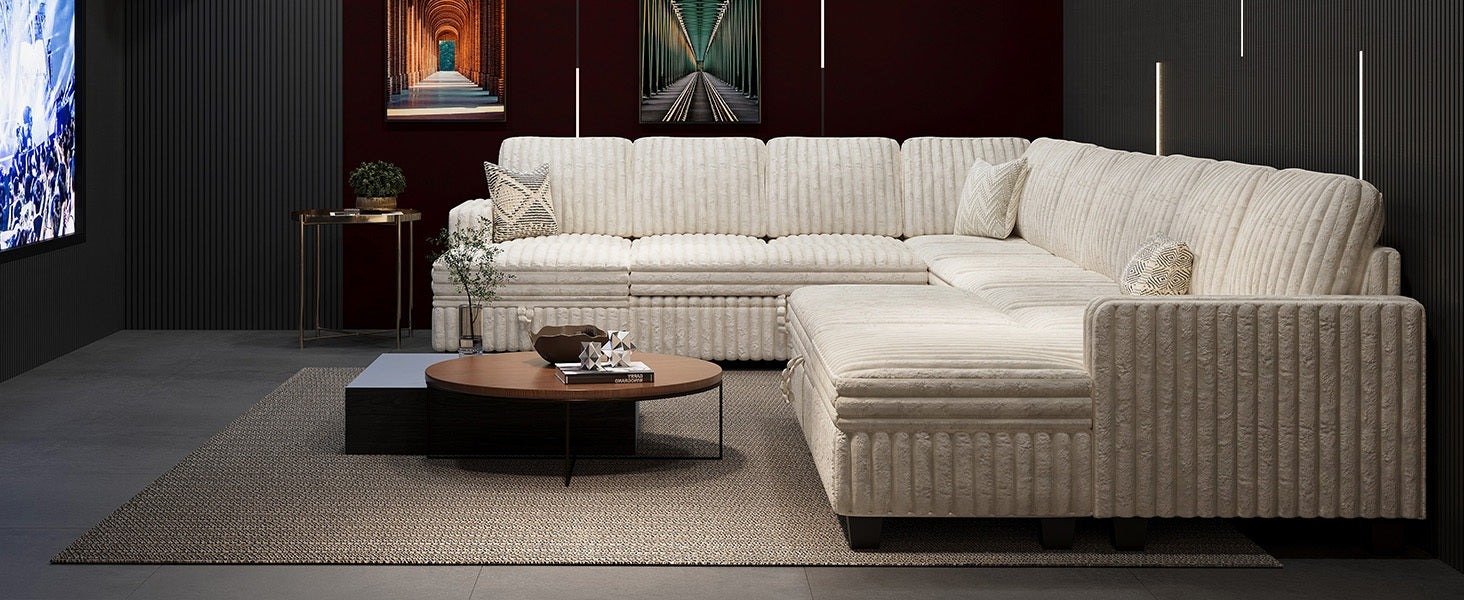
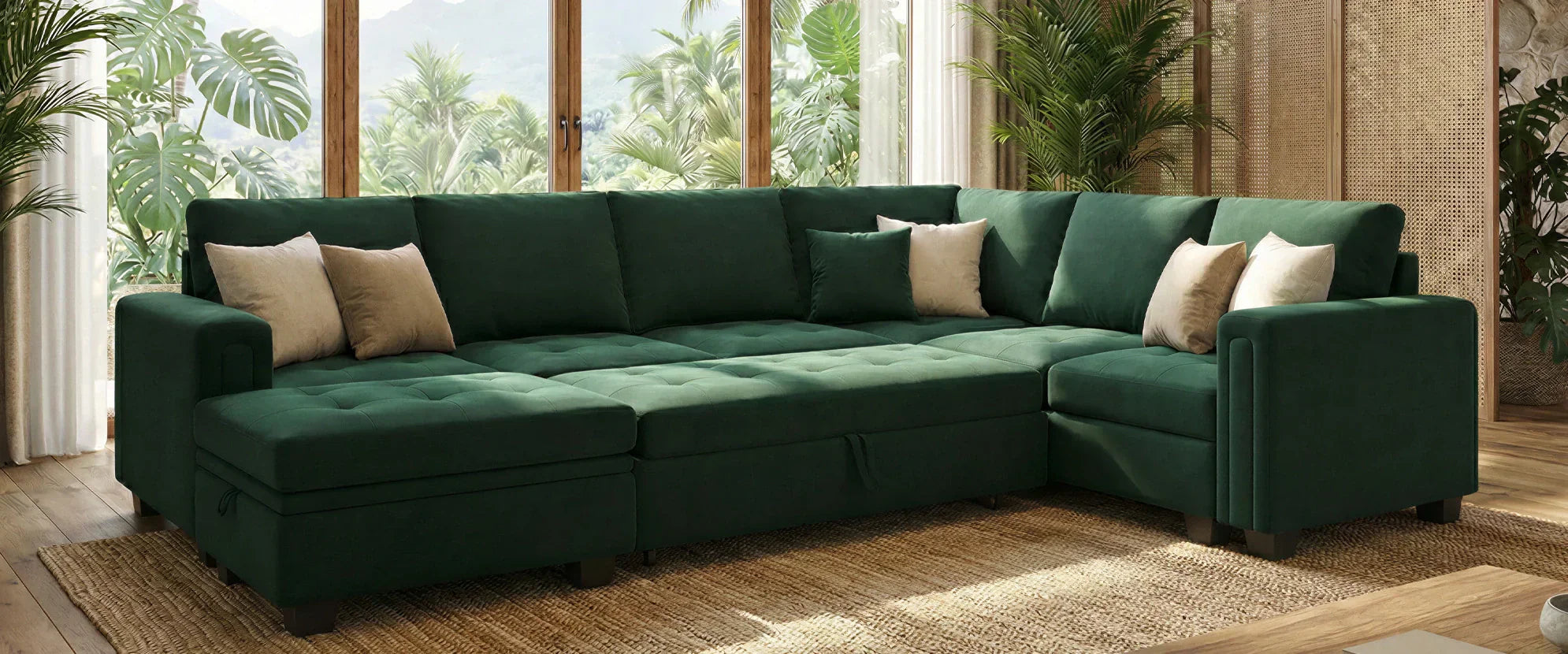
Ever feel like your living room layout is more of an obstacle course than a place to relax? You buy a beautiful sofa, only to realize it blocks the walkway, covers the vents, or makes the entire room feel cramped. The truth is, a successful living room furniture arrangement doesn’t depend on how expensive your couch is—it’s all about how you position it. In this couch placement guide, we’ll show you the golden rules of sofa arrangement to maximize your space, unlock hidden functionality, and finally create that effortless, flowing layout you’ve been dreaming of.
Factors to Consider for a Functional Living Room Layout
Consider Traffic Patterns
The absolute foundation of an efficient living room furniture layout is understanding how people move through it. Your sofa is typically the largest piece in the space, which means it acts like a boulder in a river—it will either guide the water smoothly or create a massive logjam. To ensure your layout feels effortless, you need to map out your room’s natural pathways and design around them. Here is how to master traffic patterns for proper sofa placement:
Maintain Major Walkways: Identify the primary routes people take to cross the room (e.g., from the front door to the kitchen, or from the hallway to the patio). Keep these main thoroughfares at least 30 to 36 inches (76–91 cm) wide. This prevents that awkward, claustrophobic feeling when trying to figure out how to arrange living room furniture in tight spaces.
The Coffee Table Clearance: Leave a golden zone of 14 to 18 inches (35–45 cm) between the edge of your sofa cushions and the coffee table. This distance is the sweet spot—it gives you plenty of legroom to sit comfortably, while keeping your drinks, tech, or books within easy arm's reach.
Avoid the Screen Interruption: Never place a sofa in a position that forces people to walk directly between the seats and the TV. Disrupting movie night or a gaming session every time someone grabs a snack is a major functional failure. Walkways should always loop behind the main seating area rather than cutting through it.
Breathing Room
One of the most common mistakes in small living room arrangement is the instinct to push every single piece of furniture flat against the walls. While it feels like you are saving space, this "perimeter layout" often leaves a giant, cold void in the center of the room and actually makes the walls feel like they are closing in on you. Giving your modular sofa literal and visual breathing room is the secret weapon used by interior designers to make a small living room look bigger, more luxurious, and highly functional.
The "Float" Technique: Whenever possible, pull your modular sofa away from the wall by at least 12 to 18 inches (30–45 cm), or even place it dead-center in the room. This is called "floating" your furniture. It creates an open couch layout, allows light to circulate, and instantly elevates the aesthetic from "standard apartment" to "designed home."
The Airflow Zone: Leaving space behind the modular couch isn't just about looks—it's highly practical. It prevents your sofa from blocking baseboard heaters, covering electrical outlets, or smashing against window curtains. If you have a beautiful view out a window, floating the sofa a few feet away ensures you don't block the natural light.
Create Useful Back-of-Sofa Space: Pulling the modular couch out opens up entirely new functional possibilities. You can slip a slim console table directly behind the sofa to hold table lamps, drop a charging station for your devices, or even tuck a low bookshelf back there.
Focal Points
Every functional room needs a clear anchor—a center of gravity that instantly tells your eyes where to look. Without a distinct focal point, a living room layout feels chaotic and unfocused. Because your modular sofa is the ultimate destination for comfort, its placement dictates how you interact with that anchor. The trick to maximizing functionality is choosing the right sofa layout ideas based on your room's features.
Identify Your Main Feature: Look at your architecture. Does your room have a stunning fireplace, a massive window with a view, or is the TV the undisputed king of the space? Your primary sofa should directly face this feature, usually positioned perpendicular or parallel to it to create a clean, balanced sightline.
The 60-Degree Viewing Rule: For the best visual ergonomics, the human eye prefers viewing angles within a 60-degree arc. When placing your modular sofa opposite a TV or a beautiful window view, ensure the seating isn't so wide that guests have to crane their necks sideways.
The Dilemma: TV vs. Fireplace: This is the ultimate living room battleground. When designing a living room layout with a TV and fireplace, don't just default to mounting the TV high above the mantle (which causes major neck strain!). Instead, consider placing the sofa facing the fireplace and using a flexible, layout-friendly arrangement to balance both.
The Best Sofa Placement Layouts for Any Space
If you are looking for practical living room layout ideas, these 4 designer-approved formulas are the best ways to maximize functionality and spatial efficiency:
The "Floating Flush" Against the Wall: Best for Compact Spaces
How to do it: Position your sectional sofa facing the main focal point (like your TV or projector screen), but pull it away from the wall just a tiny bit. Leave a 2 to 4-inch (5–10 cm) gap between the back of the sofa and the wall.
The Functional Benefit: This is the ultimate space-saving sectional couch layout for smaller apartments, maximizing open floor area in the center of the room. However, that tiny sliver of air behind the couch prevents wall scuffing and creates a subtle optical illusion that helps make a small living room look bigger.

The Open-Concept "Float": Best for Large Living Rooms & Studio Apartments
How to do it: Break the rule that furniture must hug the walls. Place your sectional sofa dead-center in the room, leaving a clear walkway of at least 36 inches (91 cm) entirely behind it.
The Functional Benefit: This is the best sectional layout for an open floor plan. Your sofa becomes a beautiful, low-profile room divider. Without building a single wall, you perfectly zone an open-concept living room layout—creating a cozy entertainment lounge at the front and a distinct dining area or home office directly behind the couch.

The L-Shape Corner Anchor: Best for Families, Socializing
How to do it: Use a sectional sofa, or position a primary sofa and a secondary loveseat/accent chairs at a 90-degree angle to one another, framing the edge of your seating zone.
The Functional Benefit: Perfect for anyone searching for high-capacity sectional sofa layouts. This layout offers the highest seating capacity per square foot. It utilizes awkward corners that usually go to waste and creates an intimate, conversational "hive" that is perfect for family gatherings.

Face-to-Face Symmetry: Best for Conversation-First Layouts
How to do it: Position two sectional sofas (or one main sofa and two matching accent chairs) completely parallel to one another, facing each other directly, with a coffee table placed in the center.
The Functional Benefit: This provides a formal yet welcoming living room furniture arrangement. It completely prioritizes human connection over screens, forcing eye contact and effortless conversation—making it the ideal setup for homeowners who love entertaining guests without a TV blaring in the background.

🛋️ Ready to Design Your Perfect Living Room Flow?
Don't let a rigid, traditional couch dictate how you live in your home. Whether you are dealing with a compact urban apartment or trying to figure out a complex open concept living room layout, flexibility is key.
Our Belffin Modular Sofa Series is engineered to give you the ultimate balance of plush comfort, therapeutic tactility, and flexible seating for your living room. With customizable modular sofa configurations, you can easily switch between any of these layouts in minutes. Move the individual blocks to clear up a walkway, create a massive L-shape for movie nights, or split them apart into separate seating zones.
Explore our space-saving sectional configurations today and find the perfect, adaptable fit for your unique home!
FAQ
1. What is the golden rule of sofa placement?
The ultimate golden rule of sectional couch placement is to prioritize traffic flow. Always ensure there is a clear, unobstructed walkway of at least 30 to 36 inches (76–91 cm) along major pathways in the room, and leave 14 to 18 inches (35–45 cm) between the front of the sofa and your coffee table for optimal legroom and accessibility.
2. Should a sofa always be pushed against the wall?
No, pushing a sofa flat against the wall is a common mistake when setting up a living room layout. Leaving just 2 to 4 inches of breathing room behind a couch can make a room feel larger. In larger spaces, floating the sofa in the center of the space creates a more luxurious aesthetic and naturally divides the room into functional zones.
3. How do you arrange a living room with a TV and a fireplace?
When mastering a living room layout with a TV and fireplace, avoid mounting the screen too high over the mantle to prevent neck strain. Instead, position your main sofa facing the fireplace and place the TV on an adjacent wall. Alternatively, choosing an L-shaped sectional sofa layout allows you to dynamically face both focal points simultaneously.
4. How do I know if a sectional or modular sofa will fit my layout?
To ensure a perfect fit for your furniture arrangement, use painter's tape on the floor to map out the exact footprint of the sectional couch before buying. Measure the clearance for nearby doors and walkways. If you want a layout that can grow with you, investing in customizable modular sofa configurations is the best choice, as the individual blocks can be infinitely rearranged to fit any space.