We’ve all been there. You spend hours scrolling through beautiful, airy spaces on Pinterest, but when you look at your own living room, it feels more "claustrophobic" than "cozy." No matter how many times you push the sofa against the wall or slide the coffee table around, the room still feels cramped, and you keep bumping your shins on the furniture.
But here is the secret: your living room might not actually be too small—your layout is just working against you.
If you are wondering why your living room feels cramped, you are not alone. Today, we’re breaking down the 4 silent living room layout mistakes that are shrinking your space and how to make a small living room look bigger with simple, clever adjustments. Let’s dive into how to easily fix these errors and make your home feel twice as large.
Mistake #1: Not Thinking Through the Layout
When planning a small living room layout, our first instinct is usually to push every single piece of furniture flush against the walls, hoping to open up a "big" space in the middle. Or worse, we buy beautiful, bulky furniture and squeeze it in without measuring the walking paths.
The result? Your living room ends up feeling less like a cozy sanctuary and more like an obstacle course. You find yourself constantly sidestepping around the coffee table, dodging the sofa corners, or blocking the doorway just to get to the window.
In interior design, this is called ignoring your living room traffic flow. A well-balanced room should have clear, unobstructed pathways (ideally 30 to 36 inches wide) so you can move naturally without bumping into things. If you have a modular couch too big for the living room, it completely locks down your floor plan and ruins the room's energy.
How to Fix:
Before buying static, oversized pieces, rethink your layout with flexible living room furniture in mind.
Keep Pathways Open: Ensure there is a direct, easy route from the entrance of the room to the seating area and other rooms.
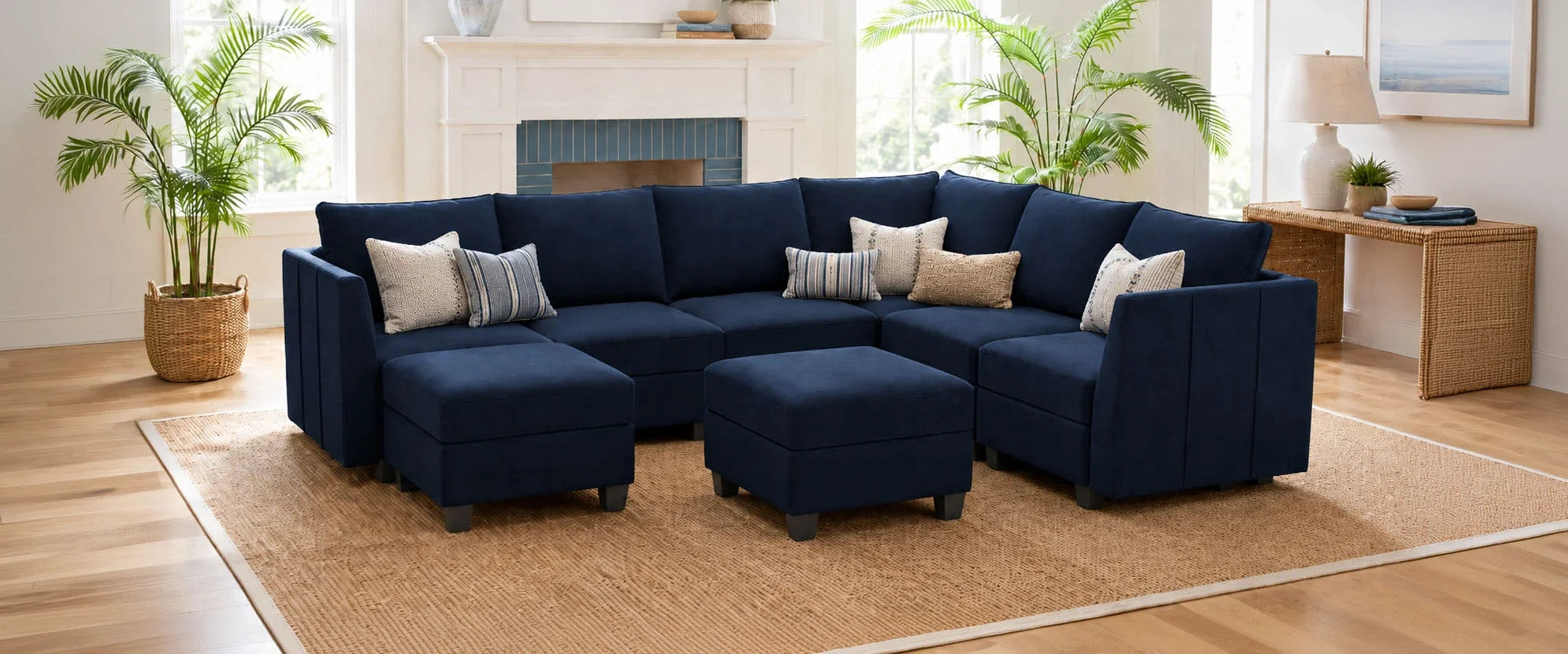
Go Modular: Instead of a giant, heavy traditional sectional that permanently locks down your floor plan, opt for a modular sectional sofa for small spaces. Modular sofa designs allow you to easily reconfigure the layout—like splitting the seats or moving the ottoman—to perfectly adapt to your room’s unique traffic patterns. It gives you the freedom to change your layout whenever you want, keeping your pathways open and your living room breathing.

If your traditional sectional is permanently locking down your floor plan, you need a layout that can evolve with your day-to-day life. Our Soforia modular sectional sofa collections allow you to split the seats, move the ottoman to either side, or completely rearrange the layout in under 5 minutes to keep your pathways wide open.
Mistake #2: Furniture That Isn’t Intended for Living
We’ve all fallen into this trap: you fall in love with a pristine, snow-white velvet sofa online or buy a rigid, delicate designer chair because it looks incredibly chic in photos. But then, real life happens. You’re constantly stressed about coffee spills, your dog’s muddy paws, or the fact that the sofa is so stiff nobody actually wants to sit on it.
If your furniture makes you feel like you are living in a fragile museum rather than a cozy home, it’s a major living room design mistake. A beautiful living room is completely useless if it doesn't support how you actually live.
In tight spaces, this mistake is magnified. When you buy "static" furniture that only serves one purpose or comes in delicate fabrics, you quickly run out of room and patience. In a small living room, every square inch of floor space is prime real estate. If your sofa isn’t helping you stay organized, it’s actively shrinking your room.
How to Fix It:
Shift your focus from "showroom aesthetics" to everyday livability. Your furniture should work for you, not the other way around.
Prioritize Performance Fabrics: If you love bright, airy colors (like cream or light gray) but worry about stains, look for furniture made with high-performance, stain-resistant, and scratch-resistant fabrics. A high-quality performance fabric modular sofa allows you to enjoy a high-end look without the constant anxiety of spills or pet damage.
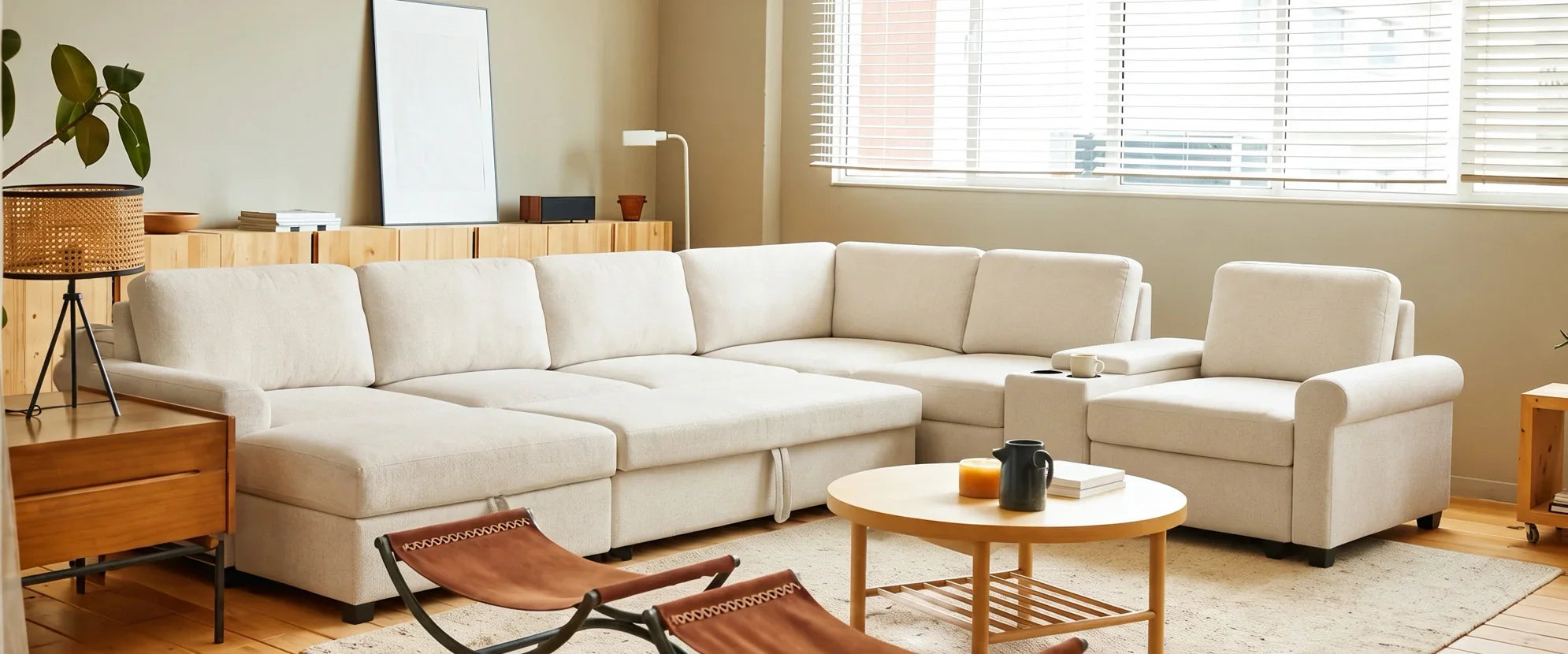
Choose Smart, Multi-Functional Pieces: In a small living room, every piece of furniture must earn its keep. Instead of a basic, single-purpose modular couch, opt for a storage sofa or a sofa with built-in storage. It gives you the plush, cloud-like comfort you want for movie nights, while secretly hiding away extra blankets, pillows, and clutter beneath the seats.

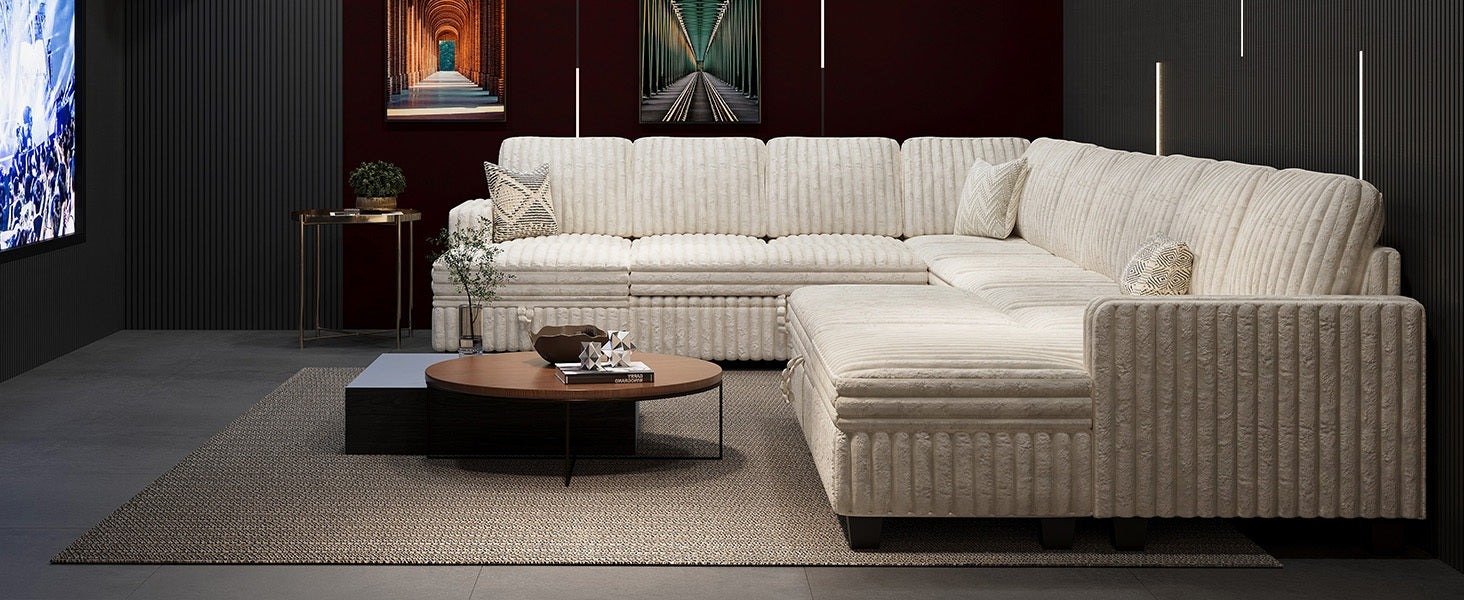
Why buy extra bulky storage bins when your modular couch can do the heavy lifting? With spacious, hidden compartments under every seat, you can tuck away blankets, pillows, and kids’ toys, keeping your space clean and visually spacious. You can choose to purchase the Thara Upgraded Cloud Sofa series.
Mistake #3: A Poorly-Sized Rug and a Lack of Pillows
It’s often the finishing touches that make or break a living room. You could have the perfect modular sectional couch and the ideal paint color, but if your rug is too small or your modular sectional couch looks barren and cold, the entire room’s balance will feel off.
First, let's talk about the "floating rug island" trap. Choosing the wrong rug size for your living room is one of the most common design mistakes in American homes. When your rug only sits under your coffee table without touching any other furniture, it creates a harsh visual boundary, making your floor look choppy and your living room feel significantly smaller.
Second is the lack of cozy layers. A modular sectional couch with zero or flat, sad pillows looks uninviting, stiff, and unfinished. It screams "dorm room" instead of "designer home."
How to Fix:
A cozy, high-end living room relies on proper scaling and plush layering. Here is how to arrange furniture in a small living room with perfect styling:
Go Big on the Rug: Your rug should act as the "anchor" of your seating area. The golden rule for a cohesive layout is that at least the front legs of all major seating pieces (your sofa, sectionals, or accent chairs) should sit on the rug. For a small living room, an 8' x 10' rug is usually the sweet spot, instantly stretching the room's visual boundaries.
Master the Art of Pillow Layering: Don't skimp on the plush factor. Mix and match different textures (like boucle, linen, or velvet) to add depth. If your modular sofa has deep, comfortable seating, lean into it with high-quality, feather-filled throw pillows in coordinating tones. It doesn’t just look like a professional showroom; it creates that "sink-in" cloud-like comfort that makes your guests never want to leave.

Pair your newly sized rug with our highly adaptable Tesso modular sectional couch collection to create a seamless, cohesive lounge area.
Mistake #4: Relying Solely on Overhead Lighting
We’ve all walked into a room that felt cold, sterile, and altogether uninviting. Chances are, it was suffering from what designers call the "interrogation room" effect—relying solely on one bright, harsh overhead light.
When you only use a single ceiling fixture, it casts harsh, downward shadows, making the corners of your room disappear into darkness. Not only does this make your living room feel flat and sterile, but it also visually shrinks your space by chopping it up with high-contrast shadows.
A living room is meant for relaxing, cozying up, and entertaining. Your lighting should reflect that, especially in a compact space.
How to Fix It:
To make your small living room feel instantly larger and infinitely cozier, you need to learn how to layer lighting in a living room. Instead of one giant light source, aim for three distinct layers:
Ambient (Overall) Lighting: This can be your overhead light, but keep it dimmable so you can control the intensity.
Task Lighting: Add a sleek floor lamp next to your sofa for reading, or a small desk lamp on a side table.
Accent (Atmosphere) Lighting: Use wall sconces, LED light strips behind the TV console, or even candles.

To truly elevate a small space, look for furniture textures that naturally capture light and add warmth. Choosing a Huvona modular sectional couch in a plush, light-colored Performance Boucle not only reflects warm light beautifully, making your room feel larger, but its stain-resistant nature also means you can enjoy that bright, airy look without the stress of spills.
The Ultimate Small Living Room Shortcut
Redesigning a small living room doesn't mean you have to compromise on style, comfort, or storage. You don't need a bigger house—you just need furniture that works with you, not against you.
If you’re tired of fighting rigid, heavy sofas that block your pathways and offer zero flexibility, it’s time to upgrade to a smarter, space-saving furniture solution.
Our modular sofa series is widely considered the best couch for a small living room. Built specifically for modern, flexible living, our series features customizable layouts that fit any tight nook, hidden under-seat storage to swallow up clutter, and pet-friendly performance fabrics. It is the ultimate design cheat code to making your small space feel like a spacious oasis.
FAQ
How do I know if my living room layout is blocking traffic flow?
The easiest test is the "Shin-Bump Test." If you have to twist your body, sidestep, or constantly dodge furniture corners just to walk from your hallway to the window, your traffic flow is blocked.
In interior design, walking pathways should be at least 30 to 36 inches wide. If traditional, rigid sofas are locking down your floor plan and clogging your paths, switching to a Reconfigurable Sectional Sofa is the ultimate fix. It allows you to move the modules (like the ottoman or single chairs) in under 5 minutes to keep your natural pathways wide open.
What is the best couch layout for a very small living room?
For tight spaces, the gold standard is flexibility. Instead of buying a heavy, static 3-seater that permanently blocks one wall, the best layout is a [Modular Loveseat with a Movable Ottoman].
This setup gives you the comfort of a sectional (L-shape) when you want to lounge, but allows you to slide the ottoman to the center as a coffee table or move it away entirely when guests arrive. It maximizes seating without eating up precious floor space.
How can I make my small living room look bigger and less cluttered?
Two designer secrets: Go big on your rug and hide your clutter. A tiny rug chops up the floor, so opt for at least an 8' x 10' rug where the front legs of your furniture can sit on it. Second, swap out single-purpose furniture for multi-functional pieces. Instead of adding bulky, space-eating storage cabinets, choose a [Modular Sofa with Built-in Under-Seat Storage]. It hides away blankets, pillows, and toys completely out of sight, instantly creating a clean, airy, and visually spacious environment.
How do I choose the right rug size for a sectional sofa?
The golden rule is that at least the front legs of your sectional should rest on the rug to anchor the room. For a compact sectional in a small living room, an 8' x 10' rug is usually perfect. For larger modular setups, go with a 9' x 12' rug. Avoid a small 5'x 7' rug under the coffee table, as this creates a "floating island" effect that shrinks your living room. A cohesive rug-to-sofa ratio makes your seating area look grounded and high-end.