A sofa isn’t just another piece of furniture — it’s the heart of your living room, the place where you curl up with a book, host friends for movie nights, or sink into after a long day. Because it plays such an important role in your home, your couch deserves the same attention you give to other essentials in your life. With the right care, you can extend its lifespan, protect its beauty, and keep it as comfortable as the day you bought it.
In this guide, we’ll walk you through practical sofa maintenance tips, easy stain-removal methods, and long-term protection strategies. Whether you own a plush fabric sectional, a sleek velvet couch, or a performance fabric sofa, these steps will help you keep your living room centerpiece looking (and feeling) its best.
Get to Know Your Sofa
Instead of technical cleaning codes, we make sofa care simple. Just follow the fabric-specific guide below.
Fabric
Everyday Care
Spill & Stain Tips
Velvet
Brush gently with a soft cloth or vacuum
Blot spills immediately, use mild soap + water if needed
Chenille
Vacuum weekly with low suction
Dab with soft cloth + diluted detergent
Terry
Shake and vacuum to prevent matting
Blot spills quickly with water-based solution
Weave
Vacuum weekly to remove trapped dust
Spot clean with mild soap + water
Corduroy
Vacuum along ridges
Blot stains gently, soft brush for grooves
Make Weekly Vacuuming a Ritual
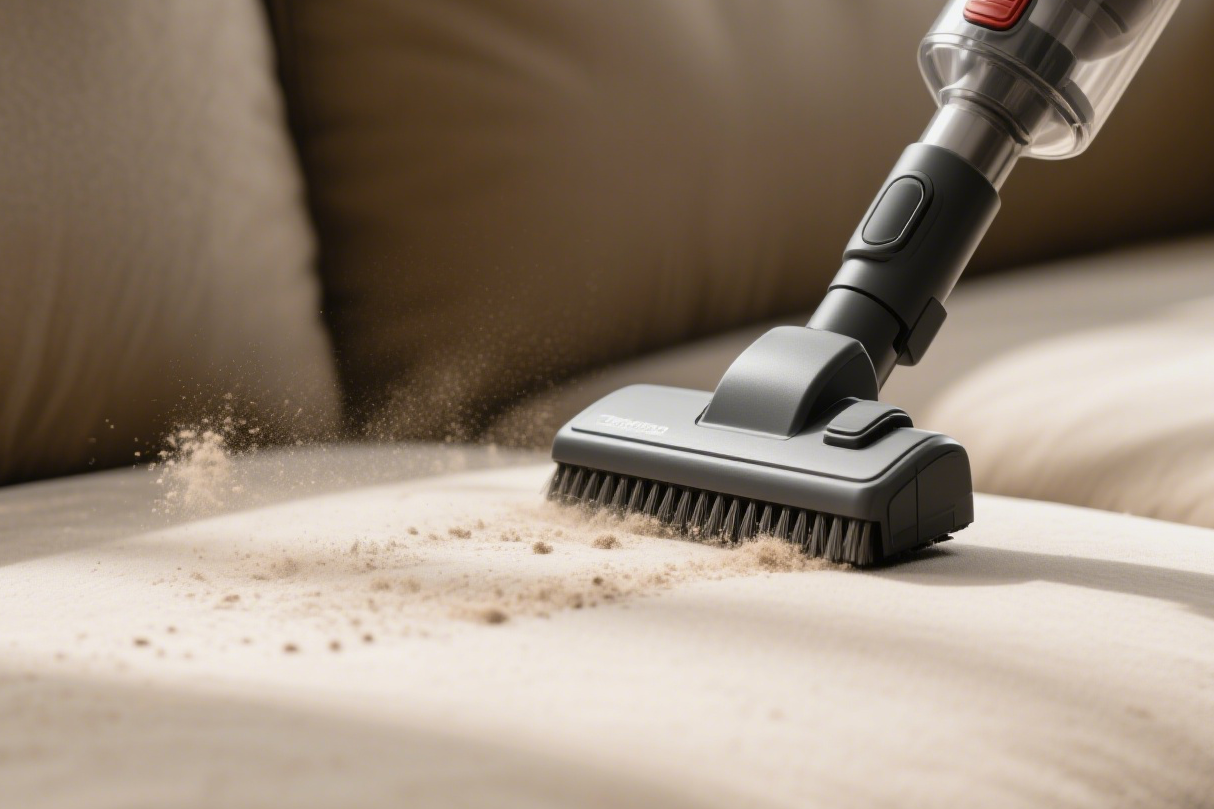
Think of vacuuming your sofa as giving it a mini spa day. Over time, dust, crumbs, and pet hair settle into the cushions, and if left unchecked, they wear down the fibers and make the fabric look dull. By vacuuming once a week with a soft brush attachment, you’ll prevent this build-up and keep your couch fresh.
Don’t forget the hidden spots — seams, under the cushions, and along the backrest. For extra care, rotate and fluff your cushions regularly so they wear evenly and stay plump. This small ritual can extend the life of your upholstery dramatically.
How to Act Fast With Spills and Stains
Life happens on your sofa — from morning coffee to a glass of red wine during game night. The key to stain removal is speed.
Blot the spill immediately with a clean, dry cloth (never rub, as that only spreads the mess).
For most fabric sofas, a mix of mild dish soap and warm water works wonders. Gently dab the area, then rinse with a damp cloth and let it air dry.
For oily stains, sprinkle baking soda or cornstarch, let it sit for a few hours to absorb the grease, then vacuum it away.
The quicker you act, the less likely the stain will leave a lasting mark — and your sofa will thank you for it.
How to Protect Your Sofa for the Long Run
Good habits will keep your sofa looking like new far longer than one-time deep cleans. A few smart strategies:
Apply a fabric protection spray to repel spills and stains.
Keep your sofa out of direct sunlight to prevent fading.
Add a washable slipcover or stylish throw in high-traffic homes or if you live with kids and pets.
Schedule a professional deep clean every 12–18 months to keep your upholstery fresh.
Think of it as investing in your sofa’s future — a little prevention today means fewer headaches tomorrow.
Special Care for Pet-Friendly Homes
For pet parents, sofas double as cuddle spots. To keep them clean and fresh:
Use an enzyme-based cleaner for pet accidents — it breaks down odor-causing proteins better than regular detergents.
Brush off pet hair regularly with a fabric brush or lint roller.
If you’re shopping for a new sofa, consider a Velvet/Chenille fabric that resists stains, scratches, and odors.
Your furry friend gets their cozy corner, and you get peace of mind knowing your sofa can handle it.
Finally
No matter which fabric covers your sofa — whether it’s velvet’s luxe sheen, chenille’s cozy softness, terry’s casual ease, weave’s timeless texture, or corduroy’s retro charm — the key is consistency. Regular care, quick spill response, and a little fabric-specific attention will keep your couch looking fresh and welcoming for years to come.
Your sofa is the heart of your living room. Treat it well, and it will reward you with comfort, style, and countless memories.
👉 Explore our sofa collectionand find the fabric that fits your lifestyle.
To be honest: in 2026, choosing a sofa is no longer merely about finding a place to sit—it is about reclaiming your living room space. For too long, we have been forced to compromise between the cloud-like comfort we crave, the modern aesthetics we desire, and the practical storage solutions we desperately need. But this year, the tide of interior design has turned: heavy, rigid, and traditional oversized sofas are gradually making their exit, giving way to a style of "light luxury" that is both dynamic and highly functional.
The following are the top five sofa trends for 2026, defining exactly how this transformative shift is manifesting in practice.
Modular Sofas
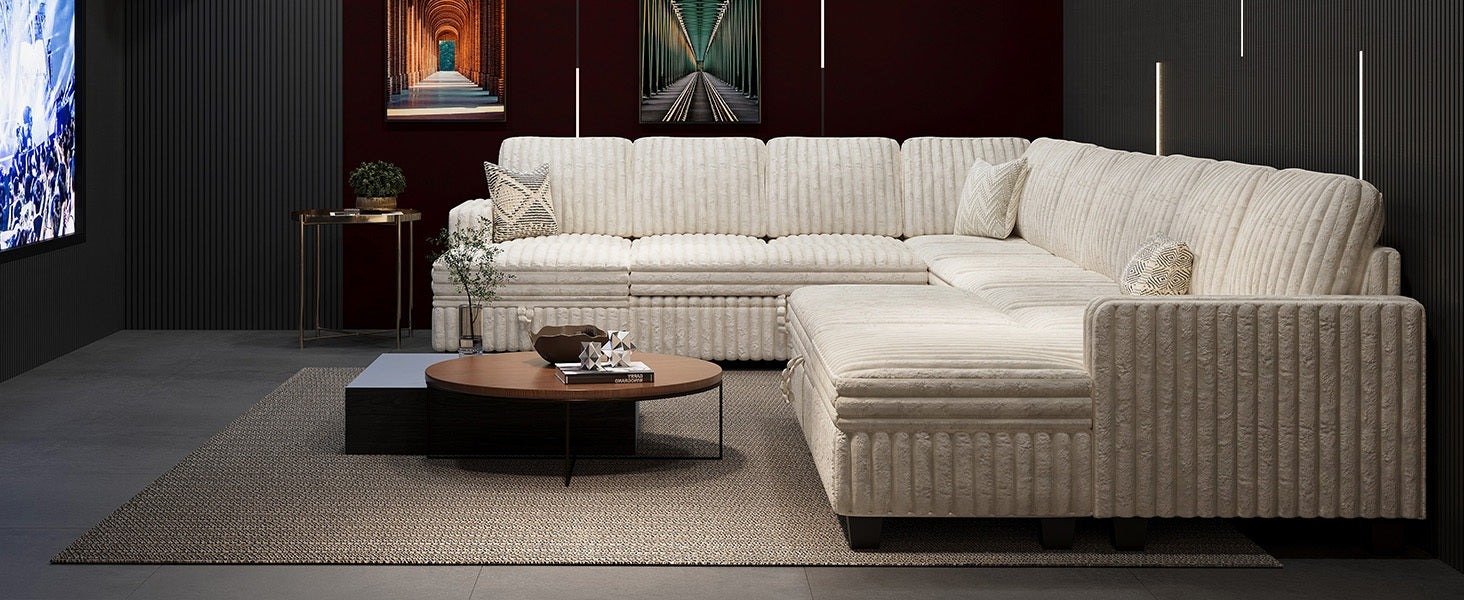
The most significant shift in 2025 and 2026 is the surging demand for modular sofas. In 2026, flexibility is being redefined as the new luxury. Forward-thinking homeowners are no longer content to confine their living rooms to rigid, static layouts; instead, they seek sofas that can adapt to their actual usage patterns—pieces that can be effortlessly reconfigured should they move or decide to rearrange their space. This year's trends lean strongly toward low-profile, architectural silhouettes, deeper, more immersive seating depths, and discreet connection systems—features that allow individual modules to be freely expanded, separated, or rearranged in mere seconds. Crucially, modular Interior designs in 2026 are increasingly integrating hidden practical features, proving that high-end aesthetics and "clutter-free" functionalism can indeed coexist in perfect harmony.
How Modular Sofas Create Zones
If you have a spacious living room, a modular sofa makes for an ideal choice.Zone Definition: If you have an open-plan living area that combines the living room and kitchen, an L-shaped modular sofa can help create a clear visual boundary between the two spaces.Versatile Configurations: The greatest advantage of a modular couch lies in its exceptional flexibility, allowing you to arrange the layout freely to suit your living room space. It can be configured in a straight line, a U-shape, or an L-shape; furthermore, when you need to accommodate guests, it can even be converted into a sofa bed. This effortless adaptability is precisely why modular sofas have remained a timeless favorite.
Sofa Color
In 2026, sofa colors will move away from cool, icy grays, becoming instead richer, warmer, and more personalized.
Architectural Earth Tones: Brown has officially become the "new black." Driven by a desire to craft cozy, high-comfort sanctuaries, high-end living rooms are trading flat beiges for rich cocoas, warm caramels, and deep chocolates. These shades appear exquisitely luxurious on textured fabrics, offering the living room a grounded yet sophisticated alternative aesthetic.Green as a Neutral: 2026 marks a departure from the pale sage greens popular in previous years; instead, the trend favors richer, yellow-leaning greens—such as olive, moss, and warm khaki. When applied to oversized, cloud-like modular sofa configurations, these earthy greens instantly infuse a home with a sense of groundedness, tranquility, and connection to nature.Deep Teal: For homeowners seeking to express their individuality without sacrificing serenity, deep teal is emerging as the "new neutral." Rich teal and peacock blue hues lend a sophisticated, boutique-hotel vibe that is highly Instagram-friendly—a look that pairs perfectly with natural wood furnishings.Burgundy and Oxblood: If you aim to create a space that feels thoughtfully curated and maturely sophisticated, bold wine-reds are making a powerful comeback. In 2026, we are moving away from jarring cherry reds in favor of more understated, complex burgundy tones with plum-purple undertones. This palette creates an atmospheric, cocoon-like intimacy within the living room—evoking a sense of vintage nostalgia while maintaining a strong, contemporary edge.
Performance Fabrics
In 2026, the demand for sofa fabrics extends beyond mere comfort; consumers also seek materials capable of withstanding the rigors of daily life.
Washed Organic Bouclé: Introduced in 2026, this upgraded fabric features a cotton-blend yarn treated with a specialized washing process. While retaining the signature "textured" aesthetic—a hallmark of bouclé that exudes high-end design—its tactile quality has been transformed into something exceptionally soft, lightweight, and breathable. Its cloud-like softness imparts a sense of luxury while infusing the room with a warm, inviting atmosphere.The Resurgence of Corduroy: Corduroy is making a powerful comeback in 2026. Not only does it offer warmth, but it also adds a distinct touch of personality. When paired with popular earth tones—such as chocolate brown, olive green, or warm sand—corduroy instantly lends a sense of coziness and "quiet luxury" to any modern home.Velvet: For 2026, velvet is reimagined with a low-sheen matte finish, eschewing the cheap, harsh glare of excessive reflectivity. Instead, it perfectly absorbs light, endowing the modular couch with a rich, deep, and buttery-smooth texture that instantly elevates the luxurious ambiance of the entire room.
Deep-Seated Sofa
Say goodbye to stiff, rigid traditional sofas! In 2026, the spacious and supremely comfortable deep-seat sectional sofa is leading the trend. Featuring plush cushions and ample room to stretch out, these deep-seat sectional sofas allow you to fully unwind and achieve total physical and mental relaxation.
Boasting an extra-deep seat depth of 24 to 28 inches, these sectional sofas are designed specifically to accommodate your authentic lounging style. Whether you prefer curling up cross-legged, sinking deep into a pile of pillows, or cozying up with a partner for a movie night, the deep-seat design offers a luxurious sense of spaciousness that satisfies every need. This deep-seat configuration naturally pairs perfectly with a low-profile, European-inspired silhouette. It instantly infuses your living room with a warm, boutique-hotel aesthetic—looking grounded, high-end, and effortlessly chic—achieving a level of sophistication that is simply impeccable.
Constructed with multiple layers of high-density, resilient foam and down-alternative filling, these deep-seat sectional sofas utilize their extended depth to distribute your body weight more evenly. By relieving pressure on the lower back, a deep-seat sectional delivers an immediate sense of therapeutic comfort—making you feel as though you are truly "floating on clouds" the moment you sit down.
Invisible Functionality
Beyond prioritizing durability, pet-friendliness, and comfort, customers also place significant value on the "hidden features" of a sectional couch. Tired of a cluttered living room? The Belffin modular couch features hidden storage compartments beneath every seat cushion. This helps you maximize living room space, allowing you to tuck away blankets, pillows, and seasonal odds and ends—restoring your home's tidiness in mere seconds.
Furthermore, say goodbye to bulky, clunky traditional recliners. Our premium 2026 modular couch designs feature adjustable backrests: maintain a standard upright angle for socializing with family or guests during the day, then simply click the backrest into place in the evening to find the perfect, ergonomically supportive angle for movie night.
In 2026, your home should be more than just a dwelling; it should be a sanctuary that evolves right alongside you. Whether you are drawn to the soft, plush texture of wide-wale corduroy, the clever practicality of hidden storage, or the sheer luxury of deep-seat lounging, the right sofa represents an investment in your daily well-being. Don't let your living room get stuck in the past. Explore our 2026 Modular Collection today and create the flexible, high-comfort space you truly deserve.
Creating a beautiful and comfortable living room involves far more than simply selecting aesthetically pleasing furniture; crucially, it requires balancing smooth traffic flow, visual equilibrium, and practical functionality. A poorly arranged living room layout can severely compromise the overall experience of the space. Regrettably, not even the most expensive furniture can salvage a room that is marred by a flawed layout. In fact, you may currently be inadvertently making subtle design errors that cause your living room to appear smaller and less inviting than it actually is. Read on to discover 7 common living room design mistakes—errors you should avoid immediately—and learn how to easily adjust your layout to transform your home into a living space that is both cozy and spacious.
Pushing The Furniture Against The Walls
When you place every piece of furniture flush against the walls, you aren't actually saving space—instead, you are creating a cold, uninviting void in the center of the room. This common layout blunder instantly strips your living room of its warm, welcoming atmosphere. From a practical standpoint, this arrangement forces people to sit too far apart, hindering the opportunity for natural, intimate conversation. From a design perspective, it actually accentuates the room's boundaries: making an already small space feel even more cramped, while causing a spacious room to feel disjointed and lacking in cohesion.
Instead, let your furniture "float." Pulling your furniture arrangement away from the walls—even by just a few inches—instantly infuses the space with a sense of "breathability," lending your home that high-end, thoughtfully curated aesthetic.
Pro Tip: Use a properly sized area rug to define this newly created "floating" zone. Ensure that the front legs of all your primary seating pieces rest firmly on the rug; this visually anchors the entire conversation area, tying it together to create a unified, harmonious whole. Referring to this article on Living Room Layout Ideas can also help you avoid many detours.
Placing The Sofa In The Flow Of Traffic
The sofa is the most important piece of furniture in the living room, yet it is also the most challenging to position. When you place a large modular couch or sectional couch directly in the path of everyday foot traffic, you completely disrupt the natural flow of movement throughout the entire living space.
Exceptional sofa layouts always prioritize "fluid circulation." The placement of the sofa should guide people around the central conversation zone, rather than cutting directly through it and splitting the space in two. If your living room features an open-plan layout, consider using the back of the sofa—or the individual modules of a sectional couch—as a stylish room divider to define the boundaries of the living area. However, be sure to position the "opening" of this zone to face the room's entrance; this creates a welcoming gesture that invites guests in, rather than an insular, closed-off feeling that keeps people at a distance.
Pro Tip: Stand at the main entrance of your living room and close your eyes. Then, open your eyes and attempt to walk directly toward the exit on the opposite side of the room. If, during this journey, you find yourself having to take a significant detour or slow down considerably to navigate around the sofa, it is a clear sign that your living room layout is in urgent need of adjustment. A smooth, unobstructed path of circulation is the key to cultivating a serene and sophisticated home atmosphere.
Opting For Oversized Furniture
In a spacious, open showroom, it is all too easy to fall in love with a massive, deep-seated modular sectional sofa. However, if you are working with a small living room layout, you may suddenly discover that it completely overwhelms your space—not only appearing visually unappealing but also obstructing the room's natural flow of movement.
A successful living room layout hinges entirely on the appropriateness of the furniture's scale and proportions, as well as furniture arrangement tips. Ideally, a living room should feel spacious and comfortable, allowing guests to enter and exit with ease without creating congestion. If you are captivated by the cozy comfort of a deep-seated sofa but your living room is of standard dimensions, look for designs featuring slender armrests (specifically right-angle styles) rather than bulky, heavy rolled arms. Furthermore, opting for a sofa with a low backrest and exposed legs allows light to pass underneath; this visually lightens the furniture's mass, making it appear airier and more open.
Pro Tip: If you have your heart set on a modular sectional sofa and simply can't do without one, consider looking for modular collections that offer customization options or flexible configuration features. Brands like Belffin, for instance, offer modular units that can be separated and reconfigured. Should you find that a specific layout makes your current living space feel too cramped or oppressive, you can easily rearrange the setup, scale down the configuration, or even separate the modular sectional sofa into independent units for placement elsewhere.
Putting The Sofa Too Close To The TV
If you position your sofa too close to the television, what was once a cozy and inviting living room can instantly transform into the worst seat in a movie theater—specifically, that dreaded "front row" that everyone tries to avoid. Furthermore, from an interior design perspective, this layout blunder can completely disrupt the room's overall sense of balance.
Finding the perfect balance between your sofa and TV is actually a simple science. The key factor depends entirely on the size of the screen. To ensure the ultimate viewing comfort, the distance between the viewer's eyes and the screen should ideally fall within a range of 1.5 to 2.5 times the screen's diagonal measurement. If your room layout is restrictive and space is at a premium, consider opting for a modular sectional sofa or lightweight lounge chairs that can be easily shifted backward; alternatively, mount your TV on an adjustable cantilever bracket so that—when guests visit, and you wish to focus on conversation—you can simply fold the screen back flush against the wall.
Pro Tip: If your room is small—meaning your modular sectional sofa must be positioned closer to the TV than the recommended formula suggests—avoid purchasing an excessively large screen. Instead, opt for a slightly smaller display with higher resolution, or cleverly integrate the TV into your interior decor to prevent it from visually dominating the space and appearing as though it is swallowing up the entire seating area.
Using Skimpy Rugs
A rug serves as the visual anchor of a living room layout, visually tying all the furniture together to create a unified and harmonious zone. If you choose a rug that is too small—leaving the entire room feeling sparse—it will completely disrupt the space's visual balance.
When selecting a living room rug, bigger is often better. The function of a rug is to define the boundaries of the conversation area, rather than merely serving as a small mat tucked beneath the coffee table.
Pro Tip: If you have already purchased a beautiful rug only to discover, to your dismay, that it is too small, don't rush to discard it! Instead, try the "layering" technique. You can purchase a larger, affordable, and neutrally colored rug to serve as a foundational base layer, and then simply center your smaller, decorative rug on top of it.
Choosing The Wrong Size Coffee Table
The coffee table occupies the absolute center of the living room layout, presenting a prime opportunity to define the space's unique style. Conversely, an ill-chosen table can become a major misstep in the design, completely undermining the room's overall aesthetic appeal.
To find a coffee table that both blends seamlessly into its surroundings and stands out as a distinctive design element, you must carefully coordinate its dimensions and height with the adjacent sofa. The coffee table should fill the space just right—neither looking too sparse nor overpowering the surrounding furniture.
Pro Tip: If you own a large L-shaped sectional sofa, a traditional rectangular coffee table can often obstruct the flow of foot traffic. In such cases, consider opting for a round coffee table or a configuration involving square ottomans. Their soft, rounded contours create a delightful visual contrast against the sharp angles of the sectional sofa, while also allowing for easier, smoother access to the corner seats.
Getting The Scale Wrong
Proportion is the single most important element in any room—and this extends far beyond mere square footage. It is also the most subtle pitfall in layout design: the tendency to mix and match furniture pieces that are completely at odds in terms of visual weight and height.
Achieving a perfect sense of scale does not mean ensuring that every object matches down to the last millimeter; rather, it lies in balancing the "visual weight" of your furniture and maintaining a coherent, unified visual horizon throughout the entire layout.
Pro Tip: Try standing at the main entrance of your living room and taking a black-and-white photograph of the space. By eliminating the distraction of color, you can gain an incredibly intuitive perspective on the "silhouettes" of your furniture and how their heights are distributed. If the lines of the room rise and fall dramatically in a jagged, "zigzag" pattern—or if one side of the photograph appears dark and heavy while the other looks empty and airy—then it is time to rearrange your elements to balance the visual weight of the composition.
Layout is the Secret to Home Comfort
Transforming your living room doesn't require a massive budget or a professional interior designer. More often than not, it simply requires a bit of strategic editing. By avoiding these 7 common layout blunders—pulling your furniture away from the walls, clearing your traffic paths, and investing in a rug that actually fits—you can instantly unlock the true potential, comfort, and beauty of your home.
If you find that your current rigid furniture makes it impossible to avoid these mistakes, it might be time to rethink your seating. Investing in a highly flexible, customizable modular sofa (like the adaptable configurations from Belffin) allows you to effortlessly resize, rearrange, and scale your layout as your life and space evolve.
Which of these layout mistakes are you going to fix first this weekend? Let us know in the comments below!
We’ve all been there: you sit down to relax on your couch, only to be hit by a stubborn sniff of old pet hair or stale room moisture. Knowing how to get couch smell out fast is essential for maintaining a clean, healthy home environment without replacing your beloved furniture. Today, I’m sharing the best DIY deodorizing methods that will rescue your fabric or velvet couch and restore its fresh-out-of-the-showroom scent.
6 Ways to Remove Odors from a Couch
Tip: If the couch has a strong odor, you may need to try several methods—or repeat the same method multiple times—to eliminate it.
Wash the slipcovers
If you have children or pets at home, investing in a modular couch with removable, washable slipcovers is absolutely the wisest choice. If the slipcovers are indeed removable, be sure to check the care labels carefully; ideally, you should purchase a modular couch with machine-washable covers. Here are the key points for cleaning your slipcovers:1. Pro Tip: Before washing, you must fasten all zippers and Velcro closures! Otherwise, during the agitation cycle in the washing machine, the sharp teeth of the zippers can snag and damage the fabric fibers, leading to loose threads or pilling.2. Spot-Treat Stains: For heavy stains on areas like armrests or cushion edges (such as coffee spills, grease, or pet paw prints), apply a neutral detergent or warm water directly to the affected area and let it sit for 10 minutes before machine washing. Do not simply toss the stained cover directly into the machine.3. Select a Gentle Cycle: Use cold water and a "Gentle" or "Delicate" cycle. Using warm or hot water can easily cause cotton and linen fabrics to shrink severely, so much so that you may be unable to fit the cover back onto the foam cushion after washing.4. Avoid High-Heat Drying: Tumble drying will cause the slipcovers to shrink. The correct approach is to air-dry them naturally. For best results, put the slipcovers back onto the foam cushions while they are still about 80% dry, then stretch and smooth them into shape.
Use Air Freshener Sprays
Sometimes, even after locating and eliminating the source of an unpleasant odor, the smell may still linger. This is particularly true when the odor is caused by pets. If you encounter this situation, you can use an air freshener spray to neutralize the smell:1. Choose the Right Product: Opt for products labeled "Pet-Safe" or "Enzymatic Spray" to avoid exposing your cats or dogs to chemical ingredients that could irritate their respiratory systems or skin.2. Maintain a Safe Distance: When spraying, hold the nozzle at least 12 inches away from the surface of the sofa. This ensures that the mist settles evenly and lightly across the fabric.3. Allow to Air Dry: After spraying, open the windows to ventilate the room or turn on a fan to accelerate the drying process. Do not sit on the sofa or allow pets onto it until it is completely dry; otherwise, fibers from clothing or pet hair will immediately stick to the damp surface.
Vacuum Thoroughly
Often, when a couch smells unpleasant or looks dirty, the issue isn't that the fabric itself is soiled; rather, it is caused by pet hair, dander, and food crumbs—hidden deep within the crevices—that have begun to ferment due to moisture. Thorough vacuuming can effectively eliminate these external sources of odor. However, simply running a vacuum cleaner over the surface of the cushions is insufficient; a truly thorough cleaning requires meticulously addressing every crevice and corner of the sofa:1. Disassembly and Clearing: Remove all throw pillows and seat cushions. If you own a modular sofa, completely separate each module.2. Essential Tool Selection:Crevice Tool: Use this to clean the hard-to-reach "dead zones" within the modular sofa's frame, the junctions of double-stitched seams, and the recesses around buttons or tufts. Motorized Upholstery Brush: Designed for fabric or soft-pile modular sofas (such as velvet or corduroy), this tool utilizes high-speed vibrations to "shake out" pet dander and dust mites embedded deep within the fibers. Dusting Brush: Use this for wooden armrests, metal fixtures, or technical fabric surfaces to prevent scratching.3. Systematic Coverage: When vacuuming, first go over the area horizontally (left to right), and then go over it again vertically (up and down) to ensure complete coverage.4. Hidden Zones: Pull the sofa forward to vacuum up any dust trapped in the gap between the back of the sofa and the wall. Then, tilt or flip the sofa to thoroughly clean the dust cover on the underside, as well as any lint or hair accumulated around the legs.Pet-Friendly Options: If the odor in your sofa stems primarily from pets (dogs or cats), ordinary white vinegar may not be sufficient to completely eradicate the smell. We recommend keeping a bottle of "Pet Odor Eliminator for Couches" on hand. After thoroughly vacuuming away all pet hair, apply a targeted spray to specific areas; this effectively prevents pets from repeatedly marking the same spot with their scent. For specific details, please refer to the instructions on how to clean a sofa.
Try a Steam Cleaner
If your sofa covers cannot be removed for washing, or if the odor is not particularly severe, consider using a steam cleaner. This method offers antibacterial benefits for modular sectional sofas and is effective at eliminating odors. However, using a steam cleaner for odor removal requires specific techniques:1. Fabric Heat Resistance Test: Before you begin, you must perform a one-minute spot test on an inconspicuous area—such as the back or underside—of the sofa. This ensures that the high-temperature steam will not cause the fabric to fade, melt, or leave permanent water stains.2. Wrap with a Microfiber Cloth: Avoid directing the hard plastic steam nozzle directly onto the fabric surface. It is recommended to wrap a clean microfiber cloth around the steam brush head (Upholstery Attachment).3. "Iron" in a Consistent Direction: Keep the nozzle moving continuously; never let it linger in one spot for more than 2–3 seconds. Work your way from top to bottom using overlapping straight lines.4. Dry and Ventilate: After steam cleaning, the sofa surface will remain slightly damp. You must turn on room fans or a dehumidifier—or open windows for ventilation—and allow the sofa to sit undisturbed for at least 12–24 hours to ensure it is completely dry before use.
Sprinkle Baking Soda
If you have pets at home that tend to leave urine odors on your sofa, baking soda can be an effective solution for eliminating this unpleasant smell. However, using baking soda to neutralize odors requires the correct technique:1. Ensure the surface is completely dry: Before sprinkling the baking soda, verify that the surface of your modular sectional is free of any wet liquids. If there are fresh pet urine stains, first blot them up using paper towels.2. Apply evenly and thoroughly: Using a shaker bottle (or simply your hands), sprinkle the baking soda evenly and over a wide area across the sofa's seat cushions, armrests, and backrests.3. Let time do the work: Allow the baking soda to sit on the sofa overnight (for 8–12 hours). This gives it ample time to absorb and neutralize odor molecules trapped deep within the fabric fibers.4. Vacuum thoroughly: Switch to your vacuum cleaner's upholstery attachment to completely vacuum up all the white powder. As you do so, you will discover that—as the powder is whisked away—the foul odor on your sofa has miraculously vanished.
Air It Out
Air-drying is the easiest—yet most frequently overlooked—step in the process of cleaning and deodorizing an entire sofa. This is because, if not done carefully, it can easily result in damage to the sofa.1. Avoid Direct Sunlight and High Heat: Many users are prone to placing freshly washed sofa covers or throw pillows under direct, intense sunlight or blasting them with hot air from a hairdryer. Ultraviolet rays and extreme heat can degrade the fabric's fiber structure, leading to yellowing, color fading, or even severe shrinkage in cotton and linen fabrics—potentially making it impossible to fit the covers back onto the foam cushions. We recommend choosing a cool, well-ventilated area to allow the items to air-dry naturally.2. The "Re-fitting and Shaping Method" (at 80% Dry): Once the sofa covers have air-dried in a cool spot to about 80% dryness—meaning they are nearly dry but still retain a hint of dampness—immediately fit them back onto the foam seat cushions.3. Create Indoor Airflow: Turn on your indoor ceiling fan or a standing floor fan and direct the airflow toward the sofa. Ensure that no one sits on the sofa—and do not allow pets to lie on it—until it has completely dried, a process that typically takes 12 to 24 hours.
A Fresh Couch Means a Fresh Home
Eliminating stubborn odors from a modular sectional sofa doesn't require a hefty investment—it simply calls for the right approach: deep vacuuming, neutralization with baking soda, and finally, thorough air-drying. By diligently caring for your upholstered furniture, you not only extend its lifespan but also ensure that your home environment remains healthy, cozy, and inviting for years to come.
However, let's be honest: deep-cleaning those "delicate" sofas can truly be an exhausting chore. If you’re tired of battling pet hair, various stains, and lingering odors, perhaps it’s time for an upgrade—choose a sofa that does the hard work for you, offering a hassle-free and effortless experience.
Now is the perfect time to elevate the style of your living room. 👉 Browse our collection of sofas featuring odor-resistant, high-performance fabrics, and shop our premium modular sectionals. Our modular sofas utilize cutting-edge performance fabrics with exceptional odor-resistance and spill-repellent properties, allowing you to simply wipe away stains with ease. Say goodbye to the hassle of deep cleaning and enjoy the fresh, showroom-new comfort you deserve.
• All food and beverage stains • All human or pet stains • Accidental rips, tears or seam separation • Chipped, peeling or cracked wood • Defects in materials and workmanship once the Limited Warranty expires • Customer Support responds within 24 hrs view details
5-Year Protection Plan
$599.99
Extend your warranty
Processing...
Search
Choosing a selection results in a full page refresh.